Bahasa Indonesia
Maritime Logistics and the Future of International Trade
Posted on May 19, 2026 by Nur Wachda Mihmidati
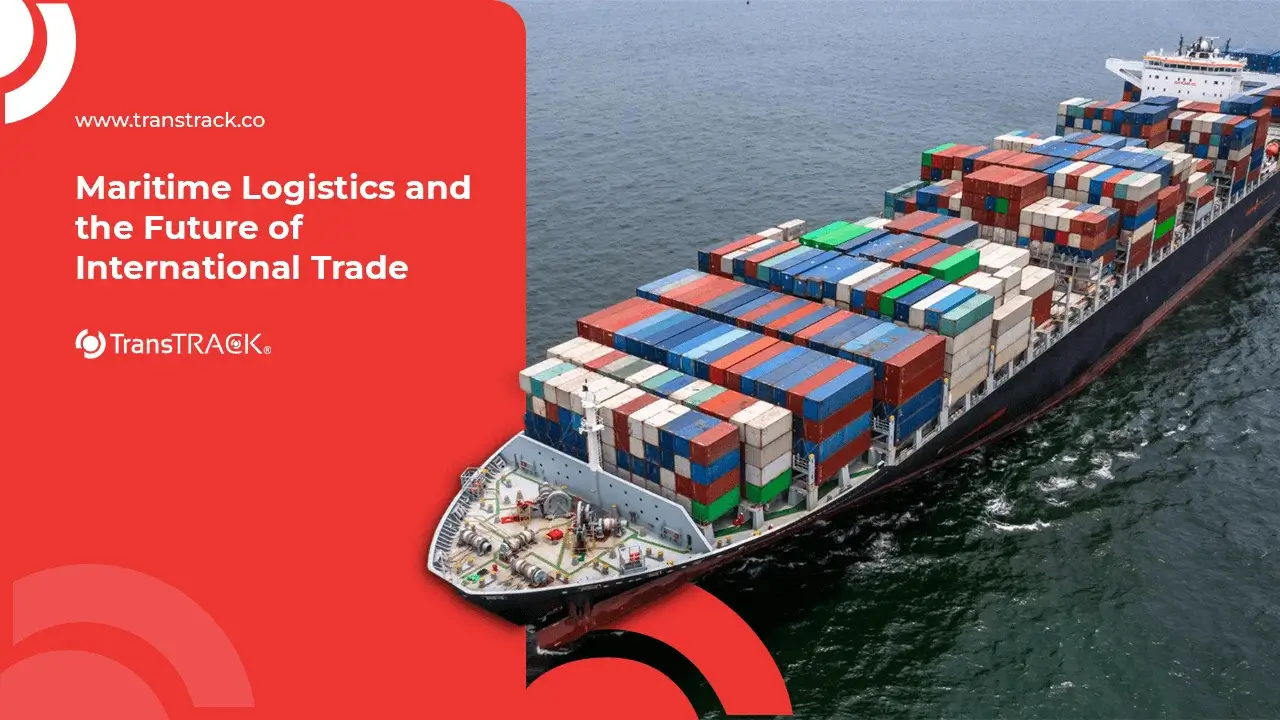
Maritime logistics is a system for managing and distributing goods via sea routes, encompassing ship transportation, port operations, warehousing, and real-time cargo monitoring. This industry serves as the backbone of global trade because it can transport goods in large volumes at a lower cost than other modes of transportation. Read the full explanation in the following TransTRACK article!
What is Maritime Logistics?
Maritime logistics is a system for managing and moving goods by sea, encompassing the processes of transportation, storage, distribution, and monitoring of goods using ships, ports, and other supporting infrastructure.
Simply put, maritime logistics ensures that goods can be transported from one location to another by sea safely, on time, and efficiently.
Core Components of Maritime Logistics
Maritime logistics involves not only the process of shipping goods by sea, but also encompasses an interconnected ecosystem that includes port infrastructure, the shipping fleet, and operational support services. These three components play a vital role in ensuring the safe, efficient, and timely distribution of goods, both for domestic and international needs.
1. Port Infrastructure
Port infrastructure serves as the hub of maritime logistics activities for the loading, unloading, storage, and distribution of goods.
Some of the key components include:
- Container terminal
- Docks and loading and unloading ports
- Warehousing
- Container yard (CY)
- Cold storage facilities
- Cranes and loading and unloading equipment
- Intermodal access (trucks, trains, and ground distribution)
- Digital port management system
- Customs area and customs inspection
The primary functions of port infrastructure are to expedite the flow of goods, improve operational efficiency, and reduce dwelling time.
2. Fleet of Ships
A fleet of ships is the primary means of maritime transportation, deployed according to the type of cargo and operational needs.
Types of Ships in Maritime Logistics
Bulk Carrier
Ships used to transport large quantities of bulk cargo, such as:
- Coal
- Iron ore
- Wheat
- Semen
Container Ship
A specialized container ship for domestic and international trade.
General information:
- Manufactured goods
- Electronics
- FMCG
- Export and import products
Thoughts
A ship designed to carry large quantities of liquid.
Type of cargo:
- Crude oil
- BBM
- LNG/LPG
- Liquid chemicals
Ro-Ro (Roll-on/Roll-off)
A vehicle ferry that allows vehicles to board and disembark on their own wheels.
Used for:
- Mobil
- Truk
- Bus
- Heavy equipment
3. Maritime Services
Maritime services support the smooth operation of ocean shipping, from administrative processes to risk management.
Ship Agency
Services that represent shipowners in the following matters:
- Ship berthing permit
- Shipping documents
- Port coordination
- Crew handling
- Ship operational requirements
Freight Forwarding
Freight management services that include:
- Transportation arrangements
- Cargo consolidation
- Customs clearance
- Import-Export Documentation
- Shipping tracking
Marine Insurance
Protection against risks during the ocean shipping process, such as:
- Damage to goods
- Loss of cargo
- Boat accident
- Extreme weather
- Maritime operational risks
Why Is Maritime Logistics Important for Global Trade?
Maritime logistics serves as the backbone of global trade because it enables the efficient distribution of large volumes of goods across countries and continents. The majority of the world’s import and export activities rely on maritime transport to ensure the smooth operation of international supply chains, ranging from industrial raw materials to consumer products.
1. Cost Efficiency
One of the main reasons for using maritime logistics is that shipping costs are more economical than air or land transport, especially for long-distance shipments and large volumes.
Cost-efficiency advantages:
- The freight cost per ton is lower
- Ideal for bulk shipping
- Efficient for bulk cargo and containers
- Reducing international distribution costs
For example, shipping coal, oil, or containers by sea can significantly reduce logistics costs compared to shipping by air.
2. Economies of Scale
Maritime transport has a very large carrying capacity, enabling it to transport thousands to hundreds of thousands of tons of cargo in a single voyage.
Benefits of economies of scale:
- Transporting massive volumes of cargo at once
- Reducing operating costs per unit
- Supporting large-scale international trade
- Accelerating the global distribution of commodities
Modern container ships can even carry thousands of TEUs (Twenty-foot Equivalent Units) in a single voyage.
3. Global Connectivity
Maritime logistics plays a vital role in connecting production centers and consumer markets around the world.
Examples of global trade connectivity:
- Asian countries as manufacturing and production hubs
- The consumer market in Europe and the United States
- International trade routes between the world’s major ports
- Cross-border distribution of raw materials and energy
Through an international shipping network, goods can be shipped seamlessly from manufacturers to distributors and on to end consumers.
Green Maritime Logistics
Green Maritime Logistics is a sustainable maritime logistics approach that focuses on reducing carbon emissions, improving energy efficiency, and promoting environmentally friendly operations in the shipping and port sectors. This transformation is becoming increasingly important as global demands for more sustainable maritime transport practices that comply with international regulations continue to grow.
1. Alternative Fuels
The maritime industry is beginning to shift from conventional fuels to more environmentally friendly energy sources in order to reduce greenhouse gas emissions and air pollution.
LNG (Liquefied Natural Gas)
LNG has become one of the most widely used alternatives because it produces lower sulfur and carbon emissions than traditional marine fuels.
Advantages of LNG:
- Reducing CO₂ emissions
- Reducing sulfur oxide (SOx) emissions
- Reducing maritime air pollution
- Supporting the energy transition in shipping
Ammonia
Ammonia is being developed as a future marine fuel because it has the potential to produce very low carbon emissions.
Potential uses:
- Kapal zero-carbon emission
- Long-distance maritime transport
- Decarbonization of the maritime industry
Hydrogen
Hydrogen is considered one of the clean energy solutions for the maritime sector, particularly for new-generation fuel-cell-powered ships.
Benefits of hydrogen:
- Very low emissions
- Supporting environmentally friendly ship operations
- High energy-efficiency potential
2. IMO Regulations 2023/2024
The International Maritime Organization continues to tighten environmental regulations to reduce the shipping industry’s impact on global climate change.
Some of the key areas of focus in the latest IMO regulations include:
- Reduction in the intensity of ship carbon emissions
- Energy Efficiency Existing Ship Index (EEXI)
- Carbon Intensity Indicator (CII)
- Use of low-sulfur fuel
- The maritime sector’s net-zero emissions target
Purpose of the regulation:
- Reducing global greenhouse gas emissions
- Promoting the use of green technology
- Accelerating the maritime energy transition
- Improving vessel operational efficiency
Shipping companies are now required to improve fleet efficiency and ensure compliance with international emissions standards.
3. Sustainable Port Operations
Modern ports are also beginning to adopt sustainable operational practices to reduce energy consumption and carbon emissions.
Electrification of Port Equipment
Various port operations are beginning to switch from fossil fuels to electricity.
Example of implementation:
- Electric crane
- Automated container handling
- Electric terminal truck
- Shore power for berthing vessels
- Smart energy management system
Manfaat sustainable port operations:
- Reducing port carbon emissions
- Reducing fuel consumption
- Improving energy efficiency
- Supporting green supply chain goals
- Improving the quality of the port environment
Operational Optimization in Maritime Logistics
The optimization of maritime logistics operations aims to improve distribution efficiency, accelerate the flow of goods, and reduce operational costs. This is achieved through the integration of technology, transportation, and modern security systems.
1. Turnaround Time Management
Turnaround time is the time it takes for a ship to arrive at a port and set sail again.
Optimization strategy:
- Speeding up the loading and unloading process
- Digital vessel scheduling
- Automation of port equipment
- Real-time vessel monitoring
Benefits:
- Reducing ship queues
- Speeding up the distribution of goods
- Improving port efficiency
2. Intermodality
Intermodality integrates ships, trains, and trucks into a single, interconnected logistics system.
Implementation:
- Port connections via rail
- Integration of trucking and container yard operations
- End-to-end distribution tracking
Benefits:
- Speed up delivery
- Reducing logistics costs
- Improving supply chain efficiency
3. Cybersecurity
The digitization of maritime logistics is increasing the need for protection of operational systems and data.
Security focus:
- Protection of ship navigation systems
- Logistics data security
- Prevention of cyberattacks
Strategy:
- Data encryption
- Firewall and system monitoring
- Backup dan disaster recovery
Benefits:
- Ensuring smooth operations
- Reducing the risk of system failures
- Protecting company data and the fleet
Conclusion
Maritime logistics plays a vital role in supporting global trade, interregional distribution, and the efficiency of modern supply chains. With the support of port infrastructure, shipping fleets, digital technology, and the implementation of green maritime logistics, the maritime industry continues to evolve toward more efficient, safe, and sustainable operations.
Amid growing demand for operational visibility and maritime safety, the use of real-time monitoring technology is becoming increasingly important to help companies track vessel movements, optimize routes, and improve fleet operational efficiency.
Use TransTRACK’s Vessel Monitoring System to help monitor vessel operations in real time, improve fleet control, ensure compliance with maritime regulations, and optimize your maritime logistics performance—all within a single integrated platform.
FAQ
What is the difference between maritime logistics and shipping?
Shipping focuses on the process of transporting goods from port to port by ship. Meanwhile, maritime logistics has a broader scope, encompassing the management of the supply chain from the point of origin to the final destination through maritime infrastructure and services.
Why is maritime logistics so important for international trade?
Because maritime logistics offers a very large cargo capacity, more cost-effective shipping costs per unit, and the ability to directly connect global markets across continents via international sea routes.
What is the biggest challenge facing maritime logistics today?
Some of the key challenges include port congestion, fluctuations in bunker fuel prices, the push for decarbonization in the maritime industry, and geopolitical disruptions along strategic trade routes such as the Suez Canal.
What role does AI technology play in maritime logistics?
Artificial Intelligence (AI) is used to support shipping route optimization, predictive ship maintenance, port operations automation, inventory management, and more accurate and efficient analysis and forecasting of cargo demand.
Recent Post





Topic :