Bahasa Indonesia
Fuel Consumption Monitoring System and Its Role in Shipping Efficiency
Posted on May 22, 2026 by Nur Wachda Mihmidati
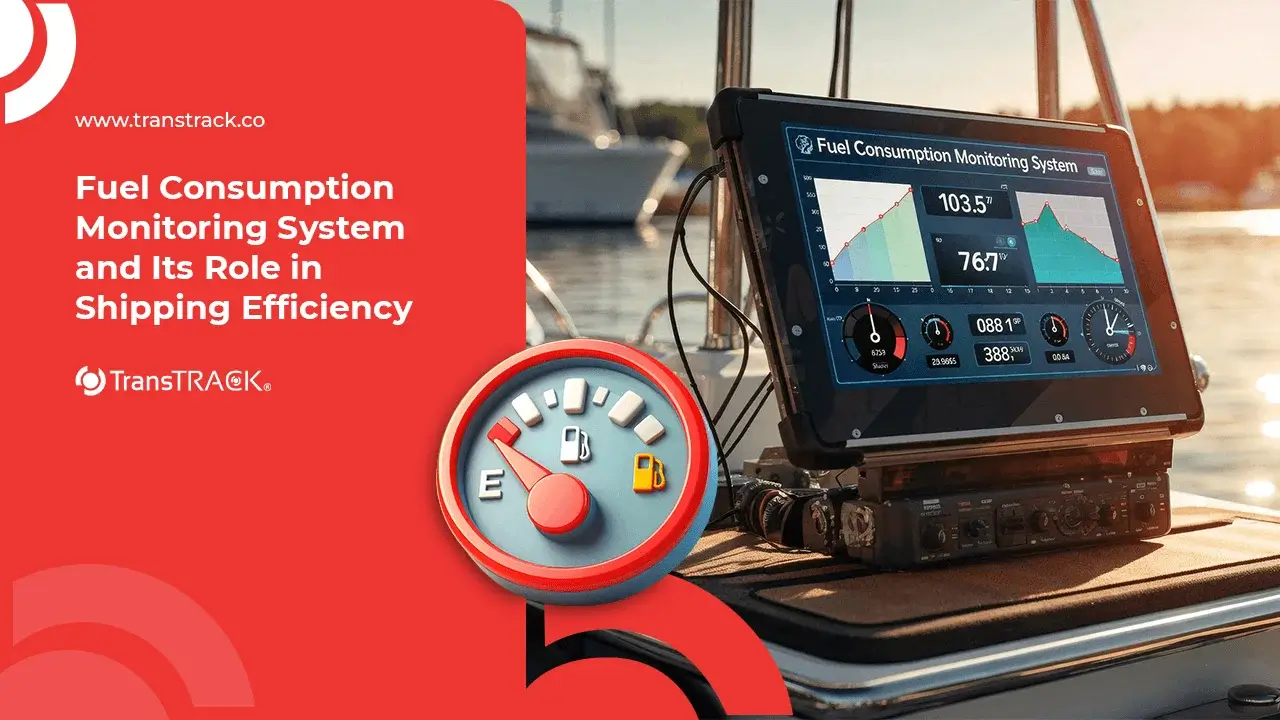
The Fuel Consumption Monitoring System (FCMS) is a digital system used to monitor a vessel’s fuel consumption in real time to improve operational efficiency, reduce fuel costs, and support compliance with maritime emissions regulations. Using sensor technology, IoT, and data analytics, FCMS helps shipping companies monitor engine performance, detect fuel waste, and optimize fleet operations more accurately and transparently. Read more about it in the following TransTRACK article!
What Is a Fuel Consumption Monitoring System (FCMS) on a Ship?
The Fuel Consumption Monitoring System (FCMS) on ships is a digital system used to monitor, measure, and analyze a ship’s fuel consumption in real time. This system helps ship operators track fuel usage for each engine, voyage, and operational activity, enabling them to operate more efficiently and cost-effectively.
FCMS is typically integrated with flow meters, GPS, engine monitoring systems, and analytical dashboards, allowing fuel consumption data to be monitored in real time both onshore and onboard.
Why Is FCMS Essential for Modern Fleets?
Amid rising fuel prices, demands for operational efficiency, and increasingly stringent global emissions regulations, shipping companies need a monitoring system capable of providing accurate, real-time visibility into fuel consumption. The Fuel Consumption Monitoring System (FCMS) serves as a critical solution to help modern fleets improve operational efficiency, transparency, and compliance.
OPEX Control
Fuel can account for up to 60% of a ship’s total operating costs. With a Fuel Consumption Monitoring System (FCMS), shipping companies can monitor fuel usage in real time to reduce waste and improve operational efficiency.
Regulatory Compliance
FCMS helps companies meet international emissions reporting standards set by the International Maritime Organization, such as the Carbon Intensity Indicator (CII) and the Energy Efficiency Existing Ship Index (EEXI), which are now a key focus of the global maritime industry.
Data Transparency
Digital monitoring systems help reduce the risk of fuel loss, manipulation of consumption data, and reliance on manual record-keeping—such as daily reports—which is prone to errors. Operational data becomes more accurate, transparent, and easier to audit.
Cara Kerja Fuel Consumption Monitoring System
The Fuel Consumption Monitoring System (FCMS) works by automatically collecting and analyzing a vessel’s fuel consumption data in real time. All data from the vessel’s engines and sensors is processed into operational insights that help shipping companies make faster and more accurate decisions.
- Data Collection? The flow meter measures the fuel flow to the main engine and the generator to determine fuel consumption in detail.
- Sensor Integration The system combines supporting data such as engine RPM, vessel speed (Speed Over Ground/SOG), and engine torque to generate more accurate performance analyses.
- Data Transmission (Telemetry) Operational data is automatically transmitted via a satellite communication network or the internet to a cloud server so it can be monitored from anywhere.
- Analysis & Dashboard Shipowners and operators can view reports on fuel consumption, engine efficiency, and voyage performance in real time via the app or the web-based dashboard.
Key Parameters in Fuel Monitoring
In the Fuel Consumption Monitoring System (FCMS), there are several key parameters used to measure a vessel’s operational efficiency and overall fuel performance. These parameters help vessel operators make more accurate decisions regarding fleet management.
- Fuel Consumption Rate Measures the amount of fuel consumed per hour (liters per hour or tons per day) to determine the ship’s engine fuel consumption rate.
- Fuel Consumption per Nautical Mile Shows fuel efficiency based on the vessel’s distance traveled, thereby helping to optimize voyages and shipping routes.
- Specific Fuel Oil Consumption (SFOC) A key parameter for measuring an engine’s fuel efficiency based on the power it generates. SFOC is typically expressed in g/kWh (grams per kilowatt-hour). The lower the SFOC value, the more fuel-efficient the ship’s engine is.

- Engine RPM Monitoring engine revolutions per minute (RPM) to observe the relationship between engine performance and fuel consumption.
- Speed Over Ground (SOG) Measures the vessel’s actual speed relative to the ground to analyze operational efficiency while underway.
- Engine Load Displays the load on the main engine and auxiliary engines to identify potential energy waste.
- Idle Fuel Consumption Monitoring fuel consumption while the vessel is idling or on standby so that operators can reduce unproductive consumption.
- Fuel Remaining & Tank Level Measures the remaining fuel in the tank in real time to assist with operational planning and bunker management.
- Emission Estimation- Calculating carbon emission estimates based on fuel consumption to support compliance with International Maritime Organization regulations such as CII and EEXI.
IoT and AI Technologies in Fuel Monitoring
Advances in Internet of Things (IoT) and Artificial Intelligence (AI) technologies are making Fuel Consumption Monitoring Systems (FCMS) increasingly intelligent and proactive. Not only do these technologies monitor fuel consumption in real time, but they also help shipping companies predict potential waste and optimize vessel operational efficiency.
Predictive Analytics
AI technology analyzes fuel consumption patterns, engine performance, and changes in vessel speed to predict potential declines in operational efficiency. One application of this technology is determining the ideal time to perform hull cleaning based on increased fuel consumption caused by fouling on the ship’s hull.
Digital Twin
Digital twin technology enables companies to create virtual simulations of ship operations based on real-time data. The system can simulate fuel consumption under various weather conditions, ocean currents, speeds, and ship loads to determine the most efficient and fuel-efficient shipping routes.
Real-Time IoT Sensor Integration
IoT sensors installed on the ship’s engines, fuel tanks, and propulsion systems automatically transmit operational data to a cloud server, enabling real-time monitoring from both the ship and the headquarters.
Automated Alert & Anomaly Detection
The AI system can automatically detect fuel consumption anomalies, such as fuel leaks, engine inefficiency, or abnormal fuel usage, allowing corrective actions to be taken more quickly.
Smart Voyage Optimization
With the help of AI and historical voyage data, the system can recommend the optimal speed to reduce fuel consumption without disrupting the ship’s delivery schedule.
Steps for Effective FCMS Implementation
To ensure that the Fuel Consumption Monitoring System (FCMS) delivers optimal results, its implementation must be carefully planned and tailored to the vessel’s operational needs. From sensor selection to software integration, each step plays a critical role in ensuring data accuracy and the effectiveness of fuel monitoring.
Needs Assessment
The initial phase of FCMS implementation involves conducting an operational audit of the vessel to determine the number of engines, fuel lines, and fuel flow points that require monitoring sensors. This process helps ensure that all fuel consumption can be accurately monitored.
Hardware Selection
The choice of hardware is a critical factor in the accuracy of monitoring systems. Many shipping companies use Coriolis-type mass flow meters (MFMs) because they provide highly accurate fuel flow measurements, even under conditions of vibration and fluctuations in the ship’s operating temperature.
Software Integration
The FCMS system needs to be integrated with a monitoring dashboard that is easy to use for both the ship’s crew and the operations team at headquarters. A good dashboard enables real-time monitoring, performance analysis, automatic notifications, and the quick and efficient generation of fuel consumption reports.
User Training
The implementation of FCMS must also be supported by training for ship crews and operators to ensure the system is used to its full potential. Understanding the dashboard, system alarms, and data interpretation is essential for supporting operational decision-making.
Regular Monitoring and Evaluation
Once the system is up and running, the company needs to conduct regular evaluations of sensor accuracy, device performance, and the quality of monitoring data. This step is essential for maintaining consistent fuel efficiency and ensuring that the system continues to operate optimally over the long term.
Conclusion
The Fuel Consumption Monitoring System (FCMS) is a critical solution for the modern maritime industry, helping to improve operational efficiency, reduce fuel costs, and ensure compliance with global emissions regulations set by the International Maritime Organization. With the support of IoT, AI, and real-time analytics, shipping companies can monitor fuel consumption more accurately, transparently, and comprehensively.
The implementation of FCMS not only helps optimize vessel engine performance but also facilitates operational decision-making through more precise and automated data. Amid the increasingly complex challenges facing the shipping industry, the digitalization of vessel monitoring is a strategic step toward creating more efficient, safe, and sustainable fleet operations.
To support comprehensive vessel monitoring needs, TransTRACK offers the TransTRACK Vessel Monitoring System (VMS), which enables companies to monitor vessel locations, operational performance, fuel consumption, and fleet activities in real time—all within a single integrated platform.
FAQ
What is the difference between a manual log and an automated monitoring system (FCMS)?
Manual logs such as the Noon Report still rely on ship crew records, making them susceptible to human error, reporting delays, and potential data manipulation. Meanwhile, the Fuel Consumption Monitoring System (FCMS) provides fuel consumption data automatically and in real time, resulting in more accurate, transparent, and consistent monitoring results.
How does FCMS help with compliance with CII (Carbon Intensity Indicator) regulations?
FCMS helps provide accurate data on fuel consumption, vessel mileage, and operational performance to support the calculation of the Carbon Intensity Indicator (CII). This data enables shipping companies to meet the International Maritime Organization’s emissions reporting standards more quickly and automatically.
Can the FCMS be installed on an old ship?
Yes. Modern FCMS systems are generally designed to be modular, allowing them to be implemented on various types of ships and engines, including older vessels through a retrofitting process without having to replace the entire ship’s engine system.
Recent Post




Topic :