Bahasa Indonesia
How Engine Performance Works and Is Monitored on Modern Ships
Posted on May 5, 2026 by Nur Wachda Mihmidati
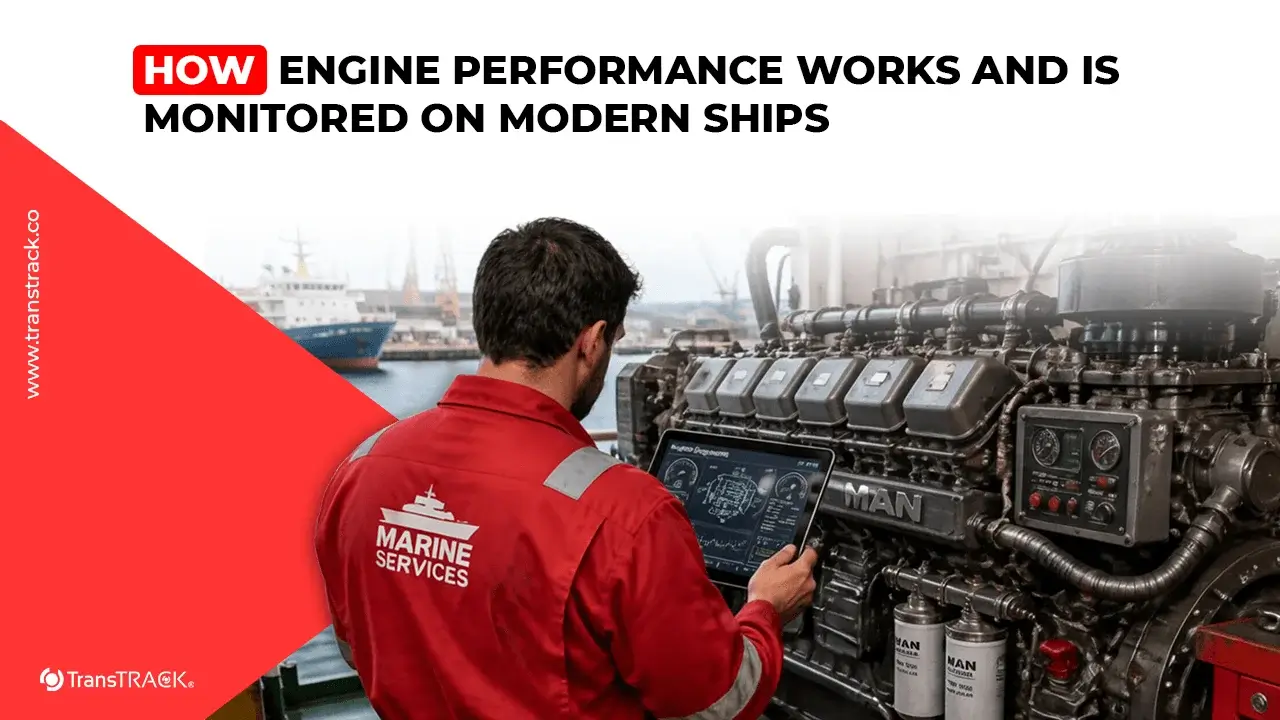
Monitoring a ship’s engine performance is a critical aspect of maritime operations to ensure that engines operate efficiently, safely, and in compliance with standards. By understanding performance parameters, the causes of performance degradation, and optimization strategies, ship operators can maintain engine reliability while reducing operational costs. Here are some frequently asked questions regarding engine performance on seagoing vessels. Read the full explanation in the following TransTRACK article!
What Is Meant by Engine Performance in Ships?
Engine performance on a seagoing vessel is a measure of the main engine’s ability to generate power to propel the vessel efficiently, safely, and in accordance with operational requirements.
Simply put, this indicates how efficiently the ship’s engine converts fuel into propulsion to drive the propeller.
Why Is Monitoring Engine Performance So Crucial?
Monitoring engine performance on ships is not just about knowing the condition of the engines; it is also a critical part of an operational strategy to ensure efficiency, safety, and regulatory compliance. With proper monitoring, ship operators can make faster, data-driven decisions to prevent operational losses.
- Fuel Efficiency: Optimizing fuel consumption to reduce operating costs (OPEX) and improve operational efficiency.
- Preventing Breakdowns: Enables early detection of anomalies in machine parameters, thereby preventing major failures before they cause operational disruptions.
- Regulatory Compliance: Ensuring that vessel operations comply with IMO (International Maritime Organization) standards, including the EEXI (Energy Efficiency Existing Ship Index) and CII (Carbon Intensity Indicator) regulations.
5 Key Parameters for Evaluating a Ship’s Engine Performance
To gain a more accurate understanding of a ship’s engine condition and efficiency, each of the following parameters serves as a key indicator that must be monitored regularly during shipping operations.
Specific Fuel Oil Consumption (SFOC)
The ratio of fuel consumption to power output per hour is used to measure an engine’s fuel efficiency. This parameter helps operators determine whether the engine is operating under optimal conditions or wasting energy.
Exhaust Gas Temperature (EGT)
The exhaust gas temperature for each cylinder serves as an indicator of the quality and efficiency of the combustion process. Abnormal changes in EGT may indicate problems with fuel injection or incomplete combustion.
Cylinder Peak Pressure (Pmax)
The maximum pressure inside the combustion chamber, which reflects the strength and efficiency of the combustion process. A stable Pmax value indicates that the combustion process is balanced in each cylinder of the engine.
Turbocharger Performance
Evaluate the relationship between intake air pressure (scavenge air) and turbine speed to ensure that the combustion air supply remains optimal. Malfunctions in the turbocharger can significantly reduce engine performance.
Vibration Analysis
Machine vibration analysis to detect wear or potential damage to internal components early on, before system failure occurs. An increase in certain vibration patterns is often an early sign of misalignment or bearing damage.
Digital Technology in Machine Performance Monitoring
Digital transformation in the maritime industry enables more accurate, faster, and real-time data-driven monitoring of ship engine performance. This technology helps operators make more proactive decisions and improves overall operational efficiency.
Internet of Things (IoT)
Real-time sensors that transmit data from the engine room to the ship’s central system or to shore. With IoT, engine conditions can be monitored in real time without having to wait for a manual inspection.
Artificial Intelligence (AI)
An intelligent algorithm used for predictive maintenance by analyzing patterns in machine operational data. This technology can predict potential failures before they actually occur, thereby reducing the risk of downtime.
Digital Twin
A virtual simulation of a ship’s engine that digitally replicates actual conditions for testing and analysis. With a Digital Twin, efficiency and operational scenarios can be tested without disrupting the performance of the engine while it is in operation.
Practical Steps for Conducting an Engine Performance Test
Engine performance tests are conducted to ensure that the ship’s engine operates in accordance with the manufacturer’s specifications and remains efficient under actual operating conditions. These tests must be conducted systematically to ensure that the data is accurate and can be used as a basis for performance analysis.
Preparation
Calibrate measuring instruments such as indicator cocks and flowmeters before testing begins. This step is important to ensure that all data obtained is truly valid and that no measurement deviations occur.
Procedure
Measurements were taken at various engine load levels, ranging from 50%, 75%, to 100% MCR (Maximum Continuous Rating). These load variations help assess the engine’s performance characteristics under different operating conditions.
Analysis
Compare field measurement data with the Sea Trial Report (original data from the manufacturer). This comparison is used to identify any decline in performance or efficiency, or potential issues with the engine.
Conclusion
Monitoring engine performance on seagoing vessels is a critical factor in maintaining operational efficiency, ensuring navigational safety, and complying with international regulations. By understanding key parameters, leveraging digital technology, and conducting regular inspections, vessel operators can ensure that engines operate under optimal conditions and that the risk of malfunctions is minimized at an early stage.
However, in today’s digital age, manual monitoring alone is no longer sufficient. A system is needed that can provide real-time visibility, automated analysis, and early detection of machine performance anomalies to enable faster and more accurate decision-making.
Optimize Engine Performance with TransTRACK Vessel Monitoring System
Improve control and operational efficiency for your vessels with TransTRACK’s Vessel Monitoring System. This system provides real-time monitoring of engine performance, fuel consumption, and vessel operational conditions all within a single integrated platform.
With TransTRACK, you can:
- Monitoring engine performance in real time
- Analyzing a ship’s fuel efficiency and operational efficiency
- Detecting potential issues early on through data analytics
- Improving maritime safety and regulatory compliance
It’s time to switch to a smarter, integrated monitoring system with TransTRACK to support the efficiency and sustainability of your maritime operations.
FAQ
How can I improve the performance of a ship’s engine?
Perform routine maintenance (Planned Maintenance System/PMS), optimize combustion by adjusting the timing of fuel injection, clean the turbocharger periodically, and use digital monitoring systems such as the Vessel Monitoring System to monitor engine conditions in real time.
What is the main cause of a decline in a ship’s engine performance?
A drop in performance is generally caused by poor fuel quality, a dirty air filter, wear on the piston rings, and carbon buildup in the exhaust port, which interferes with the combustion process.
What is the relationship between RPM and load in a ship’s engine?
RPM indicates the engine’s rotational speed, while load indicates the engine’s operating condition or the load it is carrying. Optimal performance is achieved when the engine operates in accordance with the load curve designed based on the propeller’s characteristics (propeller curve).
Recent Post





Topic :