Bahasa Indonesia
Types of Mining Trucks and Their Roles in Mining Operations
Posted on July 9, 2026 by Nur Wachda Mihmidati
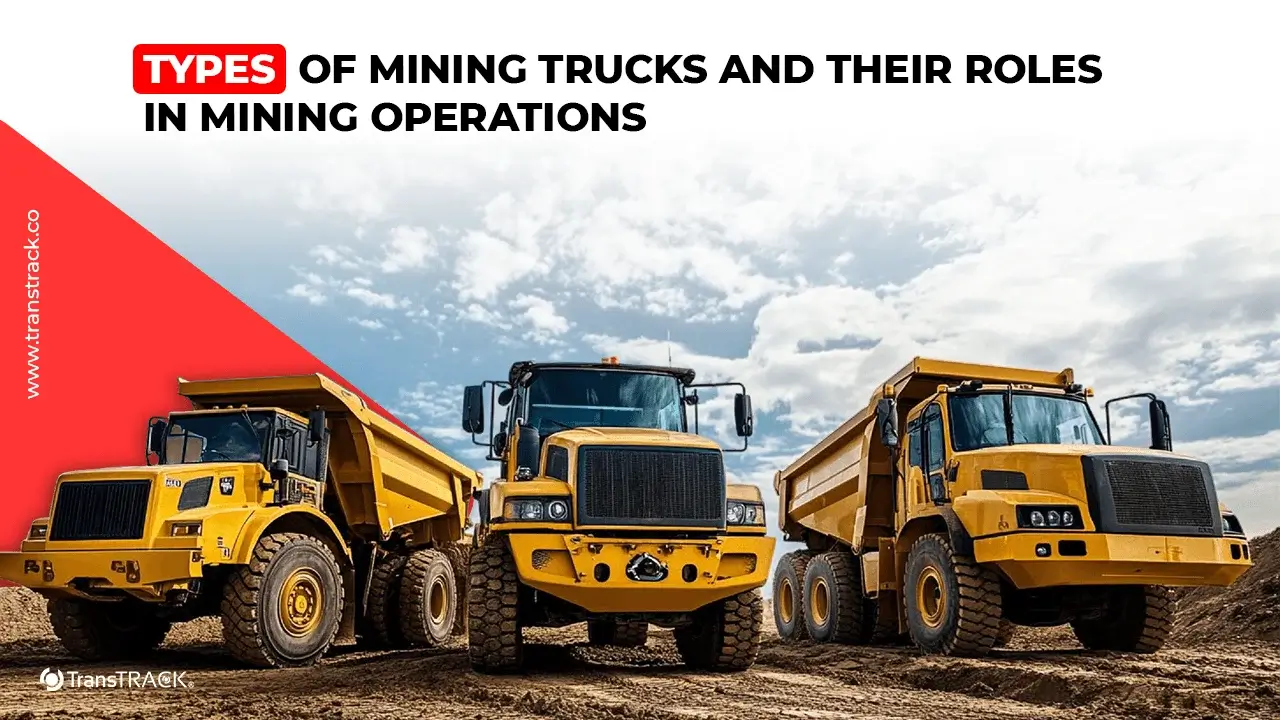
Mining trucks are the primary means of transportation in the mining industry, used to move materials from mining sites to processing areas or stockpiles. With capacities reaching hundreds of metric tons, these trucks are designed to operate safely and efficiently in harsh environments. Read the full explanation in the following TransTRACK article!
What Is a Mining Truck?
Mining trucks are heavy-duty, high-capacity vehicles specifically designed to transport mined materials—such as coal, metal ore, sand, soil, and rock—from mining sites to processing facilities, stockpiles, or dumping areas. Unlike highway trucks, mining trucks are built to operate in extreme terrain, carry extremely heavy loads, and work continuously under challenging conditions.
Mining trucks are among the most important assets in mining operations because they play a direct role in maintaining productivity and ensuring the smooth flow of material transport. Their carrying capacity can range from tens to hundreds of metric tons per trip, thereby improving operational efficiency and reducing transportation costs per metric ton of material.
Classification of Mining Trucks by Design and Capacity
Each type of mining truck has a different design and load capacity depending on terrain conditions, material volume, and operational requirements. Here are the three most common classifications of mining trucks used in the mining industry.
1. Rigid Dump Truck (RDT)
The RDT is a rigid-frame mining truck designed to transport large quantities of material in open-pit mines with good road conditions.
Characteristics:
- Capacity 35–240 metric tons
- Stable for heavy loads
- Ideal for wide, level mining roads
- High productivity for large-scale operations
2. Articulated Dump Truck (ADT)
The ADT has an articulation joint between the cab and the body, making it more flexible when maneuvering on narrow, muddy, or uneven terrain.
Characteristics:
- Capacity 25–45 metric tons
- Smaller turning radius
- High traction on rough terrain
- Suitable for quarries and mines with temporary access roads
3. Ultra-Class Trucks (Giant Mining Trucks)
Ultra-Class Trucks are very high-capacity mining trucks used in large-scale mining operations to transport large volumes of material.
Characteristics:
- Capacity 290–400+ metric tons
- Using a diesel-electric powertrain in many models
- Productivity is very high
- Used in large-scale open-pit mines
4 Modern Technology Solutions to Overcome Challenges in the Mining Truck Industry
To improve productivity, safety, and operational efficiency, mining companies are now adopting various smart technologies for their mining truck fleets. Here are some of the most widely used solutions.
1. Integrated Mine Fleet Management System (FMS)
FMS helps monitor the location, productivity, work cycles, fuel consumption, and condition of the fleet in real time, making operations more efficient.
2. Fatigue & Distraction Monitoring System (DMS)
DMS uses cameras and AI to detect driver fatigue, drowsiness, or inattention, and then issues warnings to reduce the risk of accidents.
3. Collision Avoidance System (CAS) & Radar Blind Spot
CAS and blind-spot radar help detect vehicles, heavy equipment, and other objects around the truck, thereby preventing potential collisions through early warnings.
4. Tire Pressure Monitoring System (TPMS) & Weight Sensor
TPMS monitors tire pressure and temperature in real time, while the weight sensor ensures that the load remains within capacity limits to extend tire life, maintain vehicle stability, and ensure safer operation.
Standard Operating Procedures (SOP) Guide for Occupational Safety and Health (OSH) for Mining Truck Operators
The implementation of standard operating procedures (SOPs) and Occupational Safety and Health (OSH) standards is essential for reducing the risk of accidents, maintaining vehicle condition, and ensuring that mining operations run safely and efficiently. Here are some basic procedures that every mining truck operator must follow.
1. SOP for Pre-Start Inspection
Before a truck is put into service, the operator must conduct a thorough inspection to ensure the vehicle is roadworthy.
Inspection checklist:
- Check the condition of the tires and the tire pressure.
- Check the engine oil, coolant, and hydraulic system.
- Make sure the brakes, lights, horn, and alarm are working.
- Check the area around the vehicle before starting the engine.
- Please report any damage or irregularities immediately.
2. Safe Operating Procedures on Haul Road
Operators must comply with the rules for driving on mine roads to ensure the safety of all heavy equipment and workers in the operational area.
Main procedures:
- Obey the posted speed limits.
- Maintain a safe distance from other vehicles.
- Follow the route in the direction of mine traffic.
- Slow down on curves, uphill sections, and downhill sections.
- Always be aware of blind spots and follow the instructions of mine traffic officers.
Conclusion
Mining trucks are the backbone of mining operations because they play a critical role in transporting materials safely and efficiently. By selecting the right type of truck, implementing operational SOPs, and utilizing technologies such as Fleet Management Systems (FMS), Driver Monitoring Systems (DMS), Collision Avoidance Systems (CAS), and Tire Pressure Monitoring Systems (TPMS), companies can increase productivity while reducing the risk of accidents and downtime.
To support more integrated logistics operations, use the Truck Appointment System (TAS) from TransTRACK. This solution helps digitally manage truck arrival and departure schedules, reduce queues in loading and unloading areas, speed up loading and unloading processes, and improve fleet movement efficiency. With real-time visibility and optimal slot management, Truck Appointment System TransTRACK helps mining companies create smoother, safer, and more productive operations.
FAQ
What is the main difference between an ADT and a rigid dump truck?
The ADT has an articulated frame, making it more flexible on uneven terrain, while the Rigid Dump Truck uses a rigid frame that is more stable for hauling heavy loads on well-maintained mine roads.
What is the capacity of the world’s largest mining truck?
The largest mining trucks can carry more than 400 metric tons of material in a single trip. One example is the BelAZ 75710, which has a capacity of approximately 450 metric tons.
Why are off-the-road (OTR) mining truck tires so expensive?
OTR tires are designed to support extremely heavy loads and operate in extreme terrain. They are large in size, made of high-quality materials, and offer far greater durability than regular vehicle tires.
Recent Post





Topic :