Bahasa Indonesia

TransTRACK Strengthens Electric Fleet Management Through Real-Time EV Battery Monitoring to Support NZE 2060
Posted on October 16, 2026 by Nur Wachda Mihmidati
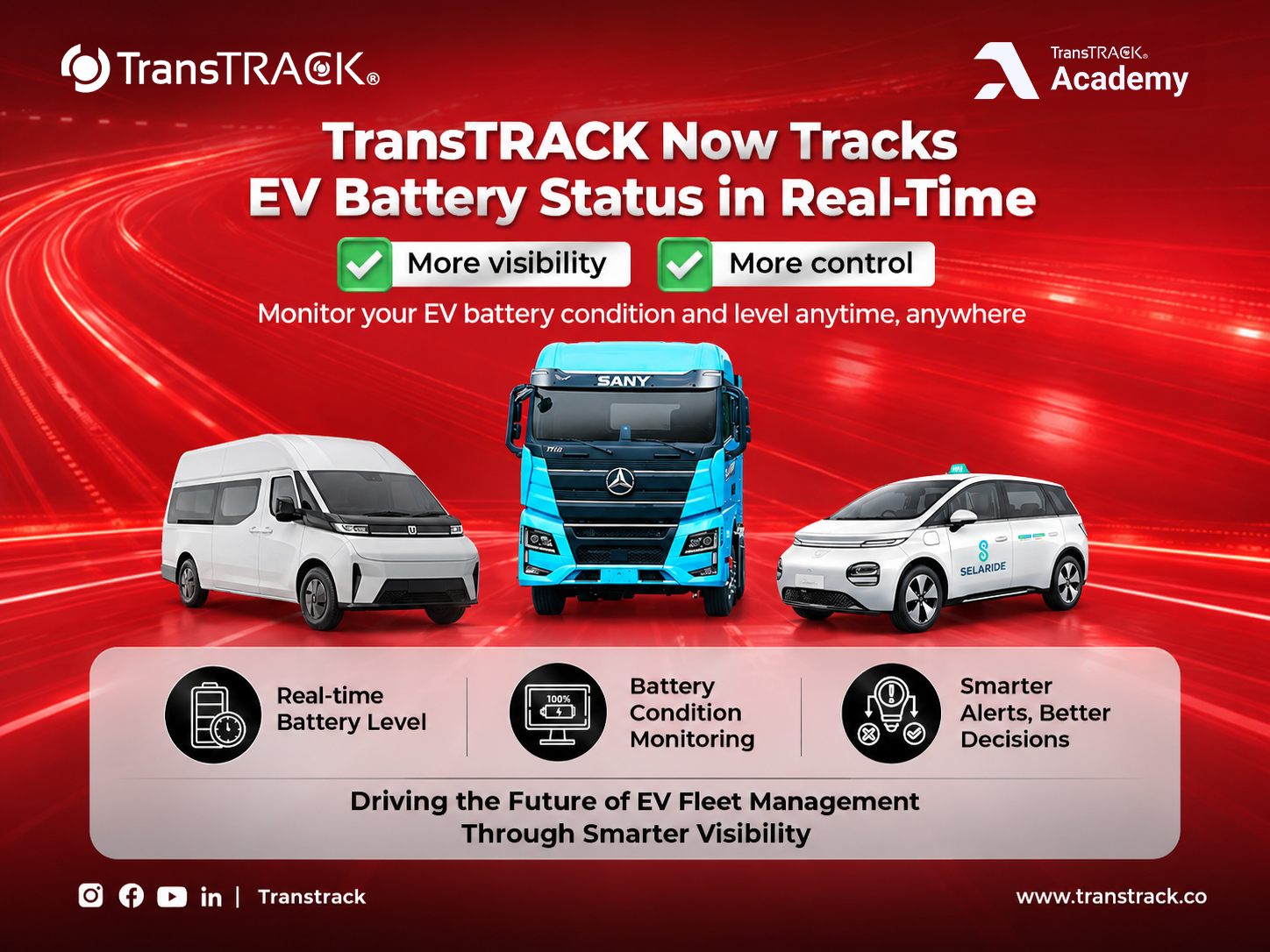
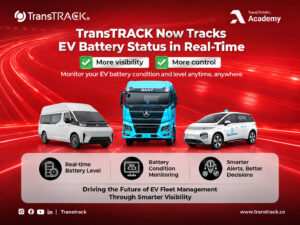
Jakarta, October 16, 2026 – The growing use of electric vehicles across various industrial sectors is driving the need for technology capable of supporting more optimal fleet management. To address this need, TransTRACK introduces the Real-Time EV Battery Monitoring feature, which allows companies to monitor the condition of electric vehicle batteries in real time through a single integrated platform. Powered by Artificial Intelligence (AI) and Internet of Things (IoT), this solution is designed to improve fleet operational efficiency while supporting the development of the Battery-Powered Electric Vehicle (KBLBB) ecosystem in Indonesia to achieve the Net Zero Emission (NZE) 2060 target.
The increasing electrification of fleets also presents new challenges for companies in ensuring that vehicles are always ready for use. Unlike conventional fleets, the performance of electric vehicles is closely tied to battery condition. When accurate information about battery condition is not available, charging schedules, vehicle management, and even operational decision-making can become less effective.
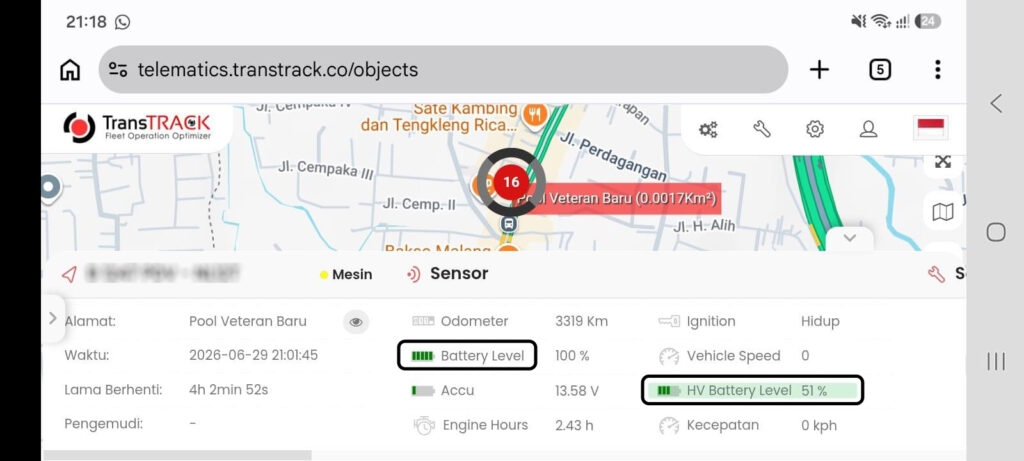
As part of the development of the Fleet Operation Optimizer ecosystem, TransTRACK introduces Real-Time EV Battery Monitoring to provide visibility into a number of key electric vehicle parameters. The information that can be monitored includes EV Battery Level or State of Charge (SoC)—displayed as a percentage, such as 80%, 60%, or 30%—ignition, odometer, engine hours, vehicle speed, and fleet location in real time.
The inclusion of this feature also supports the government’s agenda to accelerate the development of the electric vehicle ecosystem, as regulated by Presidential Regulation No. 55 of 2019 and its amendments via Presidential Regulation No. 79 of 2023. As the use of electric vehicles becomes more widespread, technology for monitoring and managing fleets is increasingly needed so that companies can carry out their transformation toward more efficient and sustainable transportation operations.
Anggia Meisesari, Founder and CEO of TransTRACK, stated that fleet electrification is a key element in driving the transformation of transportation toward efficiency and sustainability. According to her, the successful adoption of electric vehicles goes beyond simply using vehicle technology; it also requires companies to manage their fleets in a smarter and more measured way.
“Fleet electrification is not simply a matter of replacing fossil-fuel-powered vehicles with electric vehicles. Companies also need to ensure their fleets can continue to operate optimally through real-time battery monitoring. Better visibility enables companies to improve fleet productivity, reduce downtime, and optimize operational efficiency,” said Anggia.
With Real-Time EV Battery Monitoring, companies can obtain information about the battery charge level of each vehicle in real time. This data can be used to create more effective charging schedules, while also helping to improve fleet readiness and utilization. Companies can also develop operational plans that take into account the actual condition of each vehicle.
The need for an integrated electric fleet management system is also felt by BHISA Shuttle, an intercity transportation service owned by PT Bhinneka Sangkuriang Transport that has been using electric vehicles to serve the Bandung–Purwakarta route and vice versa. In developing more environmentally friendly transportation services, BHISA views technology as a key factor in facilitating vehicle monitoring, strengthening operational coordination, and ensuring the fleet is ready to serve passengers.
“The use of electric vehicles is one of our steps toward providing more environmentally friendly transportation services while reducing our reliance on diesel fuel. On the other hand, operating an electric fleet requires more consistent monitoring, particularly of battery conditions and charging needs. With the support of TransTRACK technology, we hope that information regarding vehicle locations and battery levels can be monitored through a more integrated system and accessed by more members of the operations team. This will allow for more effective coordination and ensure the fleet remains ready to support passenger service,” said BHISA Shuttle Operational Manager Denny Cahya.
Meanwhile, Ndaru Ruseno, VP of Business Development at TransTRACK, explained that managing an electric fleet requires a data-driven strategy that differs from that used for conventional fleets.
“In conventional fleets, operational considerations typically include vehicle location, fuel consumption, and driver behavior. With electric vehicles, however, battery condition is a key factor in determining a vehicle’s readiness for operation. Therefore, Real-Time EV Battery Monitoring was developed so that battery data can serve as a basis for operational decision-making. By integrating battery information, vehicle telematics, and various other operational parameters into a single AI- and IoT-based platform, fleet managers can determine not only a vehicle’s location but also its readiness to perform its next task. “This shift in approach—from mere vehicle tracking to operational intelligence—is becoming a key foundation for managing electric fleets in the future,” said Ndaru.
Moving forward, TransTRACK will continue to deliver innovations based on AI, IoT, and data analytics to address the increasingly dynamic and complex needs of fleet management, including supporting the transition to electric vehicles. By developing technologies tailored to the industry’s operational needs, TransTRACK is committed to helping companies improve the efficiency, productivity, and sustainability of their fleets while contributing to the transformation of the transportation and logistics sector in Indonesia.
Recent Post



Topic :