Bahasa Indonesia
Driver Identification, How does it Work and its Benefits?
Posted on June 20, 2025 by Nur Wachda Mihmidati
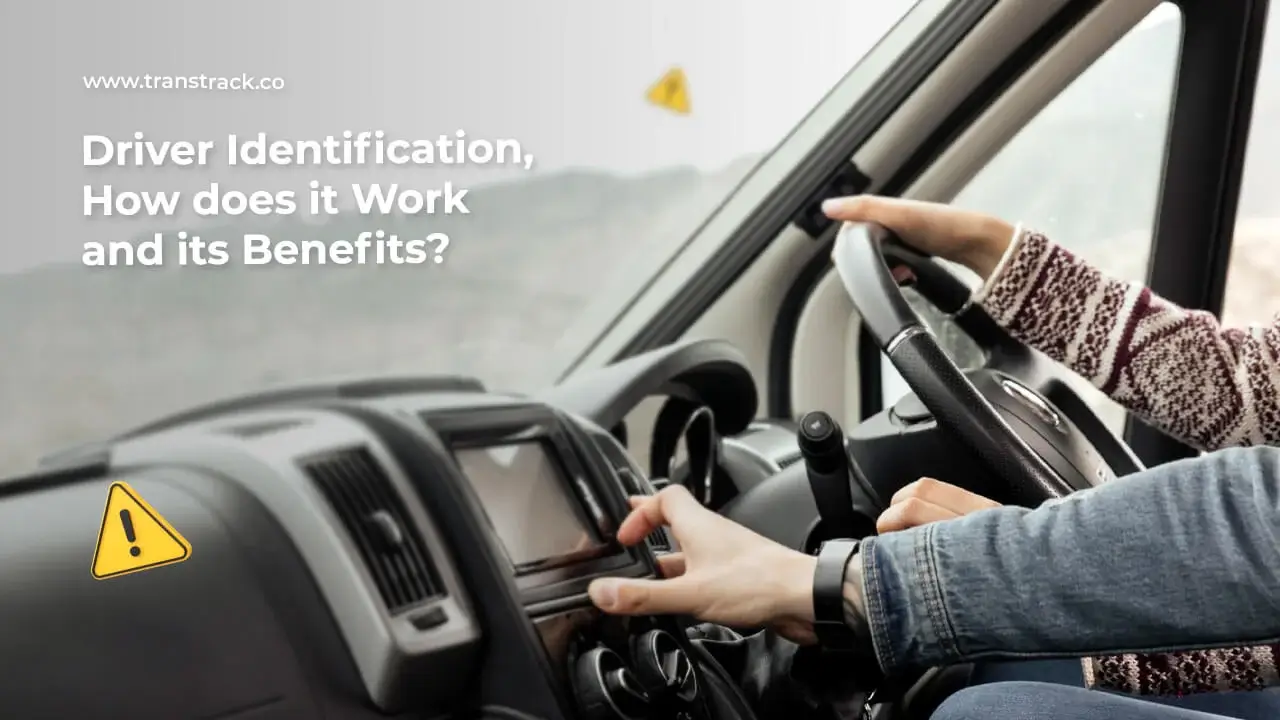
Driver Identification has many benefits for its users. Then, how does it work and its benefits for drivers and companies? We will explain this in the following TransTRACK article!
Driver Identification, What is it?
How good a picture do we have of our company’s vehicle usage? If a company has a lot of machines and employees, keeping an eye on everything can be quite difficult. Vehicles have not been refueled or left dirty at the end of the day, there are fines for the company for speeding, and no one admits their mistakes. Sound familiar?
To avoid such problems and take advantage of the many other benefits, there is a solution for us to familiarize ourselves with this Identification.
This Identification allows drivers to be identified with RFID cards or magnetic keys before driving. It can even be said that this is an essential solution for companies with a shared vehicle fleet, as it provides the most accurate picture of the working hours and driving habits of the drivers.
Based on the collected information, it is easy to track vehicles, call drivers who violate traffic rules or even reduce the company’s engine costs. Drivers also don’t have to worry about filling out their driving logbooks, as reports are generated automatically based on the data collected by this Identification.
Overall, the introduction of Driver Identification in our company helps save work time and makes work organization smoother and more efficient.
Common Issues in Fleet Management
In fleet management, many challenges are often faced and can have a serious impact on operational efficiency and cost control. Here are some of the most commonly encountered issues:
Unauthorized use of vehicles
Vehicles are often used outside of operating hours or without authorization from management. This risks misuse of assets and unaccountable operating expenses. Without an adequate monitoring system, these activities are difficult to detect in real-time.
Unable to track who the driver is during an accident or violation
When an incident occurs on the road, it is difficult to accurately identify the driver if there is no integrated driver login system. This makes it difficult to investigate and enforce discipline. In addition, driver performance evaluations are not objective.
Cheating in daily operations
Some drivers may manipulate routes or record hours that do not match reality. Such fraud results in fuel inefficiency and loss of accuracy in operational reports. Without transparent and accurate data, companies risk ongoing losses.
How Driver Identification Works
We can also choose between two options for Driver Identification – RFID i.e. smart card, or I-button i.e. magnetic key Driver Identification. The solution works well and you can choose based on your preferred option.
In both cases, the identification is installed in the vehicle, where the driver has to place his smart card or magnetic key before starting the car. The card and key number are associated with a dedicated driver in this solution.
RFID cards
Card-based Driver Identification works on the same principle as, for example, a requested bank or access card. Therefore, there is no need to purchase a new card for Driver Identification, but any smart card that supports RFID can be used.
I-button or magnetic lock
The I-button works in the same way as the magnetic locks on the outside doors of many apartment buildings, which are placed in front of the reader on the phono lock.
Additional Driver Identification options
Now, there are also additional options for this Identification feature. The additional options are:
Reminders
A sound signal (buzzer) can also be installed in the vehicle to remind users of the need for identification. This helps avoid forgetful drivers and ensures that all trips are recorded correctly. Once detected, the solution instantly shows in real-time who is using which vehicle. Driving information is also automatically entered into the logbook. The journey ends when the ignition switch is turned off.
Immobilizer
Driver detection can be set so that the car cannot be started before a card or magnetic key is placed near the reader. In this case, the vehicle’s ignition circuit is cut off and the engine will not start. This serves as a great anti-theft solution!
Advantages of Using Driver Identification
In addition to the benefits mentioned earlier, what are the advantages we can get when using Driver Identification? You can read them below.
Controlling driver assignment
With the Automatic Driver Identification system, we know – with certainty – which driver is assigned to a vehicle at any given time, preventing unauthorized use of the vehicle after hours. In addition, we can receive an alarm if the driver is not identified when the vehicle starts the journey.
Complying with laws
Driver Identification also helps us comply with necessary laws regarding drivers, such as “duty of care” and “working time limits”, by recording and reporting their driving time.
Reduce costs and avoid vehicle misuse
If our fleet has a high rotation of drivers in the same vehicle, it is usually unknown who committed the violation or left the vehicle with damage. In addition, drivers who are not responsible for violations can pose serious risks and even unnecessary vehicle stops.
With an automated Driver Identification system, we can quickly identify violators and act accordingly. As a result, drivers will know that they are being monitored and thus change their driving behavior, reducing company costs and avoiding vehicle misuse in the long run.
Payroll automation
In addition, this type of system allows us to record the mileage traveled by each driver and automatically calculate the corresponding salary, if we need to implement mileage-based payroll.
If we need to avoid violations and keep track of which drivers are assigned to each specific trip, this Identification is the solution we need.
Why is driver identification important in fleet management?
Driver identification is crucial in fleet management as it provides control, transparency, and accountability to fleet operations. Here are some key reasons why driver identification is a crucial feature:
1. Accountability and Responsibility
With a driver identification system, every vehicle operated can be traced back to a specific driver. This:
- Increases personal responsibility.
- Minimizes reckless driving behavior.
- Facilitate investigations in the event of a violation or incident.
2. Vehicle and Asset Security
Only authorized drivers can operate the vehicle:
- Reduces the risk of vehicle theft or misuse.
- Ensure that drivers running vehicles are trained and up to standard.
3. Driver Performance Analysis
The data collected can be used to:
- Assess the efficiency and safety of each driver.
- Provide customized training based on driving patterns.
- Provide incentives for top-performing drivers.
4. Working Time Monitoring and Regulatory Compliance
Driver ID helps record work time accurately:
- Ensure compliance with working hour rules (such as OHS rules).
- Avoiding driver fatigue that could lead to accidents.
5. Integration of Operational Reports
In a fleet management system, driver identification makes it easy:
- Reconciliation between vehicle data and driver data.
- Reporting of costs per driver, fuel consumption, and vehicle maintenance.
6. Fraud Prevention
With identity verification, companies can:
- Prevent the use of vehicles by unauthorized parties.
- Avoiding trip log data manipulation or driver substitution in the field.
Overall, driver identification is a key foundation for safe, efficient and data-driven fleet management. This technology, when integrated with systems such as TransTRACK, can add great value to logistics and transportation operations.
What is the difference between RFID-based and biometric ID drivers?
The main differences between RFID-based ID drivers and biometrics lie in the authentication technology, security level, and how they are used. The following explains the comparison between the two:
Driver ID Comparison: RFID vs Biometrics
| Aspects | RFID (Radio Frequency Identification) | Biometrics (Fingerprint, face, iris, etc.) |
| Identification Method | Using RFID cards/tags scanned into a reader device | Uses unique biological data of the driver (fingerprint, face, etc.) |
| Security | Medium – can be borrowed, lost, or misused | High – difficult to counterfeit, non-transferable |
| Identification Accuracy | Depends on who is carrying the card | Highly accurate as it is based on physical identity |
| Ease of Use | Easy – just need to tap the card onto the reader | Requires initial customization time, but quick and automatic afterwards |
| Cost of Implementation | Cheaper, suitable for large scale | More expensive due to advanced devices and technology integration |
| Maintenance Needs | Low – only need to ensure cards/tags and readers are working | Medium – sensors need to be cleaned and calibrated periodically |
| Risk of Fraud | Existent – can be loaned to others | Minimal – can only be used by the identity owner |
| System Integration | Easy to integrate with vehicle management system | Need more complex system integration |
For a flexible and efficient solution, many companies opt for a combination of both: RFID for speed and convenience, and biometrics for additional verification at crucial points.
What are the types of driver identification systems?
Here are the types of driver identification systems that are commonly used in fleet management, along with their advantages and disadvantages:
1. RFID-Based Identification
Uses an RFID card or tag scanned into a reader device on the vehicle to identify the driver.
Pros:
- Fast process and easy to use
- Low implementation costs
- Suitable for large-scale fleets
Cons:
- Can be loaned to others (prone to misuse)
- Cards or tags can be lost or damaged
2. Biometric Identification
Uses biometric data such as fingerprints, face, or iris to confirm the driver’s identity.
Pros:
- High security and difficult to counterfeit
- Accurate in individual identification
Cons:
- Higher device and integration costs
- Sensors require regular maintenance
3. PIN/Password-Based Identification
The driver enters a PIN or password into the vehicle system before being able to operate it.
Pros:
- Simple implementation
- No additional devices required
Cons:
- PIN can be shared with others
- Risk of forgetting or entering the wrong code
4. Smartcard or Key Fob Identification
Uses a smartcard or key fob containing encrypted data to unlock the vehicle.
Pros:
- More secure than standard RFID cards
- Practical and portable
Cons:
- Can be lost or damaged
- Replacement cost of the device is relatively high
5. Mobile App-Based Identification
Uses a mobile app with Bluetooth, NFC, or QR Code connection to identify and activate the vehicle.
Pros:
- Easily integrated with modern fleet management systems
- Can support additional features such as tracking and reporting
Cons:
- Depends on smartphone device and connection
- Technical risks such as battery drain or app crashes
6. Token or iButton Driver
Uses a small metal token (iButton) that is touched to the reader for identity verification.
Pros:
- Durable and suitable for extreme field conditions
- More secure than standard RFID cards
Cons:
- Can still be loaned between drivers
- Requires a dedicated reader
The choice of driver identification system depends on several factors, including:
- The desired level of security
- Scale and complexity of the fleet
- Budget and technology readiness
- Need for integration with other systems
Many companies today adopt a combination of methods to combine practicality and security, such as using RFID for initial login and biometrics for additional verification. If you need materials in presentation format or comparative tables, I can help compile them.
How to Make Driver Identification Work for Us?
Then, how can we make this Identification work properly? TransTRACK will explain it for you below.
Convenient calculation of working hours and wages
If the use of a vehicle is directly related to the driver’s duties, the use of Driver Identification is an easy way to accurately calculate working time and payment. For example, many agricultural and forestry companies have automated the calculation of work time through Driver Identification and a combination of geographic areas.
Suppose an employee is paid by the hour and is responsible for cutting down trees in a designated forest. The Driver Identification solution includes a forestry map where we can mark the designated area. The time of entering and exiting the area will be displayed in later reports. It is also possible to determine whether the driver was actually working during the time spent in the area (harvester head in working position) or the machine was idling.
Driver-based reports therefore provide a complete overview of driving time, machine operating hours, fuel consumption and much more that needs to be considered in a cost-benefit analysis.
[display-post-read-also]
Driving style
Economical driving is not only important for safety and nature conservation. More economical driving helps reduce fuel consumption by up to 25% and also ensures longer fleet life.
The ECO driving solution detects excessive speed, acceleration and sharp cornering, sudden braking, and engine idling. Based on the collected data, the solution evaluates the driver’s driving style with an ECO score. In terms of Driver Identification, the report pinpoints which employees are driving economically and which ones should take continuous driving training.
Such a solution has been chosen, for example, by Omniva, a postal service company with the largest car fleet in the Baltics, which rewards drivers with the best driving scores every month. Fuel and vehicle maintenance costs have decreased. By monitoring drivers’ driving styles, Bolt also improves customer safety and driver safety.
Driver Identification History
Driving history can be viewed in solutions of up to 7 years, so by using Driver Identification, we can see exactly who used which machine and when.
This may be necessary, for example, if a traffic violation has been committed and a fine sent to the company email. To find out the employee, it may be wise to let them pay for the mistake themselves. With Driver Identification solutions, one doesn’t have to look for the culprit for long.
If there is a problem with careless use of the vehicle, Driver Identification will also help locate the employee.
Driver Identification is a good solution for companies, as well as for drivers who want their safety to be guaranteed. For that, you can start to try this excellent feature through TransTRACK. You can enjoy this Driver Identification feature by installing Fleet Management System and other products. Start using Driver Identification and enjoy the benefits!
Recent Post





Topic :