Bahasa Indonesia
Heavy Equipment Maintenance Strategies to Minimize Downtime and Costs
Posted on June 11, 2026 by Nur Wachda Mihmidati
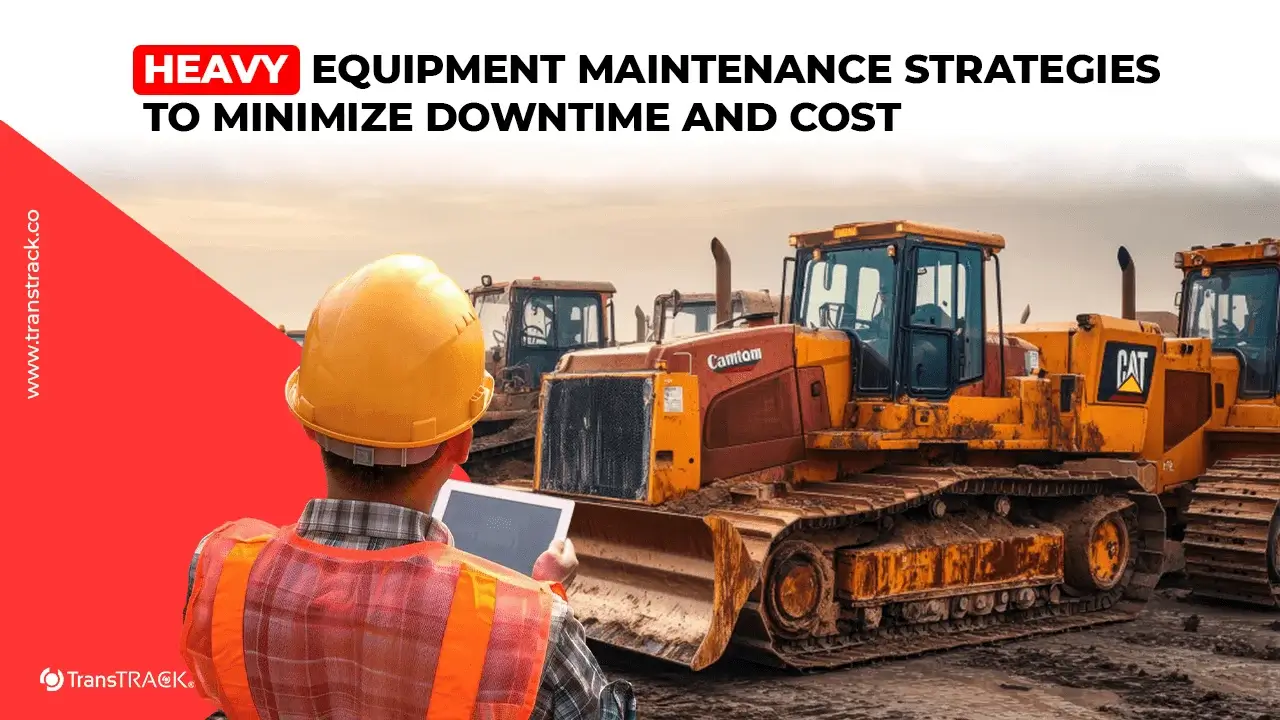
Heavy equipment maintenance is a crucial factor in ensuring the smooth operation of the construction and mining industries. Without proper maintenance, the risk of sudden breakdowns, extended downtime, and skyrocketing operating costs increases significantly. Therefore, understanding the types of maintenance, monitoring systems such as hour meters, and machine condition analysis is essential to ensure that heavy equipment remains in optimal condition and remains productive. Read the full explanation in this TransTRACK article!
What is the heavy equipment maintenance process?
The heavy equipment maintenance process is a series of scheduled inspections, maintenance tasks, repairs, and component replacements carried out to ensure that heavy equipment continues to operate safely and efficiently and has a longer service life.
By performing routine maintenance, companies can reduce downtime, minimize unexpected repair costs, increase heavy equipment productivity, and extend the service life of their operational assets.
What is the main purpose of heavy equipment maintenance?
The primary purpose of heavy equipment maintenance is to ensure that the equipment continues to operate optimally, safely, and efficiently throughout its service life. More specifically, these objectives include:
- Maintaining Performance and Productivity
- Ensure that heavy equipment is always in good working order (ready to use).
- Avoiding performance issues that could hinder work.
- Preventing Sudden Breakdowns
- Reduces the risk of sudden failures that can cause downtime.
- Identifying potential problems before they turn into major damage.
- Extending the Service Life of Equipment
- Reduce component wear through routine maintenance.
- Maintaining the engine to ensure it lasts longer.
- Optimizing Operating Costs
- Minimizing major repair costs resulting from severe damage.
- Reducing costs resulting from downtime.
- Ensuring Workplace Safety
- Reducing the risk of accidents caused by equipment malfunction.
- Ensure that all systems are operating in accordance with safety standards.
- Preserving Asset Value
- Well-maintained heavy equipment has a higher resale value.
In short, heavy equipment maintenance aims to ensure the reliability, efficiency, safety, and economic life of the equipment during daily operations.
Why Is Heavy Equipment Maintenance Key to the Profitability of Contracting and Mining Businesses?
Heavy equipment maintenance is not merely a technical activity, but a direct factor that determines profit or loss in contracting and mining operations. Heavy equipment is a key productive asset; when it stops working, revenue stops as well.
The Financial Impact of Unscheduled Downtime
Sudden breakdowns of heavy equipment can result in significant losses that are often not immediately apparent, such as:
- Loss of operational productivity
- The equipment is not working → the daily production target was not met.
- Rental or ownership costs continue to accrue
- Installment payments, lease payments, or rental fees must still be paid even if the equipment is not in operation.
- Emergency repairs cost more
- Emergency repairs usually require spare parts on short notice (at a premium cost) and overtime labor.
- Project delays (contract penalties)
- Delays in the work may result in late fees from the client.
- A domino effect on other units
- If a single piece of equipment stops working, the workflow of the entire fleet can be disrupted.
Occupational Health and Safety (OHS) Standardization
Heavy equipment maintenance is also a key foundation in the implementation of occupational safety and health (OSH) to prevent workplace accidents:
- Reducing the risk of operator accidents
- Well-maintained brakes, hydraulic systems, and steering prevent malfunctions during operation.
- Preventing fatal accidents caused by mechanical failure
- Examples: a broken excavator boom, failed dump truck brakes, or a hydraulic system leak.
- Ensuring compliance with safety regulations
- Avoiding penalties from regulators and safety audits.
- Improving awareness and maintenance discipline
- Operators and technicians are more aware of the condition of the equipment before it is used (pre-start check).
- Reducing the cost of workplace accidents
- Reducing medical costs, insurance costs, and workers’ compensation costs.
Maximizing Resale Value
Well-maintained heavy equipment has a higher resale value:
- The engine runs more smoothly and is better maintained
- High operating hours do not necessarily reduce value if maintenance is consistent.
- The maintenance history is well documented
- Buyers have more confidence in equipment with a complete service history.
- Component wear is better controlled
- The undercarriage, engine, and hydraulic system are more durable.
- It sells more easily on the secondhand market
- Well-maintained units have higher liquidity.
- A slower decline in value
- The total cost of ownership (TCO) becomes more efficient.
3 Main Methods of Modern Heavy Equipment Maintenance
In the construction and mining industries, heavy equipment maintenance is generally divided into three main, complementary methods designed to ensure performance, reliability, and operational efficiency.
Preventive Maintenance
Maintenance performed on a scheduled basis before any damage occurs to prevent failure.
- Performed based on operating hours (hour meter) or calendar (daily/monthly)
- Regular replacement of oil, filters, and wear-and-tear parts
- Inspection of the hydraulic, brake, electrical, and cooling systems
- Cleaning and lubrication of critical components
- Reducing the risk of sudden breakdowns
- Extending the service life of engine components
Predictive Maintenance
A maintenance method based on data and the actual condition of the equipment (condition-based) to predict failures before they occur.
- Using sensors and telematics (IoT)
- Monitoring parameters such as:
- Engine vibration
- Component temperature
- Oil and hydraulic pressure
- Fuel consumption
- Data analysis to detect anomalies
- Using trend data for failure prediction
- Minimizing unplanned downtime
- More efficient than maintenance based on a fixed schedule
Corrective / Breakdown Maintenance
Maintenance procedures performed after equipment damage or malfunction.
- Repairs are performed after the equipment breaks down (reactive maintenance)
- Includes the replacement of failed components
- It could involve emergency repairs on-site
- Often causes unscheduled downtime
- Repair costs tend to be higher
- It is typically used as a backup if preventive or predictive measures fail to prevent damage
Maintenance Interval Matrix for Heavy Equipment Based on Hour Meter Readings
This matrix is used to determine the schedule for preventive maintenance based on the heavy equipment’s operating hours (hour meter) to ensure optimal performance and minimize the risk of downtime.
Heavy Equipment Maintenance Interval Matrix
| Interval Hour Meter | Types of Treatment | Main Activities | Objective |
| Every day (Pre-Start / 0–10 HM) | Daily Check | Check oil, coolant, fuel, for visible leaks, and the condition of the tires and undercarriage | Ensuring that equipment is ready for daily operations |
| 50–100 HM | Minor Inspection | Lubricating components, checking the air filter, checking bolts and connections | Preventing premature wear of components |
| 250 HM | Minor Service | Change the engine oil (if necessary), check the hydraulic system and the pre-filter | Maintaining stable engine performance |
| 500 yards | Periodic Service | Complete engine oil and filter change; check the brake and electrical systems | Reducing the risk of a decline in performance |
| One thousand meters | Intermediate Service | Inspection of the transmission, hydraulic, fuel injection, and cooling systems | Early detection of potential major damage |
| 2,000 HM | Major Service | Minor overhaul of major components, complete filter replacement, system calibration | Extending the lifespan of equipment |
| 4,000–6,000 ft | Heavy Overhaul | Engine/transmission/hydraulic system overhaul, replacement of critical components | Performance restoration to near-new condition |
Conclusion
Heavy equipment maintenance is the cornerstone of ensuring operational continuity in the construction and mining industries. Through a structured approach—such as preventive maintenance, predictive maintenance, and corrective maintenance—companies can ensure that their equipment is always in optimal condition, safe, and ready for use.
Implementing maintenance based on hour meter readings and monitoring of actual conditions also helps companies reduce the risk of unplanned downtime, lower emergency repair costs, and extend the economic life of their assets. Ultimately, a disciplined maintenance program not only maintains equipment performance but also contributes directly to profitability and business sustainability.
Optimize your heavy equipment maintenance management with a more modern, integrated, and data-driven system.
Use the Vehicle Maintenance System from TransTRACK to:
- Automatic monitoring of maintenance schedules based on hour meter readings
- Detecting potential damage early through real-time data
- Reducing unplanned downtime in the heavy equipment fleet
- Manage service and asset history on a single integrated platform
- Improving operational efficiency and controlling maintenance costs
It’s time to shift from reactive maintenance to smart maintenance management, which is more precise, efficient, and profitable.

FAQ
What are the different types of heavy equipment maintenance?
Heavy equipment maintenance is generally divided into three types: preventive maintenance (regular maintenance to prevent damage), predictive maintenance (data-driven, real-time monitoring of equipment condition), and corrective maintenance (repairs performed after damage or malfunction occurs).
What is an hour meter (HM) on heavy equipment?
An hour meter (HM) is a measuring device that records the total operating hours of heavy equipment. HM data is used as the primary reference for determining periodic maintenance schedules, such as 250 HM, 500 HM, and 2,000 HM service intervals.
Why is oil analysis so important in heavy equipment maintenance?
Oil analysis is important because it can detect contamination—such as water, dust, or fuel—as well as metal particles caused by component wear at an early stage. This helps prevent potential serious damage to the engine or hydraulic system before a major breakdown occurs.
Recent Post





Topic :