Bahasa Indonesia
What Causes Truck Blind Spots? Learn About These Areas and How to Avoid Them
Posted on July 28, 2026 by Nur Wachda Mihmidati
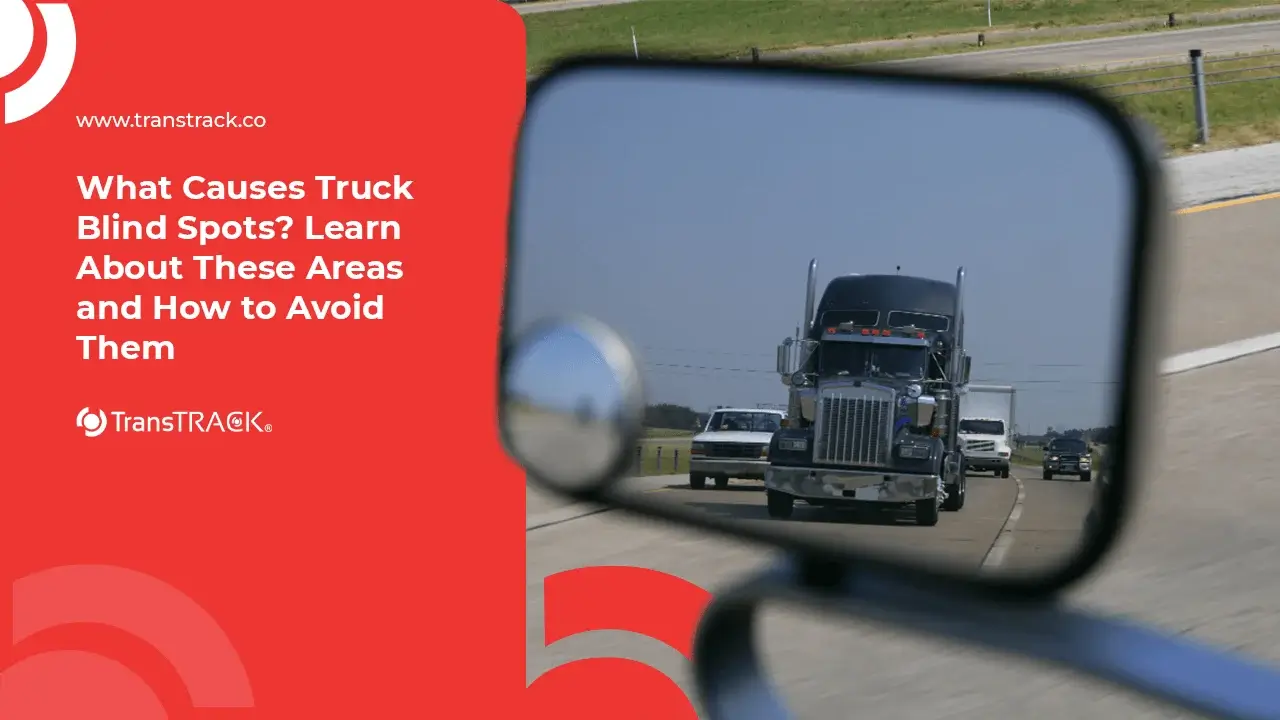
Blind spots are one of the biggest challenges in commercial vehicle operations. Blind spots in front of, to the sides of, or behind a truck can prevent drivers from noticing other vehicles around them. By understanding the causes, locations, and technological solutions for addressing blind spots, companies can improve fleet safety while reducing the risk of accidents. Read the full explanation in the following TransTRACK article!
What is a blind spot on a truck?
A truck’s blind spot is an area around the vehicle that the driver cannot see through the windshield, side mirrors, or side windows. Vehicles, motorcycles, cyclists, or pedestrians in this area are at risk of going unnoticed, thereby increasing the potential for accidents, especially when the truck is turning, changing lanes, or backing up.
Why Are Truck Blind Spots a Fatal Threat on the Highway?
Truck blind spots pose a serious threat because there are areas around the vehicle that the driver cannot see, even when using side mirrors. When other vehicles—especially motorcycles or pedestrians—are in these areas, the risk of an accident increases when the truck changes lanes, turns, or backs up.
Due to their size and weight, accidents caused by blind spots involving trucks are often more fatal than those involving ordinary vehicles. Therefore, the use of technologies such as Blind Spot Detection (BSD), cameras, and sensors is a crucial solution to help drivers detect objects in their blind spots and improve road safety.
What Can Cause a Blind Spot?
Blind spots on trucks can be caused by several factors that prevent drivers from seeing the entire area around the vehicle.
- The vehicle is large, so parts of the area in front, to the sides, and behind are obstructed from the driver’s view.
- The high position of the cab makes it difficult to see the area around the vehicle, especially in front and on the left side.
- The limitations of rearview mirrors, since they cannot cover all angles around the truck.
- A vehicle’s cargo or body, such as a trailer, container, or luggage, that obstructs the driver’s view.
- Other vehicles that are too close, especially motorcycles or small cars traveling alongside the truck.
- Road and weather conditions, such as curves, uphill slopes, rain, or fog that reduce visibility.
- An improper driving position or suboptimal rearview mirror adjustment.
Therefore, blind spots can result from both the vehicle’s design and driving conditions on the road.
How Can You Address Blind Spots in Trucks?
Blind spots on trucks cannot be completely eliminated, but the risks can be reduced through a combination of technology and safe driving practices. Here are some ways to do that:
1. Adjust the Rearview Mirror to the Correct Position
Make sure all the side mirrors are adjusted to maximize your field of view and minimize blind spots.
2. Use the Camera and Blind Spot Sensor
A 360° camera, radar sensor, or Blind Spot Detection (BSD) system can help detect vehicles or objects that are not visible to the driver.
3. Take Advantage of ADAS Technology
The Advanced Driver Assistance Systems (ADAS) feature can issue a warning when there is a potential collision due to a vehicle being in the blind spot.
4. Check Before Maneuvering
Always check your rearview mirror and make sure the area around you is safe before changing lanes, turning, or backing up.
5. Raise Driver Awareness
Defensive driving training and an understanding of blind spots help drivers stay more alert on every trip.
By implementing these measures, both companies and drivers can reduce the risk of accidents and improve fleet operational safety.
Mapping the 4 Main Blind Spot Areas of Trucks
A truck’s blind spots are divided into four main areas (No-Zones) that are difficult for the driver to see and can potentially cause accidents.
1. Front Blind Spot (Front No-Zone)
The area directly in front of the cab is difficult to see, especially if a vehicle or pedestrian is too close. Therefore, drivers must make sure the area in front is completely clear before starting to drive.
2. Rear Blind Spot (Rear No-Zone)
The area behind the truck cannot be seen directly, posing a risk when the vehicle is backing up. Using a backup camera or parking sensors can help reduce this risk.
3. Blind Spot Sisi Kiri (Left No-Zone)
The largest blind spot on a truck. Vehicles traveling alongside the truck on the left are often not visible when the truck is turning or changing lanes. Other drivers should avoid driving too close to the left side of the truck for extended periods.
4. Blind Spot Sisi Kanan (Right No-Zone)
Although it is smaller, the right side still has blind spots that pose a risk when a truck changes lanes. Drivers need to check their mirrors and make sure the lane is clear before maneuvering.
4 Modern Technology Solutions to Address Truck Blind Spots
The use of safety technology helps drivers detect blind spots and reduce the risk of accidents on the road.
1. Blind Spot Detection (BSD) & Radar Sensor
The BSD system uses radar to detect vehicles in blind spots and alerts the driver before changing lanes. This technology is highly effective when driving on highways or in heavy traffic.
2. 360-Degree Camera (Around View Monitor)
Cameras mounted on several sides of the vehicle provide a comprehensive view of the area around the truck, making it easier to monitor blind spots. Drivers can see the area around the vehicle in real time while maneuvering.
3. ADAS & Forward Collision Warning (FCW)
ADAS technology with FCW provides an early warning if a potential collision with a vehicle or object ahead is detected. This system helps drivers react more quickly to avoid accidents.
4. Additional Convex Side Mirrors (Fishtail/Wide-Angle Mirrors)
Convex rearview mirrors widen the driver’s field of view, allowing for better monitoring of areas that were previously difficult to see. This solution is a simple yet effective way to improve visibility while driving.
Conclusion
Truck blind spots are one of the main factors that increase the risk of road accidents, especially when vehicles are changing lanes, turning, or backing up. Understanding blind spot areas, adopting safe driving habits, and utilizing technologies such as cameras, sensors, and ADAS are important steps toward improving fleet operational safety.
For optimal protection, the Vehicle Surveillance System from TransTRACK offers an AI-based vehicle monitoring solution featuring smart cameras, real-time monitoring, and safety features that help reduce risks associated with blind spots and improve driver visibility. Enhance your fleet’s safety with TransTRACK and achieve safer, more efficient, and better-controlled transportation operations.
FAQ
Where is the largest blind spot on a container truck?
The largest blind spots on container trucks are generally on the left side of the vehicle and the rear of the trailer. These areas are difficult for drivers to monitor due to the length and size of the containers, so other vehicles that are too close may go unnoticed.
Why do trucks have such large blind spots?
Trucks have large blind spots because they are larger than ordinary vehicles, combined with the high position of the cab and the limited range of the side mirrors. As a result, there are areas in front, to the sides, and behind the truck that the driver cannot see directly.
How can other drivers tell if they are in a truck’s blind spot?
The easiest way is to make sure the driver’s face is visible in the truck’s rearview mirror. If you can’t see the driver, you’re most likely in the blind spot. It’s best to avoid driving alongside or directly behind a truck for too long and to safely pass the vehicle as soon as possible.
Recent Post





Topic :