Bahasa Indonesia

Ambulance Optimization: Improving Emergency Service Speed and Safety
Posted on September 29, 2026 by Nur Wachda Mihmidati
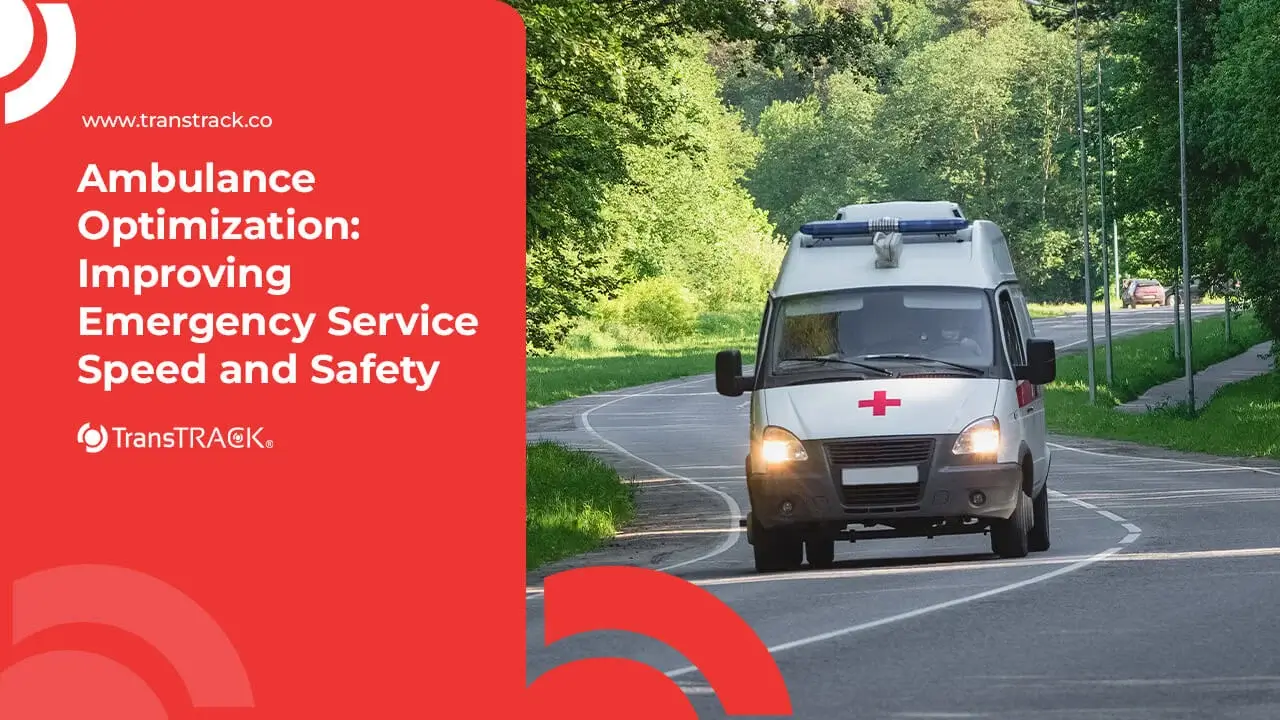
In emergency medical services, every second can affect a patient’s condition. Ambulances must not only be available but also arrive at the scene quickly, carry ready-to-use equipment, and remain connected to the control center and destination healthcare facility.
For this reason, ambulance optimization is an important step for hospitals, local governments, clinics, healthcare providers, and companies operating medical vehicles. With technologies such as GPS tracking, telematics, and fleet management systems, ambulance operations can become faster, safer, more efficient, and more measurable. Learn more with TransTRACK.
What Is Ambulance Optimization?
Ambulance optimization is the process of improving ambulance operational effectiveness to deliver emergency responses that are fast, safe, and targeted. This process includes route planning, vehicle location monitoring, driver readiness, vehicle condition, availability of medical equipment, and coordination with hospitals.
In practice, ambulance optimization is not solely focused on vehicle speed. Its primary goal is to ensure that the right ambulance is dispatched to the right location, at the right time, with resources that match the patient’s needs.
For example, a system can help operators select the ambulance closest to an incident, monitor traffic conditions, and direct drivers through the fastest route to the patient and the referral hospital.
Key Components of Ambulance Optimization
Ambulance optimization requires a combination of skilled personnel, reliable vehicles, operational procedures, and supporting technologies. Key components include:
- GPS tracking systems to identify ambulance locations in real time.
- A dispatch system or control center to select and deploy the most suitable ambulance unit.
- Route optimization based on traffic conditions, distance, and road accessibility.
- Vehicle condition monitoring, including fuel, engine, battery, tires, and maintenance schedules.
- Driver management, including compliance with SOPs, driving behavior, and working hours.
- Medical equipment readiness, including oxygen, defibrillators, stretchers, medication, and communication tools.
- Data integration with hospitals, call centers, or emergency service systems.
When these components are connected through one system, managers can make faster decisions and minimize the risk of service delays.
Why Is Ambulance Optimization Important?
Here are several key reasons why ambulance management needs to be optimized:
- Speeds up the selection and deployment of the nearest ambulance.
- Helps identify more efficient routes to avoid traffic congestion.
- Monitors vehicle readiness and prevents disruptions during operations.
- Optimizes the use of a limited ambulance fleet.
- Accelerates coordination between operators, drivers, medical personnel, and hospitals.
- Supports decision-making through real-time ambulance location and status data.
- Reduces the risk of delayed treatment that may affect patient safety.
Direct Impact on Patient Safety
Response time is a critical factor in emergency medical services. Patients experiencing conditions such as heart attacks, strokes, traffic accidents, respiratory distress, or severe trauma need assistance as quickly as possible.
Through ambulance optimization, operators can dispatch the nearest available unit and determine a more efficient route. Medical teams can also receive preliminary information about the location, type of incident, and patient condition before arriving at the scene.
As a result, initial treatment can begin sooner, coordination with the hospital can improve, and the patient’s chance of receiving timely assistance may increase.
Challenges of Ambulance Services Without Optimization
Without an optimization system, ambulance management often depends on manual communication and disconnected records. This situation can create several challenges, including:
- Operators may struggle to identify the ambulance closest to the incident location.
- Drivers may choose routes based on assumptions rather than current traffic conditions.
- Vehicle maintenance schedules may not be monitored consistently.
- Fuel usage and driving behavior information may lack transparency.
- Trip history and response times may be difficult to evaluate.
- Coordination between ambulances, call centers, and hospitals may become slower.
Without integrated data, management may also find it difficult to identify the causes of delays or determine areas requiring improvement.
Benefits of Ambulance Optimization for Emergency Services
Implementing ambulance optimization can provide direct benefits for patients, medical personnel, drivers, fleet managers, and healthcare institutions.
Improved Response Time
The following are key benefits for improving response times:
- Real-time GPS helps operators identify the location of the nearest ambulance.
- Dispatch systems speed up unit deployment based on patient needs.
- Route optimization helps ambulances avoid traffic congestion and road obstacles.
- Arrival times can become faster and more measurable.
Operational and Cost Efficiency
The following are benefits for improving operational efficiency:
- Reduces empty trips, vehicle waiting time, and excessive fuel consumption.
- Trip data helps create more effective fleet operating schedules.
- Vehicle monitoring makes it easier to detect maintenance needs earlier.
- Unexpected repair costs and the risk of vehicles being unavailable can be reduced.
Improved Safety and Compliance
The following are benefits for improving safety and compliance:
- Fleet management monitors driver speed, braking, and acceleration.
- Driving data can be used as material for ambulance driver training.
- Managers can improve compliance with emergency service SOPs.
- Vehicle inspections and maintenance can be completed according to schedule.
Data and Transparency for Evaluation
The following are benefits for service evaluation:
- The system records call times, departure times, trips, and hospital arrival times.
- Management can measure response time and fleet utilization effectiveness.
- Data helps identify areas, operating hours, or vehicles with operational challenges.
- Service improvement decisions can be made based on transparent data.
Ambulance Optimization with Fleet Management
Fleet management is a system for centrally managing vehicles through digital technology. In the ambulance context, this system helps managers monitor fleet location, vehicle status, travel patterns, driver safety, and maintenance requirements in real time.
Implementing fleet management makes ambulance services more responsive because all essential information can be accessed through a single dashboard. Operators no longer need to contact each driver manually just to determine the location or status of a unit.
Fleet Management System Integration for Ambulances
Fleet management system can be integrated with emergency call centers, dispatch systems, navigation applications, hospitals, and vehicle telematics devices. This integration creates a more coordinated emergency response workflow.
For example, when an accident report is received, operators can view available ambulances near the incident location. The system can then help identify the closest unit, send assignment details to the driver, and recommend a faster route.
On the other hand, hospitals can receive estimated patient arrival information. Medical teams at the destination facility can prepare rooms, equipment, or healthcare personnel based on the patient’s reported condition.
Specialized Features for Emergency Services
Several fleet management features relevant to ambulance optimization include:
- Real-time GPS tracking to monitor ambulance location and status.
- Geofencing to track vehicle movement within specific operational areas.
- Route optimization to select faster and more efficient routes.
- Dispatch management to assign ambulances based on proximity and availability.
- Vehicle health monitoring to track engine condition and maintenance needs.
- Driver behavior monitoring to evaluate driving patterns.
- Trip reports to measure response time, mileage, and vehicle utilization.
- Automated notifications for maintenance, operational violations, or potential vehicle issues.
The chosen system should be tailored to fleet size, coverage area, integration requirements, service procedures, and the institution’s data security standards.
Conclusion
Ambulance optimization is a strategic effort to improve the quality of emergency medical services. Its purpose is not simply to make journeys faster, but to ensure that the fleet, drivers, medical personnel, routes, and operational information work in an integrated manner.
By using fleet management, operators can improve response times, maintain travel safety, control operational costs, and obtain more transparent data for service evaluation. Ultimately, ambulance optimization supports more reliable emergency services that prioritize patient safety.
Want to improve the management of your ambulance fleet and medical vehicles? Click here TransTRACK Medical & Chemical to learn more about TransTRACK’s fleet management solutions for the medical industry.
What Are Ambulance Service Standards?
Ambulance service standards generally include vehicle readiness, complete medical equipment, staff competency, communication procedures, travel safety, vehicle cleanliness, service documentation, and coordination with healthcare facilities. Specific standards may vary depending on government regulations, ambulance type, operational area, and the healthcare institution’s requirements.
What Are the Key Aspects of Ambulance Optimization?
The key aspects of ambulance optimization include response time, route selection, fleet availability, vehicle readiness, driver safety, medical equipment availability, dispatch coordination, and data-based evaluation. Fleet management helps bring these elements together so that ambulance operations become more effective and measurable.
How Does Fleet Management Support Ambulance Optimization?
Fleet management helps operators monitor ambulance locations in real time, select the nearest unit, optimize routes, and track vehicle condition and driver behavior. With integrated data, ambulance services can respond to emergency calls faster, maintain fleet readiness, and improve operational safety.
Recent Post





Topic :