Bahasa Indonesia
How Route Planning Helps Reduce Fleet Operating Costs
Posted on July 17, 2026 by Nur Wachda Mihmidati
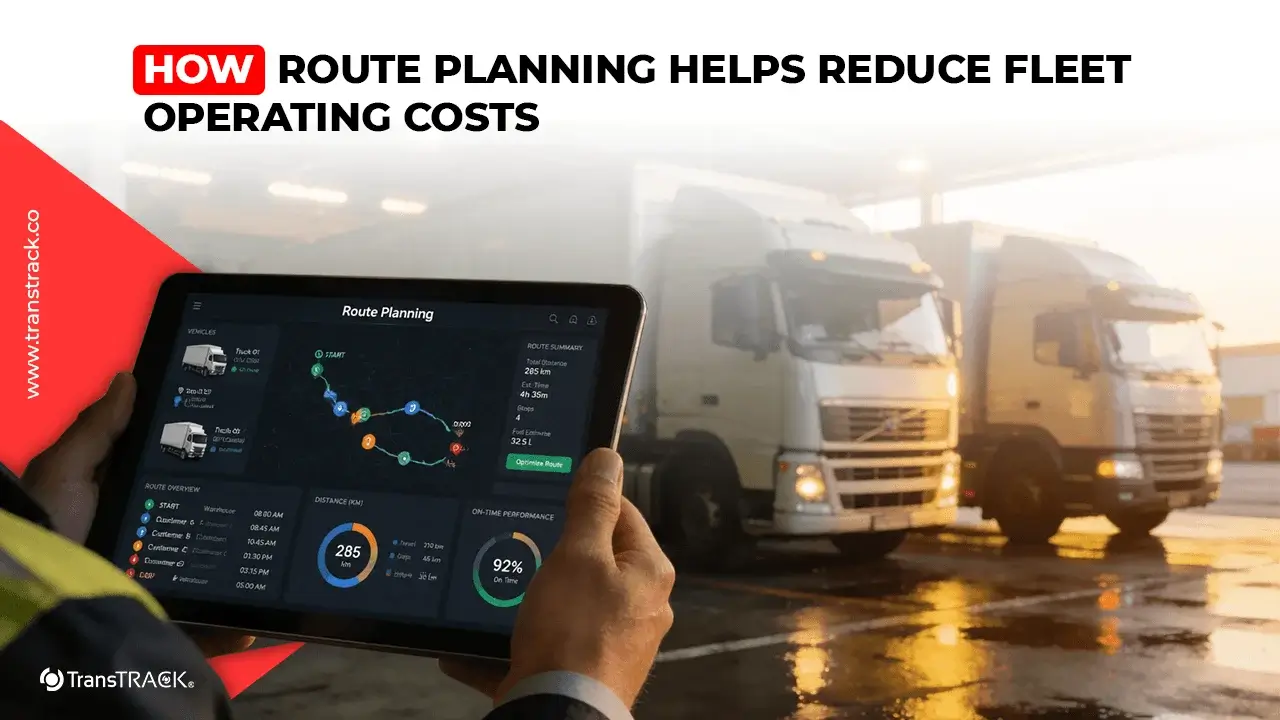
Route planning is the process of planning the most efficient travel routes for vehicles or fleets so that deliveries can be made with optimal time, distance, and cost. This process takes into account factors such as destination locations, traffic conditions, vehicle capacity, and delivery schedules. Read the full explanation in the following article TransTRACK !
What Is Route Planning?
Route planning (route planning) is the process of determining the most efficient travel route for a vehicle or fleet to reach its destination with optimal time, cost, and resource utilization. In logistics and transportation operations, route planning involves not only selecting the shortest route but also considering various factors such as traffic conditions, vehicle capacity, delivery schedules, customer locations, and road restrictions.
With effective route planning, companies can ensure that each vehicle takes the most efficient route, resulting in faster deliveries, reduced fuel consumption, and increased fleet productivity.
What Is the Main Purpose of Using Route Planning?
The primary goal of using route planning is to optimize vehicle routes so that the distribution or delivery process becomes more efficient, faster, and cost-effective. By determining the best routes based on various operational factors, companies can improve fleet productivity while providing better service to customers.
Some of the main objectives of route planning include:
- Reducing operating costs Minimizing mileage, fuel consumption, toll fees, and driver overtime costs.
- Improving fleet efficiency Ensuring that each vehicle is used optimally so that the fleet’s capacity can be fully utilized.
- Speed up delivery times Choose a faster route by taking traffic conditions into account, so that goods arrive on time.
- Improving On-Time Delivery Helping companies meet their delivery schedules in accordance with their commitments to customers.
- Optimizing driver productivity Reducing unnecessary driving time and helping drivers complete more deliveries in a single trip.
- Improving Customer Satisfaction On-time delivery and accurate estimated times of arrival (ETAs) can boost customer trust and enhance the customer experience.
- Reducing the environmental impact More efficient travel results in lower fuel consumption and helps reduce carbon emissions.
Why Is Route Planning the “Key to Saving” Your Logistics Profit Margin?
In the logistics business, profitability is determined not only by the volume of shipments, but also by how efficiently operations are run. One of the most effective ways to maintain profit margins is through route planning.
Route planning helps companies determine the most optimal delivery routes by taking into account distance, traffic conditions, delivery schedules, and vehicle capacity. As a result, the fleet can operate more efficiently at a lower cost.
Some of the main benefits of route planning include:
- Reduce operating costs by minimizing fuel consumption, toll fees, and travel time.
- Increase fleet productivity so that more deliveries can be completed in a single day.
- Ensuring on-time delivery to improve customer satisfaction.
- Reduces vehicle maintenance costs because vehicle mileage and usage become more efficient.
- Supporting sustainable operations by reducing fuel consumption and carbon emissions.
By implementing technology-driven route planning, such as the Fleet Management System (FMS), companies can optimize every fleet trip, reduce operating costs, and sustainably improve profitability.
Differences Between Traditional Route Planning and Dynamic Route Optimization
Although they are often considered the same, route planning and route optimization serve different purposes. Route planning focuses on determining a route before the trip begins, while route optimization automatically adjusts the route based on actual conditions on the ground.
| Aspek | Route Planning | Route Optimization |
| Objective | Determine the best route before the trip begins. | Continuously optimize routes based on real-time conditions. |
| Basis for Calculation | Distance, destination, and delivery schedule. | Traffic, accidents, weather, order changes, and vehicle conditions. |
| Route Adjustments | This is generally done manually whenever a change occurs. | Automatically updates the route when there are obstacles along the way. |
| Efficiency | Reducing distance and travel time. | Maximize efficiency by responding to changes in real time. |
| Technology | A digital map or a simple navigation system. | Powered by AI, GPS tracking, and a Fleet Management System (FMS). |
Which Is Better?
Route planning remains essential as the foundation for creating delivery schedules. However, for operations with large fleets and daily deliveries, route optimization offers greater efficiency because it can automatically adjust routes based on real-time conditions.
By combining route planning and route optimization within a Fleet Management System (FMS), companies can reduce operating costs, improve delivery timeliness, and maximize fleet productivity.
4 Strategic Steps for Implementing Automated Route Planning
The implementation of automatic route planning depends not only on technology, but also on data quality and sound operational processes. Here are four strategic steps that can be taken:
1. Consolidation of Address and Order Data (Data Cleansing)
Ensure that all shipping address data, destination points, and order details are accurate, complete, and free of duplicates. Clean data is the key foundation for the system to generate optimal routes and reduce the risk of delivery errors.
2. Define Vehicle and Driver Parameters
Define operational parameters such as vehicle capacity, cargo type, driver working hours, service area, and road access restrictions. These parameters help the system plan routes that align with the fleet’s conditions and operational needs.
3. Digital Route Execution and Distribution
Once the route has been created, distribute it digitally to each driver via a mobile app or navigation device. This ensures that all drivers receive the same route information quickly and accurately.
4. Monitor Route Deviations via the Control Tower
Monitor fleet movements in real time via the dashboard or control tower. In the event of route deviations, traffic congestion, or other issues, the operations team can immediately make adjustments to maintain efficiency and on-time delivery.
Conclusion
Route planning (route planning) is a key strategy for improving logistics operational efficiency. By determining the optimal route, companies can reduce fuel costs, minimize travel time, increase fleet productivity, and ensure on-time deliveries. When combined with automated technology and real-time monitoring, route planning can have a significant impact on profitability and service quality.
Optimize your fleet management with the Fleet Management System (FMS) TransTRACK. With features such as GPS Tracking, Route Planning & Optimization, Live Monitoring, Geofencing, and fleet performance analytics, TransTRACK helps companies plan more efficient routes, monitor trips in real time, and improve operational productivity. Contact the TransTRACK team today to schedule a demo and discover the best solution for your fleet operations.
FAQ
What is the difference between route planning and route optimization?
Route planning determines the best route before the trip begins, while route optimization automatically adjusts the route based on real-time conditions, such as traffic congestion or changes in delivery schedules.
How does a route-planning algorithm work?
The algorithm analyzes data such as destination, vehicle capacity, delivery schedules, and traffic conditions to generate the most efficient route in terms of time, distance, and cost.
What are the main benefits of using delivery routing software (routing software)?
Routing software helps automate route planning, reduce operating costs, improve delivery timeliness, optimize fleet utilization, and monitor vehicles in real time.
Recent Post




Topic :