Bahasa Indonesia

What Is Last Mile Delivery? A Complete Guide for the FMCG Industry
Posted on September 11, 2026 by Nur Wachda Mihmidati
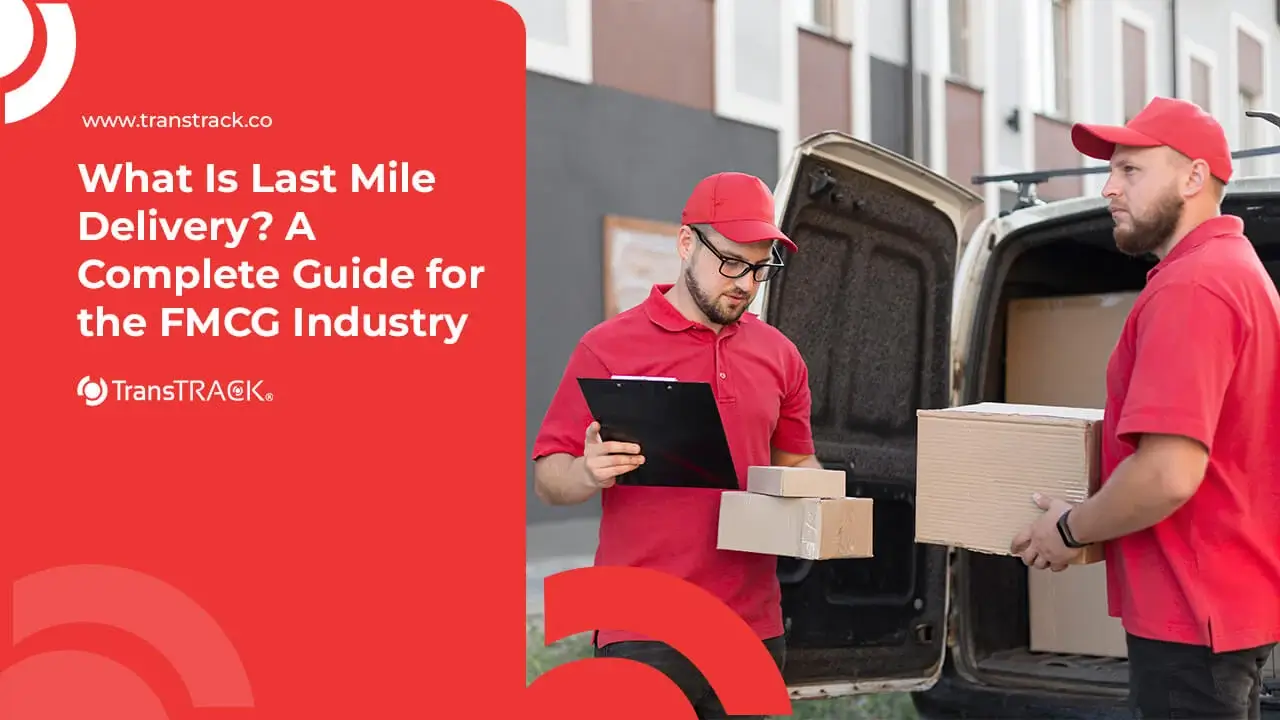
In the FMCG industry, speed and delivery accuracy are crucial to maintaining product availability at outlets and ensuring customer satisfaction. Last mile delivery becomes the most critical stage because it determines whether goods arrive on time, in good condition, and are accurately confirmed. This article reviews the definition of last mile delivery, its differences from first mile, optimization strategies, and technologies that can improve FMCG distribution efficiency. Read more with TransTRACK!
What Is Last Mile Delivery?
Last mile delivery is the final stage in the supply chain, involving the shipment of goods from a warehouse or local distribution hub to the final destination, such as a store, outlet, or customer. This stage is often the most difficult and expensive part because it involves many delivery points, complex routes, and time pressure.
Understanding Last Mile Delivery in the Supply Chain
In the context of the supply chain, last mile delivery is the final step before products reach consumers or sales points. This stage significantly impacts logistics costs, service levels, and customer experience.
What Is FMCG Distribution?
FMCG (Fast-Moving Consumer Goods) distribution is the process of delivering daily consumer products such as food, beverages, and household necessities from manufacturers to consumers through various channels, including wholesalers, retailers, and small outlets. The fast-moving nature of FMCG demands efficient, timely distribution capable of reaching multiple points simultaneously.
The Role of Last Mile Delivery in the FMCG Industry
Last mile delivery plays a vital role in ensuring FMCG products are available at outlets on time, preventing stockouts, and maintaining product freshness. Last mile efficiency also directly impacts distribution costs, fleet productivity, and customer satisfaction.
Differences Between First Mile Delivery and Last Mile Delivery
Although both are part of the supply chain, first mile and last mile have different characteristics.
What Is First Mile Delivery?
First mile delivery is the initial shipping stage, involving the movement of goods from manufacturers or suppliers to the first warehouse or distribution hub. The focus is on consolidating goods in large volumes with relatively more planned routes.
What Is Last Mile Delivery?
Last mile delivery is the final shipping stage from a local distribution hub to the final destination such as a store or customer. This stage involves many points, complex routes, and high time pressure, making it often the most difficult and expensive part.
Last Mile Delivery Strategies for the FMCG Industry
Here are practical strategies to improve last mile delivery efficiency in the FMCG industry:
Determining Delivery Priorities Based on Location and Demand
Here’s how to determine delivery priorities based on location and demand:
- Group outlets by geographic zone and demand level.
- Prioritize deliveries to areas with high demand or stockout risk.
- Use historical sales data to predict needs per outlet.
Implementing Flexible Delivery Scheduling
Steps to implement flexible delivery scheduling include:
- Create delivery schedules that can be adjusted to traffic conditions and outlet availability.
- Provide broader delivery time options to reduce delays.
- Coordinate with outlets to ensure readiness for goods receipt.
Adjusting Fleet Capacity to Order Volume
Here’s how to adjust fleet capacity to order volume:
- Use appropriately sized fleets to avoid underutilization or overload.
- Combine large fleets for main routes and small fleets for dense areas.
- Evaluate fleet needs periodically based on demand trends.
Improving Coordination Between Warehouse, Distributor, Driver, and Outlet
Here’s what needs to be done to improve coordination:
- Ensure smooth communication between all relevant parties.
- Use integrated systems to share delivery status information.
- Conduct regular briefings to align targets and field constraints.
Reducing Waiting Time at Delivery Points
Here’s what can be done to reduce waiting time at delivery points:
- Optimize the unloading and goods checking process at outlets.
- Use digital queuing systems to manage fleet arrivals.
- Provide incentives for outlets ready to receive deliveries on time.
Ensuring Digital and Accurate Proof of Delivery
Here’s what needs to be ensured:
- Use e-POD (Electronic Proof of Delivery) to confirm goods receipt.
- Include photos, digital signatures, and timestamps for validation.
- Integrate e-POD with the main system for real-time status updates.
Managing Repeated Deliveries to Multiple Outlets Efficiently
Steps to manage repeated deliveries efficiently include:
- Plan efficient multi-stop routes using optimization algorithms.
- Group outlets with similar delivery frequencies into one route.
- Use historical data to predict repeated delivery patterns.
Technologies to Improve Last Mile Delivery Efficiency
Technology plays a key role in optimizing last mile delivery. Here are some solutions that can be implemented:
Transportation Management System for Delivery Planning
Here are several ways TMS helps optimize delivery planning:
- TMS helps plan, schedule, and monitor deliveries centrally.
- Features like load planning and route scheduling improve fleet efficiency.
- Integration with other systems ensures consistent and real-time data.
Route Optimization for Determining Effective Distribution Routes
Route optimization can be done by considering the following factors:
- Route optimization algorithms consider distance, time, and traffic conditions.
- Reduces mileage, fuel consumption, and delivery time.
- Can be adjusted to constraints such as outlet opening hours and fleet capacity.
GPS Tracking for Real-Time Fleet Monitoring
Fleet monitoring can help companies in several ways:
- Monitor fleet positions directly for quick response to issues.
- Improve driver safety and accountability.
- GPS data can be used for performance evaluation and route planning.
Delivery Tracking to Improve Delivery Status Visibility
To improve visibility, companies can do the following:
- Provide delivery status updates to warehouses, distributors, and outlets.
- Reduce uncertainty and improve coordination.
- Can be integrated with automatic notifications via SMS or apps.
Electronic Proof of Delivery to Accelerate Receipt Confirmation
e-POD usage can simplify the receipt confirmation process through the following:
- e-POD replaces paper documents with digital confirmation.
- Accelerates validation processes and reduces administrative errors.
- e-POD data can be directly synchronized with the main system.
Analytics Dashboard for Evaluating Costs, Timeliness, and Productivity
Analytics dashboards help evaluate performance through the following features:
- Dashboards provide KPI visualization such as on-time delivery, cost per drop, and fleet productivity.
- Helps identify bottlenecks and areas for improvement.
- Analytics data supports fact-based decision making.
Conclusion
Last mile delivery plays an important role in maintaining product availability, controlling logistics costs, and improving customer satisfaction in the FMCG industry. By leveraging technologies such as TMS, route optimization, GPS tracking, delivery tracking, e-POD, and analytics dashboards, companies can improve distribution visibility and efficiency.
TransTRACK provides integrated solutions to help FMCG companies optimize delivery planning, monitor fleets, and evaluate distribution performance more accurately. Visit TransTRACK to learn about Fleet Management System solutions and logistics technologies that can support your business’s last mile delivery efficiency.
FAQ
How to Optimize FMCG Delivery Routes?
Here are several ways to optimize:
– Use route optimization algorithms that consider distance, time, and traffic conditions.
– Group outlets by zone and delivery frequency.
– Evaluate and adjust routes periodically based on performance data.
What Technologies Help Improve Last Mile Delivery Efficiency?
The following features can help:
– Transportation Management System (TMS) for delivery planning.
– Route optimization to determine the most efficient routes.
– GPS tracking and delivery tracking for real-time monitoring.
– Electronic Proof of Delivery (e-POD) for digital confirmation.
– Analytics dashboard for performance and cost evaluation.
What is Last Mile BPO?
Last mile BPO (Business Process Outsourcing) is the practice of outsourcing last mile delivery operations to a third party that specializes in handling these business processes. The goal is to improve efficiency, reduce costs, and leverage the expertise of professional logistics service providers.
Recent Post



Topic :