Bahasa Indonesia

Getting to Know the Car Rally Monitoring System with TransTRACK
Posted on September 1, 2026 by Nur Wachda Mihmidati
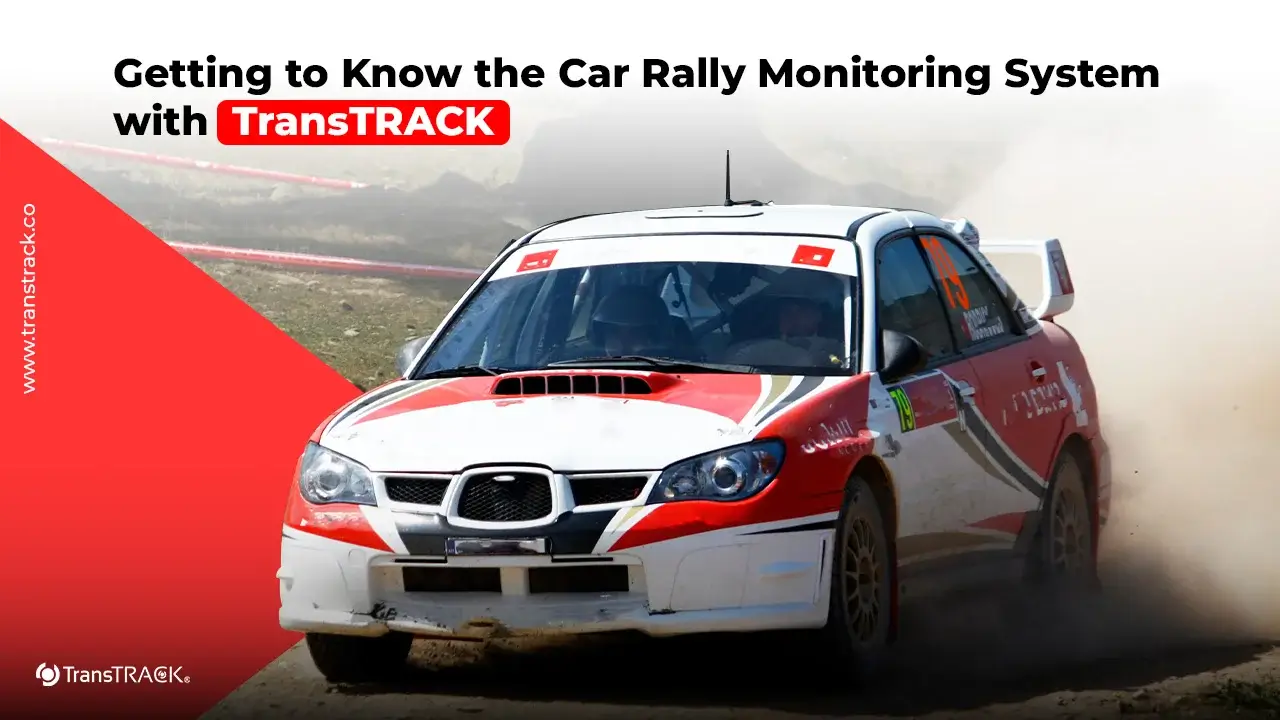
The Car Rally Monitoring System serves as a solution to help organizers monitor vehicle position, speed, and condition in real time. This system not only supports race management but also improves coordination among all parties involved. Therefore, understanding how the Car Rally Monitoring System works, its functions, and its benefits is a fundamental step toward creating safer, more efficient, and professional rally events. Read the full explanation with TransTRACK!
What Is a Car Rally Monitoring System?
A Car Rally Monitoring System is a digital monitoring system used to track the position, speed, direction, and condition of rally cars in real time. This system combines GPS technology, vehicle sensors, communication networks, and monitoring software to make it easier for organizers to supervise all participants throughout the race.
The rally car monitoring system helps race control track vehicles, detect incidents, and respond to situations quickly. This technology also plays a role in improving safety, operational control, and the experience of both participants and spectators.
Who Uses This System?
This system can be used by various parties involved in organizing rally events, such as:
- Rally organizers and promoters.
- Race directors and race control.
- Safety teams and medical personnel.
- Marshals and field officers.
- Engineering teams and recovery vehicles.
- Participant teams or technical crews.
- Sponsors and media, according to granted access rights.
Key Functions of the Car Rally Monitoring System
The Car Rally Monitoring System has several core functions that support race operations:
- Real-time vehicle position tracking to know the location of each rally car.
- Monitoring vehicle speed and direction to help oversee compliance with race regulations.
- Geofencing rally areas to detect vehicles leaving the route or entering specific zones.
- Detection of abnormally stopped vehicles, which may indicate accidents or mechanical issues.
- Monitoring travel time and checkpoints to support race result recording.
- Providing incident notifications to race control and safety teams.
- Generating post-event reports based on each vehicle’s travel data.
How Does the Car Rally Monitoring System Work?
The Car Rally Monitoring System works by collecting data from devices that capture information on location, speed, acceleration, direction, and specific conditions, then transmitting it via communication networks to the monitoring server. The received data is processed and displayed on a digital dashboard.
In general, the workflow includes:
- Monitoring devices collect data from rally cars.
- Data is transmitted via cellular networks, radio, satellite, or a combination of networks.
- The server processes and stores vehicle data.
- The dashboard displays information in real time.
- The system sends notifications if violations or incidents occur.
- Race control coordinates responses based on this information.
Main System Components
Key components of a rally car monitoring system include:
- GPS or GNSS tracker to determine vehicle position.
- Vehicle monitoring unit as the data collection and transmission device.
- Vehicle sensors to read speed, acceleration, impacts, or changes in vehicle conditions.
- Communication devices such as cellular networks, radio, or satellite.
- Server and cloud platform to process and store data.
- Race control dashboard to display vehicle positions and statuses.
- Mobile applications for field officers or safety teams.
The combination of these components enables organizers to gain a comprehensive overview of event conditions.
Safety and Security Features
Safety is one of the main reasons this system is used in rally events. Commonly available features include:
- Emergency or SOS button.
- Impact detection or sudden speed changes.
- Notifications when a vehicle stops for a certain period.
- Alerts for vehicles leaving the route.
- Speed monitoring in specific zones.
- Real-time vehicle location identification.
- Two-way communication between vehicles and race control.
- Incident location mapping to assist emergency response teams.
The monitoring system must still be supported by safety procedures, field officers, and backup communication devices.
Data Flow from Vehicle to Race Control
In general, the data flow from vehicle to race control includes:
- Data collected – Telematics devices gather GPS data and vehicle conditions via sensors.
- Data transmitted – Information from the vehicle is sent to the server for processing.
- Data displayed – Information appears on the race control dashboard as maps, vehicle statuses, graphs, and notifications.
- Conditions detected – The system provides alerts if impacts occur, vehicles stop, or leave the route.
- Action taken – Operators can contact participants, dispatch safety teams, or execute emergency procedures.
Car Rally Monitoring System Vs Traditional Tracking Methods
There are several differences between the Car Rally Monitoring System and traditional tracking methods, as follows:
Key Differences in Monitoring
- Car Rally Monitoring System: More integrated monitoring because location data, vehicle status, incidents, and travel history can be managed within a single platform.
- Traditional tracking methods: Rely on radio, manual reports, checkpoints, or simple GPS trackers.
| Aspects | Car Rally Monitoring System | Traditional Tracking Methods |
| Real Time Tracking | Digital systems can display vehicle positions live or with minimal delay. Race control can identify which vehicles are moving, stopped, or approaching specific checkpoints. | position information is usually obtained via radio or officer reports. As a result, data updates can be delayed, especially when the number of participants and route length are considerable. |
| Data Accuracy | Data from GPS, sensors, and telematics systems can provide more measurable information regarding location, speed, and travel time. This data can also be stored for analysis after the event concludes. | Conversely, manual recording is more prone to human error, reporting time discrepancies, and incomplete information. |
| Response Speed | Automatic alerts enable safety teams to verify and respond to incidents more quickly. Clear location information also helps officers determine routes to vehicles requiring assistance. | In manual systems, operators must receive reports, confirm information, determine locations, and forward instructions to officers. Each additional step can increase response time. |
| Transparency | Digital data can be used to review race progress, including vehicle positions, checkpoint times, and specific incidents. This helps improve transparency for organizers, participants, and related parties. | Traditional methods can still produce documentation, but usually require combining data from various sources, such as radio, forms, and officer reports. |
Advantages of the Car Rally Monitoring System
The Car Rally Monitoring System provides advantages relevant to modern rally events, particularly in safety and operational efficiency.
Key advantages include:
- Better operational visibility, as all vehicles can be monitored from a single dashboard.
- Improved safety, through incident detection and emergency buttons.
- Faster decision-making, based on actual field data.
- More efficient event management, as information can be shared with related teams centrally.
- Analyzable data, for evaluating routes, vehicle performance, and events during the rally.
- Scalability, so the system can be used for small events or races with many participants.
- Better participant experience, as monitoring and safety procedures appear more professional.
However, system effectiveness is highly influenced by device quality, network availability, geofence configuration accuracy, and team readiness to respond to alarms.
Conclusion
The Car Rally Monitoring System is an important solution for improving safety, efficiency, and transparency in rally event management. This system helps monitor the position, speed, and condition of rally cars in real time, while also supporting incident detection and accelerating coordination between race control, safety teams, and field officers.
With the Car Rally Monitoring System from TransTRACK, organizers can manage race operations more integrally through GPS tracking technology, vehicle monitoring, incident notifications, and a centralized monitoring dashboard. Available data can also be used to evaluate event performance and improve safety standards for future races.
Ensure your rally event runs more safely, controllably, and professionally with the Car Rally Monitoring System from TransTRACK. Contact TransTRACK now to find vehicle monitoring solutions that suit your event needs through the official TransTRACK website.
How Does the Monitoring System Work on Rally Cars?
The monitoring system works by collecting data from GPS, vehicle sensors, and telematics devices installed in rally cars. This data is transmitted via communication networks to the server, then displayed on the race control dashboard.
Operators can view vehicle location, speed, direction, and status in real time. If the system detects impacts, stopped vehicles, or route deviations, notifications can be sent to safety teams.
What Safety Features Do Rally Cars Have?
Common safety features available in the Car Rally Monitoring System include SOS buttons, impact detection, stopped vehicle alerts, geofencing, speed monitoring, and real-time location tracking.
Some systems also support two-way communication and integration with command centers. Available features may vary depending on the device, platform, event type, and organizer requirements.
Can the Car Rally Monitoring System Be Used for Small-Scale Rally Events?
Yes, the Car Rally Monitoring System can be adapted for various event scales, from local races to national championships. For small-scale events, the system can be configured with simpler features, such as location tracking and vehicle status monitoring, without activating all available modules.
Organizers can adjust the number of devices, network coverage, and dashboard complexity according to needs and budget. Thus, this technology can still provide benefits in improving safety and operational efficiency, even for events with limited participants.
Recent Post



Topic :