Bahasa Indonesia
A Comprehensive Guide to Vehicle Emissions Regulations in Indonesia
Posted on August 3, 2026 by Nur Wachda Mihmidati
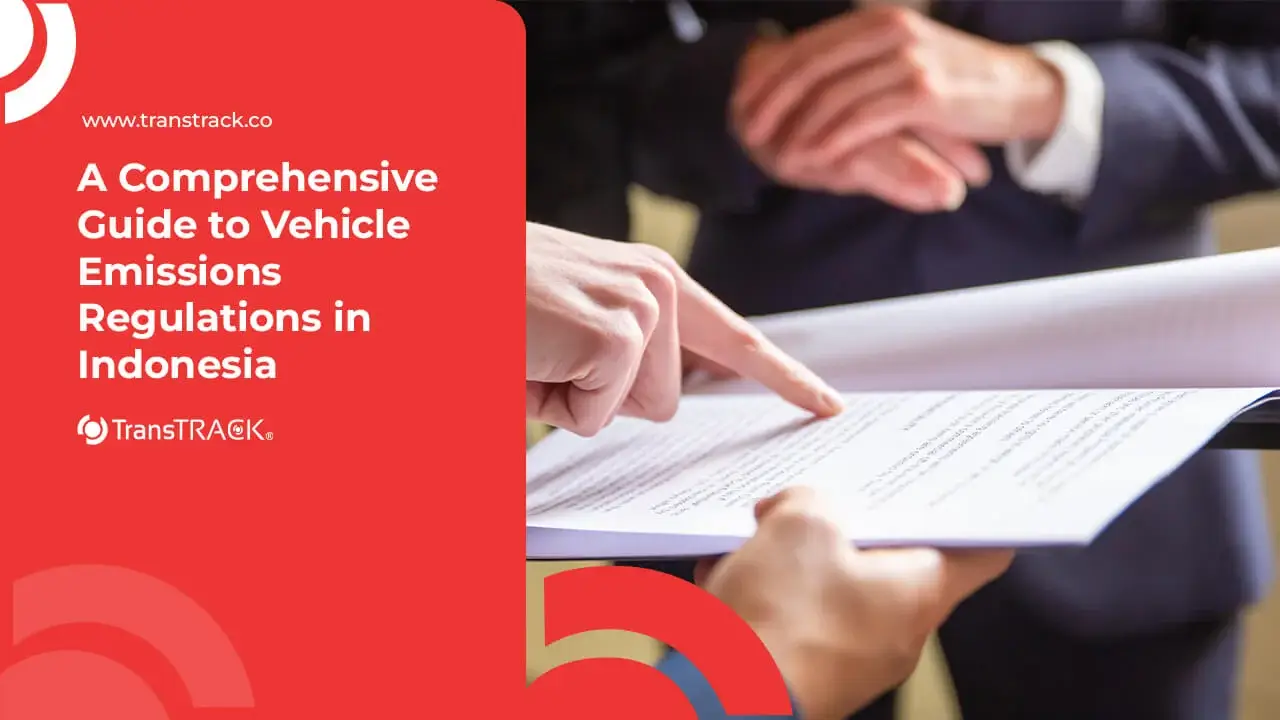
Vehicle emissions regulations are rules that set maximum limits on exhaust emissions from motor vehicles to reduce air pollution and protect the environment. These regulations include emissions standards, emissions testing, and requirements that vehicles must meet based on their type and category. Read the full explanation in the following TransTRACK article!
What Are Vehicle Emissions Regulations?
Vehicle emissions regulations are rules that set maximum limits on the exhaust gases or pollutants that motor vehicles are allowed to emit. These regulations aim to reduce air pollution, protect public health, and encourage the use of more environmentally friendly vehicles.
In practice, vehicle emissions regulations may include emissions standards, pollutant concentration limits, mandatory emissions testing, and vehicle technology requirements that must be met. Pollutants of general concern include carbon monoxide (CO), hydrocarbons (HC), nitrogen oxides (NOx), particulate matter (PM), and carbon dioxide (CO₂).
For companies that operate large fleets, understanding emissions regulations is becoming increasingly important because emissions levels can be influenced by vehicle type, engine condition, driving habits, fuel consumption, and vehicle maintenance. Technology-based monitoring can help companies track their fleet’s fuel consumption and emissions more accurately, enabling them to implement emissions reduction efforts more effectively.
Vehicle Emissions Policies and Regulatory Standards in Indonesia
Vehicle emissions regulations in Indonesia continue to be tightened to reduce air pollution and encourage the use of more environmentally friendly vehicles. Some key policies to be aware of include:
Primary Legal Framework (Ministry of Environment and Forestry Regulation No. 20 of 2017)
Ministry of Environment and Forestry Regulation No. 20 of 2017 serves as one of the legal bases for setting emission standards for new types of motor vehicles. This regulation establishes emission limits for various types of vehicles as part of efforts to control air pollution.
Implementation of the Euro 4 Standard and the Path Toward Euro 6
Indonesia has implemented Euro 4 emission standards for certain vehicles, with stricter limits on pollutants such as CO, HC, NOx, and particulate matter. Going forward, emission standards are expected to continue evolving toward stricter regulations, including the Euro 6 standard.
Local Regulations & Parking Disincentives / Taxes
Local governments can also implement emission control policies, such as emission tests, vehicle restrictions, parking fees, and tax policies. These policies can serve as incentives or disincentives to encourage the use of low-emission vehicles.
Comparison of Emission Standards: Euro 2 vs. Euro 4 vs. Euro 6
The higher the Euro standard, the stricter the pollutant emission limits that vehicles must meet. The differences can be seen in the technology, emission limits, and their impact on air quality.
| Aspek | Euro 2 | Euro 4 | Euro 6 |
| Standard level | Dasar | Stricter | Very strict |
| Emissions control | Limited | Better | Very strict |
| Major pollutants | CO, HC, NOx | CO, HC, NOx, PM | CO, HC, NOx, PM |
| Technology | Simple catalytic converter | More advanced fuel injection systems and catalytic converters | DPF, SCR, NOx control, and advanced technologies |
| Environmental Impact | Relatively high emissions | Lower emissions | Emissions are much lower |
In short, Euro 2 is an older standard, Euro 4 imposes stricter emission controls, while Euro 6 sets much lower limits and requires more advanced vehicle technology.
The Impact of Emissions Regulations on Vehicle Owners and Fleet Managers
Emissions regulations affect not only vehicle manufacturers but also vehicle owners and companies that manage large fleets. The impact can be seen in everything from operating costs to vehicle monitoring requirements.
For Private Vehicle Owners
Vehicle owners need to ensure that their vehicles continue to meet emissions standards and applicable emissions testing requirements. Regular engine maintenance, the use of appropriate fuel, and emissions testing help keep vehicles running efficiently while reducing air pollution.
For Commercial and Logistics Fleet Managers
For companies with large fleets, emissions regulations can increase the need for monitoring of fuel consumption, maintenance, and fleet efficiency. Technology-based fleet management can help monitor vehicle usage, identify fuel waste, and measure emissions more accurately to support compliance and sustainability goals.
Conclusion
Vehicle emissions regulations are a key step toward reducing air pollution while promoting the use of more fuel-efficient vehicles. For companies with large fleets, compliance with these regulations must be supported by consistent monitoring of fuel consumption and emissions.
With the Fleet Management System from TransTRACK, companies can monitor their fleet’s carbon emissions and fuel consumption more accurately. This data can help identify inefficient fuel usage, optimize vehicle operations, and support efforts to reduce emissions.
Optimize fleet efficiency while supporting emission reduction goals with TransTRACK.
FAQ
What do vehicle emissions regulations mean?
Vehicle emissions regulations are rules that set limits on vehicle exhaust emissions to reduce air pollution and protect the environment.
What are the current emissions standards for vehicles in Indonesia?
Indonesia has implemented various emission standards based on vehicle type and category. Euro 4 is one of the main standards that has been implemented, while regulations leading to stricter standards continue to be developed.
What happens if a vehicle fails an emissions test in Indonesia?
Vehicles that fail the emissions test must be inspected and repaired so that their emissions meet the threshold limits. In certain areas, vehicles that do not meet the requirements may also be subject to restrictions or disincentives in accordance with local government policies.
How long is the emission test certificate valid?
The validity period of emission test results or certificates may vary depending on local government regulations and the type of test. Therefore, vehicle owners must follow the emission test schedule established in their respective regions.
Recent Post

Understanding Carbon Tracking and Its Role in Sustainability
August 31, 2026
Understanding Mining Digitalization and Its Impact on Operations
August 28, 2026


Topic :