Bahasa Indonesia
Understanding Vessel Berthing Time and Its Role in Port Efficiency
Posted on August 17, 2026 by Nur Wachda Mihmidati
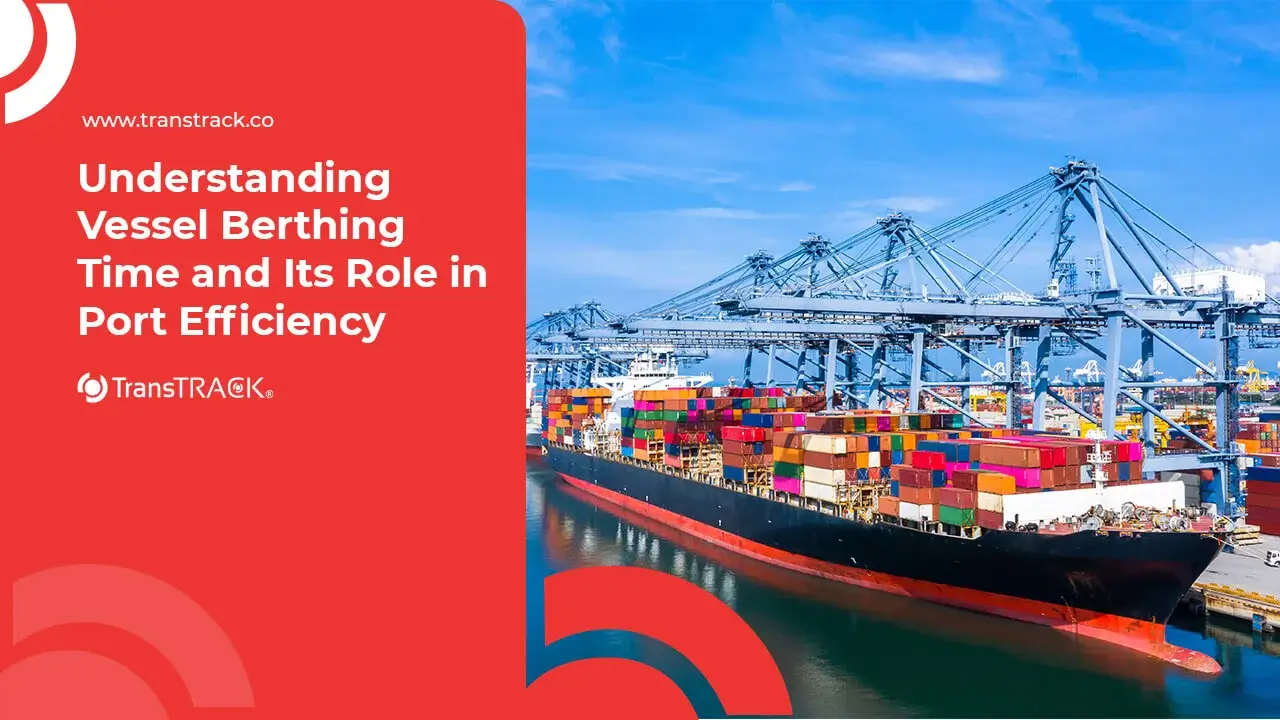
Berthing time is the duration a ship spends at the dock, from the moment it begins to dock until it casts off. This time includes various operational activities such as loading and unloading, inspections, and ship services that affect port efficiency. Read the full explanation in the following TransTRACK article!
What Is Berthing Time?
Berthing time is the time it takes for a ship to enter or occupy a berth at a port until it leaves that berth. This term is used to measure the efficiency of wharf utilization and the smooth operation of ship-related services.
Simply put, berthing time = the time a ship spends at the dock to receive services, including loading and unloading, refueling, inspections, or other operational activities.
Key Stages in Vessel Berthing Time
Berthing time encompasses not only the time a ship spends at the dock but also consists of several interrelated operational phases. Each phase must be managed effectively to ensure that the process—from berthing to departure—proceeds safely and efficiently.
Pre-Berthing Phase (Preparation & Guidance)
The initial phase includes preparing the pier, coordinating arrival schedules, and guiding the ship to its berth. Pilots, tugboats, and mooring personnel may be involved to ensure the ship can dock safely.
Operations Phase (Key Activities)
After the ship successfully docks, various operational activities are carried out as needed, such as loading and unloading, ship inspections, refueling, and other services. The smooth operation of these activities at this stage significantly affects the duration of the berthing time.
Post-Berthing Phase (Completion & Unmooring)
The final stage involves completing the necessary tasks and paperwork before the ship departs. Once all requirements have been met, the ship casts off with the assistance of port personnel, a pilot, or a tugboat until it leaves the dock area.
Perbedaan Berthing Time, Berthing Date, Waiting Time, dan Dwelling Time
These four terms are all used in port operations, but they have different meanings and functions. Understanding the differences is important for measuring the efficiency of ships, docks, and the flow of goods at the port.
| Term | Definition | Measurement Focus |
| Berthing Time | The duration the ship remains at the dock, from the time it begins to dock until it casts off. | Length of time the ship used the dock |
| Berthing Date | The date or time when the ship begins berthing at the dock. | Time the ship began to anchor/dock |
| Waiting Time | The time a ship spends waiting before receiving service or securing a berth. | Ship waiting time |
| Dwelling Time | The length of time goods or containers remain in the port area from the time of arrival until they leave the port. | Length of time the goods remain at the port |
A simple example: The ship arrived on August 10 and had to wait 4 hours before being assigned a berth. After docking, the ship remained at the berth for 12 hours before departing. Meanwhile, it takes 2 days for the containers to be cleared from the port area. Under these conditions, waiting time is 4 hours, berthing time is 12 hours, and dwelling time is 2 days.
Factors Affecting Berthing Time and How to Optimize It
Berthing times may vary depending on the operational conditions of the vessel and the port. Therefore, effective schedule management and coordination are necessary to ensure that berthing times remain efficient and do not disrupt the operations of other vessels.
Causes of Extended Berthing Times
Berthing time can increase due to delays in loading and unloading, limited terminal facilities, suboptimal workforce readiness, equipment malfunctions, inclement weather, and ineffective coordination among parties. Unplanned vessel schedules can also cause queues and extend the time spent at the terminal.
Modern Solutions for Optimizing Berthing Schedules
Optimization can be achieved by implementing digitization and real-time monitoring of vessel activities. The system can help track vessel positions, estimate arrival times, manage berthing schedules, and provide operational information to relevant parties. With integrated data, port operators can make decisions more quickly, reduce waiting times, and improve berth utilization.
Conclusion
Berthing time is one of the key indicators for measuring a port’s operational efficiency. The length of time a ship spends at the berth can be influenced by facility readiness, loading and unloading activities, coordination, and operational conditions. Through real-time scheduling and vessel monitoring, berthing time can be optimized, thereby improving berth utilization.
To support this management, TransTRACK Vessel Monitoring System helps monitor vessel positions and activities in real time, featuring AIS Global Integration, Smart ETA/ETD Prediction, Port Area Monitoring, and Historical Playback. Take advantage of TransTRACK’s Vessel Monitoring System to improve operational visibility of vessels and support the efficiency of port activities.
FAQ
What is the difference between berthing time and berthing date?
Berthing time is the duration a ship remains at the dock, from the time it begins to dock until it casts off. Meanwhile, berthing date refers to the date or time when a ship begins the docking process at the dock.
Why is an excessively long berthing time detrimental to shipping companies?
Excessively long berthing times can increase operating costs, disrupt sailing schedules, and reduce vessel utilization. Delays can also cause vessels to back up and disrupt schedules at the next port.
What is a berthing schedule?
A berthing schedule is a schedule that governs the arrival, berthing, service activities, and departure times of ships at the pier. Proper scheduling helps avoid conflicts over pier usage and reduces ships’ waiting times.
How do you calculate a ship’s estimated berthing time?
Berthing time is generally calculated from the time the vessel begins to berth until the time it casts off. The duration can be estimated based on the type of vessel, cargo volume, type of activity, loading and unloading productivity, and the condition of the port’s facilities and operations.
Recent Post

Understanding Carbon Tracking and Its Role in Sustainability
August 31, 2026
Understanding Mining Digitalization and Its Impact on Operations
August 28, 2026


Topic :