Bahasa Indonesia
Understanding Port Loading and Unloading and the Stages of the Process
Posted on August 26, 2026 by Nur Wachda Mihmidati
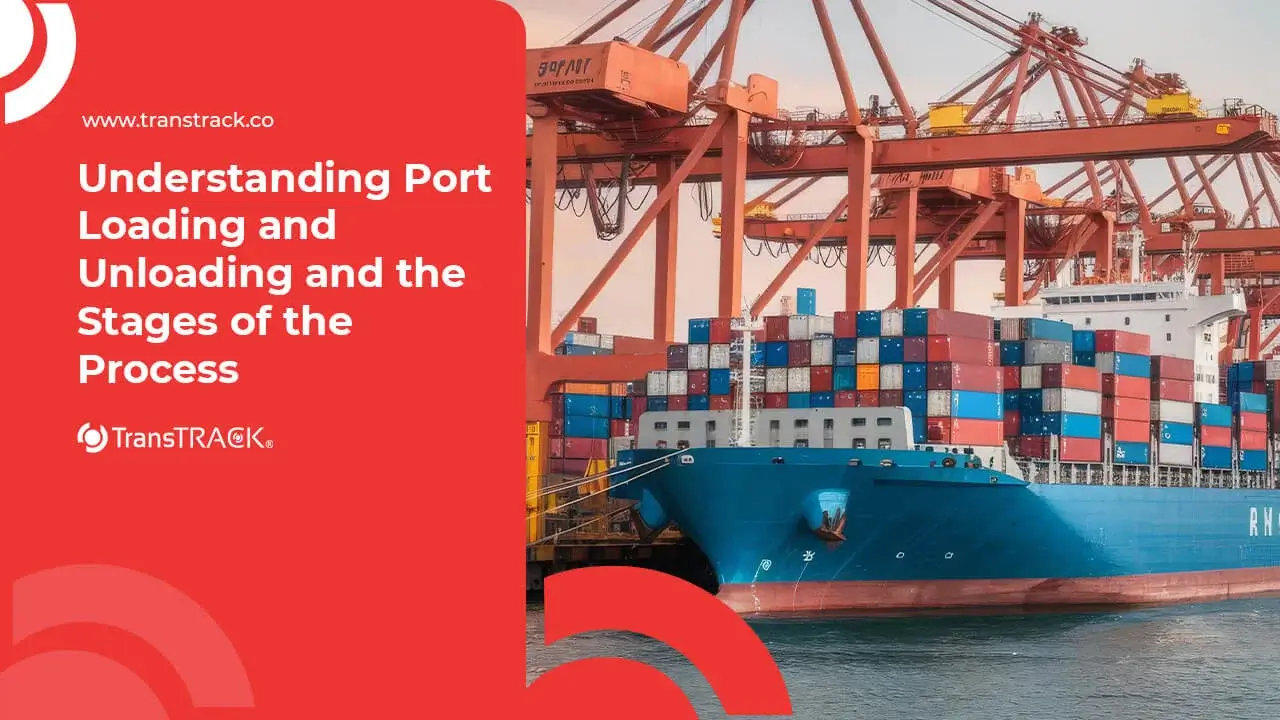
Port loading and unloading operations are a series of processes involved in transferring goods or cargo from ships to land, and vice versa, using various pieces of equipment and port personnel. These operations play a vital role in the logistics chain because they ensure the smooth flow of goods from one point to another.
In practice, cargo handling operations are increasingly supported by digitization and monitoring systems so that cargo location, vessel activity, equipment usage, and the movement of goods can be monitored more accurately and in real time. Read more about this in the following article on TransTRACK!
Port Loading and Unloading Process from Start to Finish
The loading and unloading process at a port involves several interrelated stages, from the transfer of cargo from the ship until the goods are received by the consignee. In general, the process consists of the following three main stages:
Phase 1: Stevedoring
Stevedoring is the process of moving cargo from a ship to the dock or vice versa. This stage is carried out using cargo-handling equipment such as cranes, container cranes, forklifts, or other specialized equipment depending on the type of cargo.
Phase 2: Cargodoring
Cargodoring is the process of moving and arranging cargo from the dock to storage areas at the port, such as warehouses or container yards. This stage ensures that the cargo is safely stored and ready for the next stage of distribution.
Tahap 3: Receiving / Delivery
Receiving or delivery is the process of receiving and dispatching goods from the port area. Incoming goods are recorded and placed according to their storage destination, while outgoing goods are prepared for transport by truck or other modes of transportation.
Types of Loading and Unloading Equipment at Ports and Their Functions
Each type of cargo requires different equipment to ensure that the loading and unloading process can take place safely, quickly, and efficiently. In general, port handling equipment can be categorized based on its primary function, namely lifting equipment, transfer and stacking equipment, and horizontal transport equipment.
Primary Lifting Equipment (Container Cranes)
- Quay Container Crane (QCC) — used to lift and move containers from ships to the dock or vice versa.
- Mobile Harbor Crane (MHC) — a mobile crane that can be used to handle both containers and general cargo.
- Gantry Crane — uses a gantry structure to lift and move loads within a specific work area.
Handling and Sorting Equipment (Yard Equipment)
- Rubber-Tired Gantry (RTG) Crane — used to stack and move containers in a container yard.
- Reach Stacker — used to lift, move, and stack containers over relatively short distances.
- Empty Container Handler — used to handle and organize empty containers.
- Forklift — used to lift and move goods, particularly general cargo and loads of a certain size.
Horizontal Conveyor
- Terminal Tractor — pulls trailers or chassis to move containers between docks, container yards, and terminal areas.
- Trailer or Chassis — used to transport containers using terminal vehicles or trucks.
- Automated Guided Vehicle (AGV) — an automated vehicle capable of moving containers within a terminal based on a navigation system and digital instructions.
Essential Terms for Loading and Unloading at Ports
In port operations, there are various terms used to describe cargo types, facility usage times, and the costs and activities involved in the loading and unloading process. Understanding the following terms can help logistics professionals better understand port operations.
FCL & LCL (Full / Less Than Container Load)
- FCL (Full Container Load) — a shipment using a single container whose cargo is intended for a single shipper or party. The container may be fully loaded or not fully loaded.
- LCL (Less Than Container Load) — a shipment where the cargo does not fill an entire container, so goods from multiple shippers are consolidated into a single container.
Demurrage & Detention
- Demurrage — a fee charged when a container remains in the terminal or port area beyond the specified free time (free time).
- Detention — a fee charged when a container has been removed from the terminal but has not been returned to the shipping line within the specified time limit.
Laytime & Dispatch
- Laytime — the period of time granted to the relevant parties to load or unload a vessel without incurring demurrage charges, in accordance with the terms of the contract.
- Dispatch — compensation or payment that may be provided when the loading or unloading process is completed sooner than the agreed-upon laytime.
Break Bulk & Bulk Cargo
- Break Bulk — a type of cargo shipped as individual units or packages without using containers, such as machinery, vehicles, sacks, or project cargo.
- Bulk Cargo — cargo transported in large quantities without individual packaging, such as coal, mineral ore, wheat, or liquid fuel.
Port Loading and Unloading Fees and Official Regulations
Port loading and unloading costs are not limited to the physical movement of goods to and from ships; they also include various operational support services. The amount of these costs may vary depending on the type of cargo, the facilities used, the volume of goods, and the regulations in effect at each port.
Regulations on Loading and Unloading at Ports (Regulations)
In Indonesia, loading and unloading activities are governed by a number of regulations that govern port operations, ship and cargo services, and the activities of stevedoring companies. One of the legal bases is Law No. 17 of 2008 on Shipping, which governs shipping operations, including port operations and loading and unloading activities.
Technical provisions regarding loading and unloading activities are also set forth in Ministry of Transportation Regulation No. PM 59 of 2021 on the Operation of Services Related to Waterborne Transportation, which includes provisions regarding the loading and unloading of goods to and from ships.
In practice, loading and unloading operations must take into account safety, security, the smooth flow of goods, workforce competence, and the use of appropriate equipment. In addition to national regulations, operators must also comply with the rules and tariffs in effect at each port.
Port Loading and Unloading Cost Components
The costs associated with loading and unloading operations may consist of several components, including:
- Stevedoring charges — charges for the handling of cargo from a ship to the dock or vice versa.
- Cargo handling charges — charges for moving and arranging goods from the dock to the storage area or vice versa.
- Receiving/delivery charges — charges related to the receipt or shipment of goods from the terminal area.
- Loading and unloading equipment usage fees — fees for the use of cranes, forklifts, RTGs, reach stackers, and other equipment.
- Demurrage — the fee charged for storing goods or containers in the terminal area after the applicable time limit or conditions have been exceeded.
- Additional service fees — may include inspection, administrative, or other fees depending on the type of cargo and the facilities used.
Note: Tariff components and rates may vary depending on the type of port, terminal, cargo type, volume, and applicable tariff regulations. When writing articles that include tariff figures, it is recommended to refer to the official tariffs of the relevant terminal or port to ensure accuracy and up-to-date information.
Conclusion
Loading and unloading operations at ports involve a series of processes that include numerous parties, equipment, and stages, ranging from stevedoring and cargodoring to receiving and delivery. The smooth operation of each stage significantly impacts vehicle wait times, terminal productivity, operating costs, and the overall efficiency of the supply chain. Therefore, managing a well-organized flow of vehicles is a key factor in supporting more optimal port operations.
To help manage truck arrivals and departures in a more structured manner, TransTRACK introduces the Truck Appointment System (TAS), which helps schedule vehicle arrivals based on capacity and slot availability at the terminal. With more coordinated appointment management, companies can reduce queues, minimize wait times, and improve visibility into vehicle movements within the port area.
FAQ
What is the standard time for the loading and unloading process at a port?
Loading and unloading times vary from port to port. The duration of these operations depends on the type and volume of cargo, the capacity of the ship and the terminal, the equipment used, and operational conditions.
What is the difference between stevedoring, cargo handling, and receiving/delivery?
Stevedoring is the loading and unloading of cargo from and onto ships. Cargodoring is the handling and arrangement of cargo within the port area. Receiving/Delivery is the process of receiving and dispatching goods from the terminal.
Who is responsible for loading and unloading operations at the port?
Loading and unloading activities are generally carried out by Cargo Handling Companies (PBM) in coordination with terminal operators, shipping companies, cargo owners, and other relevant parties.
What factors can hinder the loading and unloading process at a port?
Obstacles may include bad weather, equipment malfunctions, traffic congestion, terminal capacity constraints, document delays, and suboptimal coordination.
Recent Post

Understanding Carbon Tracking and Its Role in Sustainability
August 31, 2026
Understanding Mining Digitalization and Its Impact on Operations
August 28, 2026


Topic :