Bahasa Indonesia
Vehicle Engine Overhaul, A Key Step in Preventing Major Damage
Posted on July 7, 2026 by Nur Wachda Mihmidati
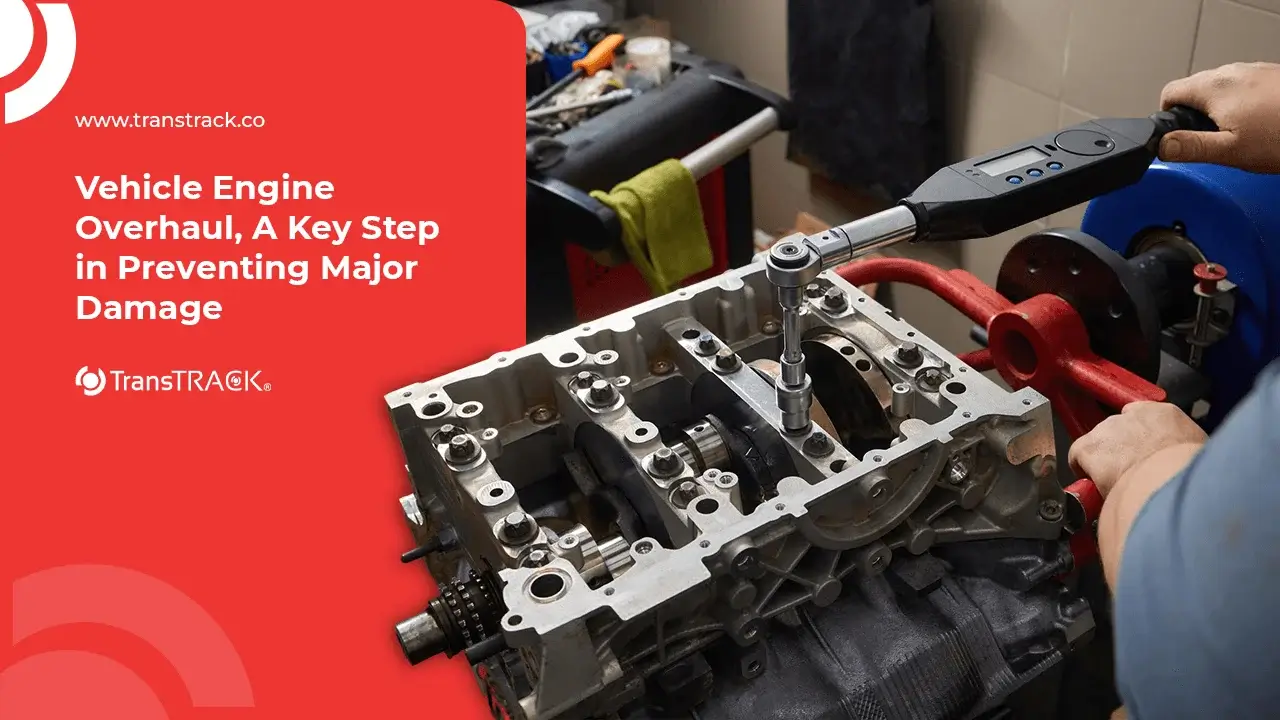
A vehicle overhaul is the process of completely disassembling, inspecting, repairing, or replacing the vehicle’s major components to restore the engine or vehicle systems to optimal performance.
In the operation of a vehicle fleet, overhauls are typically part of preventive maintenance and are performed based on mileage, engine hours (engine hours), damage history, and vehicle inspection results to ensure that vehicles remain safe and productive. Read more about this in the following TransTRACK article!
What is the main purpose of a vehicle overhaul?
The primary purpose of a vehicle overhaul is to restore the vehicle’s performance and reliability through inspection, repair, or replacement of worn components. This process helps improve operational efficiency, prevent further damage, extend the vehicle’s service life, and ensure that the vehicle remains safe and operates at its best.
Types of Overhauls
Each type of overhaul involves a different level of inspection and repair, depending on the engine’s condition and the extent of the damage. Ranging from partial repairs to a complete engine disassembly, the type of overhaul selected is tailored to the vehicle’s needs so that its performance and reliability can be restored to optimal levels.
1. Top Overhaul (Upper Half)
A top overhaul is a repair that focuses on the upper part of the engine, particularly the cylinder head area. This process is performed without disassembling the entire engine.
Components inspected or repaired:
- Cylinder head
- Valve
- Gasket
- Seal
- Combustion chamber
Purpose: To address issues such as compression leaks, excessive oil consumption, or a slight drop in engine performance.
2. Semi-Overhaul (Partial Overhaul)
A semi-overhaul is the process of disassembling some components of the upper and lower engine sections for a more thorough inspection than a top overhaul.
Components inspected or repaired:
- Pistons and piston rings
- Bearing
- Crankshaft
- Cylinder block
- Cylinder head
Objective: To repair components that have suffered moderate wear and restore engine performance without a complete disassembly.
3. Major/Full Overhaul (Complete Engine Overhaul)
A major overhaul, or full overhaul, is a comprehensive repair process that involves disassembling the entire engine for inspection and replacement of necessary components.
Components inspected or repaired:
- Engine block
- Piston
- Ring piston
- Crankshaft
- Bearing
- Valve
- Seals and gaskets
Purpose: To restore the engine to a condition close to its original performance, especially in vehicles with high mileage or that have sustained severe damage.
5 Critical Engine Symptoms That Require Immediate Engine Overhaul
A drop in engine performance can be a sign of damage to internal components that requires further inspection. If the following symptoms are ignored, the damage may worsen and result in higher repair costs.
1. Engine Oil Consumption Rate Tinggi
Abnormally high engine oil consumption may indicate wear on components such as piston rings, pistons, or seals. This condition causes the oil level to drop more quickly and can potentially damage other engine components.
2. Lossy Compression (Loss of Power)
A loss of compression causes the combustion process to be suboptimal, resulting in reduced engine power, weaker acceleration, and difficulty in achieving maximum performance.
3. Engine Knocking (Sound of Metal Clanging)
A knocking or clanging sound coming from inside the engine may indicate a problem with internal components such as bearings, pistons, or the crankshaft that are showing signs of wear.
4. Milky Oil (Oil Mixed with Water)
A change in the oil’s color to a milky appearance (milky) indicates that oil has mixed with coolant due to a damaged gasket or other engine component. This condition can disrupt engine lubrication.
5. Excess Blow-By Gas
Excessive amounts of combustion gases entering the oil chamber (blow-by gas) indicate a leak in the compression system, usually caused by wear on the piston rings or cylinder walls. This can accelerate engine damage if not addressed promptly.
Standard Operating Procedure (SOP) Following an Overhaul
Once the overhaul is complete, the engine should not be immediately subjected to maximum operational loads. Post-overhaul procedures are necessary to ensure that the new components settle in properly, prevent premature failure, and maintain optimal engine performance.
1. SOP Running-In / Break-In
Running-in, or break-in, is the process of adjusting engine components after an overhaul so that the surfaces of components such as pistons, piston rings, and cylinders can function properly.
Steps taken:
- Avoid heavy loads on the machine during the initial period of use.
- Operate the vehicle at varying engine speeds (RPM); do not maintain a constant speed for long periods of time.
- Check the engine temperature, oil pressure, and for any unusual noises on a regular basis.
- Check for oil or coolant leaks.
2. First Oil Change
The first oil change after an overhaul is performed to remove any remaining dirt, fine metal particles, or residue from the engine component adjustment process.
Things to keep in mind:
- Use oil that meets the engine specifications.
- Change the oil according to the technician’s recommendations or the manufacturer’s standards.
- Check the condition of the used oil to detect any signs of abnormal wear.
- Replace the oil filter as needed to keep the lubrication system running optimally.
Conclusion
An overhaul is an essential maintenance step for restoring a vehicle’s performance and reliability, especially when engine components experience a decline in function due to wear and tear or damage. By performing an overhaul properly, a vehicle can return to optimal operation, reducing the risk of downtime and extending the asset’s service life.
However, preventing major breakdowns remains the best strategy for vehicle management. Through the Vehicle Maintenance System from TransTRACK, companies can monitor maintenance schedules, track vehicle service histories, manage work orders, and perform data-driven preventive maintenance to avoid unexpected breakdowns.
Optimize your fleet maintenance with the Vehicle Maintenance System TransTRACK and ensure that every vehicle remains ready for operation at peak performance.
FAQ
What is the difference between an overhaul and a tune-up?
An overhaul is the process of disassembling, inspecting, and repairing an engine’s internal components to restore its performance, whereas a tune-up is minor maintenance to keep the engine in optimal condition, such as adjusting components, cleaning, and replacing small parts.
What are the signs that a truck or heavy equipment engine needs an overhaul?
Some signs that an engine needs an overhaul include increased oil consumption, decreased engine power, knocking noises, oil mixed with water (milky oil), excessive exhaust smoke, and an increase in blow-by gas, which indicates a compression leak.
How long does a complete overhaul take?
The duration of a complete overhaul depends on the extent of the damage, the type of vehicle, the availability of parts, and the complexity of the engine. Generally, this process can take anywhere from a few days to several weeks, including the disassembly, inspection, component replacement, reassembly, and engine testing phases.
Recent Post




Topic :