Bahasa Indonesia
How to Save Fuel on Trucks to Reduce Operating Costs
Posted on June 9, 2026 by Nur Wachda Mihmidati
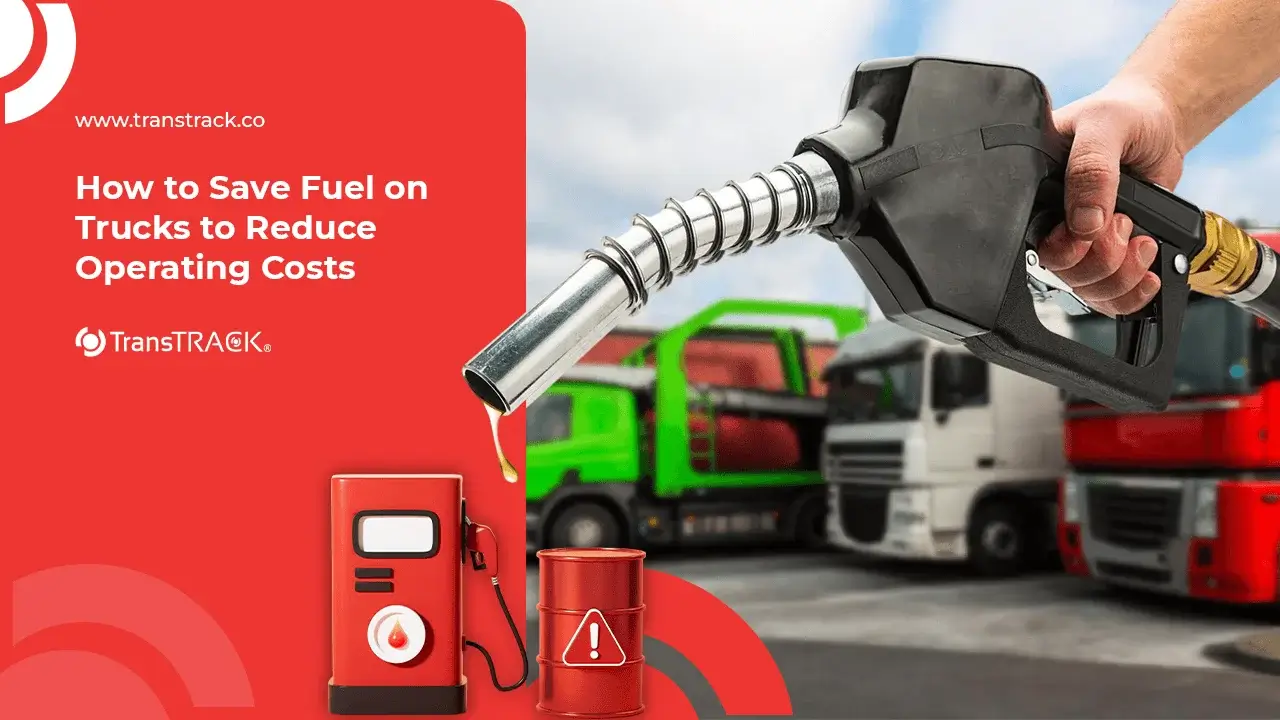
Ways to save fuel in trucks include practicing eco-driving, performing regular vehicle maintenance, maintaining proper tire pressure, avoiding overloading, and optimizing travel routes. With the right strategies and the support of fleet management technology, companies can reduce fuel consumption, lower operating costs, and improve overall fleet efficiency. Read the full explanation in the following TransTRACK article!
What is truck fuel efficiency?
Truck fuel efficiency is a truck’s ability to use as little fuel as possible while delivering optimal operational performance, such as hauling cargo, traveling a certain distance, and completing deliveries on time. The less fuel required to travel a certain distance or haul a specific load, the higher the truck’s fuel efficiency.
The Three Biggest Factors in Fuel Efficiency
Fuel efficiency isn’t determined solely by vehicle specifications. There are three main factors that most significantly affect a fleet’s fuel consumption: driver behavior, vehicle condition, and route management.
1. Driver Behavior
Driver behavior can account for up to 30% of fuel efficiency. Habits such as sudden acceleration, hard braking, erratic speed, and excessive idling can significantly increase fuel consumption.
2. Vehicle Technical Condition
Suboptimal vehicle condition causes the engine to work harder and consume more fuel. The most significant factors include incorrect tire pressure and engine health, such as the condition of the filters, fuel injectors, and combustion system.
3. Route Management
Effective route planning helps reduce mileage, travel time, and traffic congestion. By choosing more efficient routes, fleets can save on fuel while boosting operational productivity.
Why Are Truck Fuel Costs the “Financial Leak” in Your Business?
For transportation and logistics companies, fuel costs are one of the largest operational expenses. Without proper management, inefficient fuel consumption can significantly reduce profitability and increase operational costs.
1. Largest OPEX Center
Fuel costs are often the largest component of a truck fleet’s operational expenditure (OPEX). Fuel expenses can account for 30–40% of a vehicle’s total operating costs, so even a slight increase in fuel consumption can have a significant impact on a company’s expenses.
2. The Impact of Rising Diesel Prices
Fluctuations in diesel prices directly affect distribution and transportation costs. When fuel prices rise, shipping costs also increase and can reduce profit margins if not offset by improved operational efficiency.
3. Correlation with Carbon Emissions (ESG)
The higher the fuel consumption, the greater the carbon emissions produced by the fleet. Therefore, fuel efficiency not only helps reduce operating costs but also supports the achievement of Environmental, Social, and Governance (ESG) targets through a reduced carbon footprint and more sustainable operations.
5 Key Tips for Saving Fuel in Trucks
Fuel savings cannot be achieved through a single measure alone. It takes a combination of disciplined drivers, well-maintained vehicles, and efficient operational management to achieve optimal fuel consumption.
1. Implementation of Eco-Driving Techniques (Driver Behavior)
Eco-driving is a driving technique that focuses on fuel efficiency without compromising driving safety. This practice helps reduce fuel waste caused by aggressive driving habits.
- Avoid sudden acceleration and braking.
- Keep the vehicle’s speed steady.
- Reduce unnecessary idling time.
- Use the appropriate gear for the ideal engine RPM.
- Anticipate traffic conditions to minimize unnecessary maneuvers.
2. Routine Mechanical Maintenance (Vehicle Health)
A well-maintained vehicle will operate more efficiently and require less fuel to achieve the same performance.
- Ensure that tire pressure is in accordance with the manufacturer’s recommendations.
- Change the oil and filter regularly.
- Check the condition of the fuel injectors and the combustion system.
- Maintaining the performance of the engine cooling system.
- Conduct routine inspections of components that affect vehicle efficiency.
3. Load Management & Overload Prevention (ODOL)
Excessive cargo forces the engine to work harder and increases fuel consumption. In addition, ODOL (Over Dimension Over Load) practices also accelerate vehicle wear and tear.
- Ensure that the load does not exceed the vehicle’s capacity.
- Ensure an even distribution of the load.
- Avoid overloading.
- Check the vehicle’s weight before departure.
- Matching the type of vehicle to the delivery needs.
4. Optimasi Rute & Geofencing (Route Planning)
Effective trip planning helps reduce mileage, travel time, and fuel consumption.
- Selecting the route with the most efficient travel time.
- Avoiding areas with heavy traffic.
- Optimizing delivery and pickup schedules.
- Utilizing GPS and fleet management systems.
- Using geofencing to monitor fleet movements and minimize route deviations.
5. Aerodynamic Modifications for Trucks
Wind resistance is one of the factors contributing to increased fuel consumption, especially during long-distance travel at high speeds.
- Installing a roof fairing or wind deflector.
- Using side skirts to reduce air turbulence.
- Minimize the use of unnecessary external accessories.
- Ensuring the vehicle’s design remains aerodynamic.
- Ensure that doors, tarps, and body components are properly secured to reduce wind resistance.
By consistently implementing these five pillars, companies can improve fuel efficiency, reduce fleet operating costs, and support more productive and sustainable transportation operations.
Matrix of Estimated Fuel Savings by Action
Every efficiency initiative has the potential to yield different savings. The following are estimates of the fuel savings that can generally be achieved based on best practices in the transportation and logistics industry.
| Action | Estimated Fuel Savings |
| Implementation of eco-driving and driver training | 5–15% |
| Reduce idling (leaving the engine running while stopped) | 3–8% |
| Maintaining tire pressure at the recommended level | 1–3% |
| Regular machine maintenance and filter replacement | 2–10% |
| Prevention of overloading (ODOL) | 5–10% |
| Route optimization and mileage reduction | 5–20% |
| The use of GPS, telematics, and fleet management | 5–15% |
| Installation of aerodynamic components (fairings, side skirts) | 3–10% |
| Real-time monitoring of driver behavior | 5–12% |
| An integrated combination of several strategies | 15–30% or more |
Note
The amount of savings can vary from fleet to fleet depending on the type of vehicle, operating conditions, route characteristics, load capacity, and driver discipline. The best results are typically achieved through a combination of improvements in driver behavior, vehicle maintenance, and the use of fleet management technology.
Calculating Fuel Consumption & Potential ROI from Savings
Before implementing an efficiency program, companies need to determine their current fuel consumption levels and the potential savings that can be achieved. This simple calculation helps gauge the financial impact of each fuel-saving initiative.
How to Calculate a Truck’s Fuel Consumption
Use the following formula:

Example:
- Mileage: 5,000 km per month
- Diesel consumption: 1,000 liters per month
Maka:
Fuel consumption = 5,000 ÷ 1,000 = 5 km/liter
This means that every 1 liter of fuel covers 5 kilometers.
How to Calculate Potential Fuel Savings
If the efficiency program succeeds in reducing fuel consumption by 10%, then:

Example:
- Initial consumption: 1,000 liters per month
- Cost-saving target: 10%
Savings = 1,000 × 10% = 100 liters/month
Calculating Cost Savings
Rumus:

Example:
- Fuel savings: 100 liters per month
- Price of diesel: Rp10,000 per liter
Cost savings = 100 × Rp10,000 = Rp1,000,000 per month
Calculating the ROI of an Efficiency Program
ROI (Return on Investment) is used to determine how quickly efficiency investments generate a return.

Example:
- Investment in a fleet monitoring system: Rp20,000,000
- Annual fuel savings: Rp36,000,000
ROI = ((IDR 36,000,000 − IDR 20,000,000) ÷ IDR 20,000,000) × 100% = 80%
Illustration of Potential Fleet Savings
| Number of Trucks | Monthly Fuel Consumption | 10% savings | Estimated Monthly Cost Savings* |
| 10 trucks | 10,000 liters | 1,000 liters | 10,000,000 IDR |
| 25 trucks | 25,000 liters | 2,500 liters | 25,000,000 IDR |
| 50 trucks | 50,000 liters | 5,000 liters | Fifty million rupiah |
| 100 trucks | 100,000 liters | 10,000 liters | 100,000,000 IDR |
*The simulation is based on a diesel price of Rp10,000 per liter.
By regularly tracking fuel consumption and monitoring the results of efficiency programs, companies can identify tangible savings opportunities, improve fleet profitability, and accelerate the return on investment for the technologies and operational programs they implement.
The Role of Digitalization: Integrating FMS and Fuel Sensors
Digitization helps companies monitor and control fuel consumption more accurately. By integrating Fleet Management System(FMS) and fuel sensors, fuel usage can be monitored in real time to improve fleet operational efficiency.
Fleet Management System (FMS)
FMS helps companies:
- Monitoring fuel consumption per vehicle.
- Analyzing driver behavior.
- Optimizing travel routes.
- Provides automated operational reports.
Fuel Sensor
The fuel sensor is used to:
- Measures fuel levels in real time.
- Detecting fuel loss or theft.
- Improving the accuracy of fuel consumption data.
- Supports operational controls and audits.
Benefits of Integration
- Better visibility into fuel consumption.
- Reduction in fuel waste.
- Greater operational cost efficiency.
- Faster data-driven decision-making.
Conclusion
Saving fuel in trucks requires a comprehensive approach, ranging from the implementation of eco-driving practices, regular vehicle maintenance, proper load management, and route optimization to the use of digital technology. By consistently managing these factors, companies can reduce operating costs, improve fleet productivity, and support their business sustainability goals.
To achieve optimal results, companies can utilize TransTRACK’s Fleet Management System (FMS). Through real-time fleet monitoring, driver behavior analysis, route optimization, and integration with fuel sensors, TransTRACK helps companies identify fuel waste and measurably improve operational efficiency.
Want to find out how much fuel your fleet could save? Contact the TransTRACK team for a demo and consultation on fleet management solutions tailored to your business needs.
FAQ
How can I drive a truck to save on diesel fuel?
Keep the engine speed between 1,000 and 1,500 RPM, avoid sudden acceleration and braking, and turn off the engine if you’re stopped for more than 3 minutes.
Why can underinflated truck tires lead to higher fuel consumption?
Low tire pressure increases rolling resistance, so the engine needs more power and fuel to move.
Does the use of air conditioning affect the fuel consumption of diesel trucks?
Yes. Using the air conditioner can increase fuel consumption by about 5–10%, especially during traffic jams or in hot weather.
How much fuel can you save by eco-driving?
Implementing eco-driving can reduce fuel consumption by approximately 5–15%, depending on the fleet’s operating conditions.
How does a Fleet Management System help save fuel?
FMS helps monitor fuel consumption, driver behavior, and travel routes in real time to reduce fuel waste.
Recent Post





Topic :