Bahasa Indonesia
Port Digitalization and the Future of the National Logistics Ecosystem (NLE)
Posted on May 7, 2026 by Nur Wachda Mihmidati
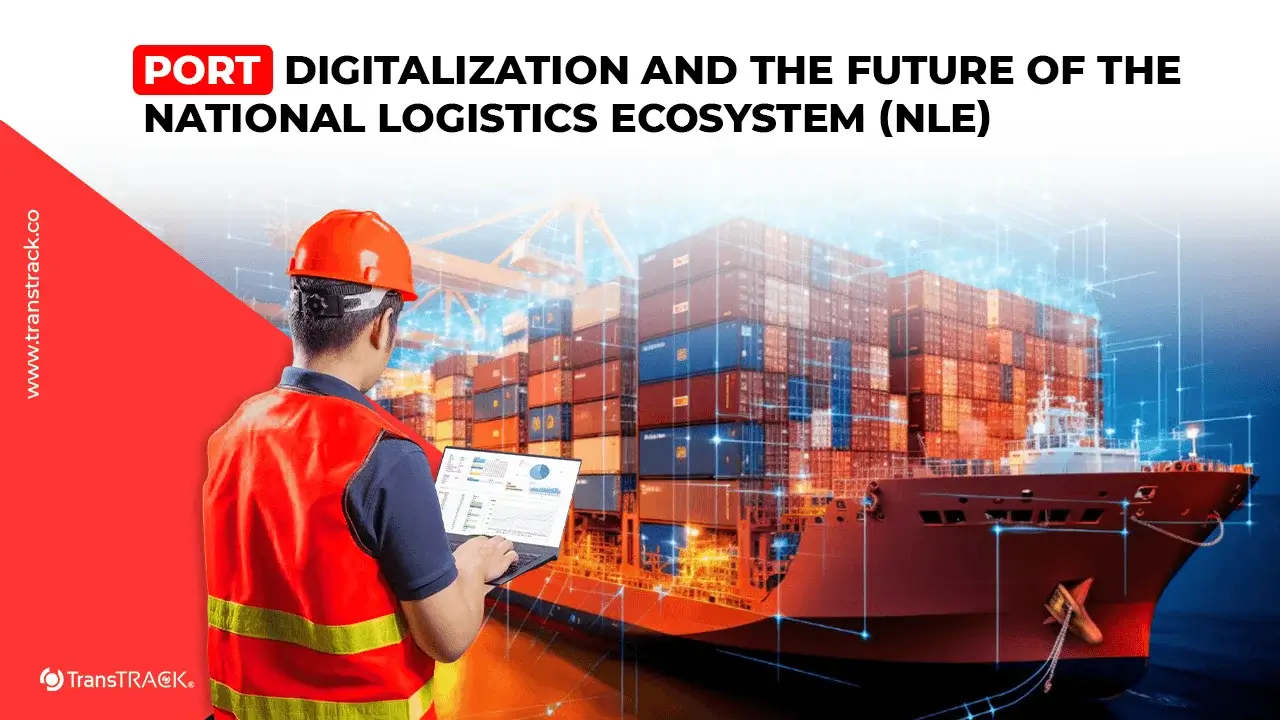
Port digitalization is a major transformation in the logistics industry that is shifting port operations from manual systems to integrated, real-time digital technology. This article discusses the concept, objectives, technologies, and impact on modern logistics ecosystems such as the National Logistics Ecosystem (NLE). Read more in the following article on TransTRACK!
What is Port Digitalization?
Port digitalization is the process of transforming port operations from manual and fragmented systems into integrated, technology-based systems. The goal is to improve efficiency, visibility, security, and coordination of all port activities—from ships, cargo, and heavy equipment to customs documents.
Simply put, port digitization transforms processes that were previously largely manual (paper-based and involving separate communication channels) into real-time, automated, and interconnected processes on a single platform.
What Is the Purpose of Port Digitalization?
In the era of modern logistics, ports are required to operate more quickly, efficiently, and in an integrated manner. Digitalization is key to addressing these challenges by implementing data-driven, real-time systems.
- Improving port operational efficiency (faster loading and unloading, vessel schedules, and cargo flow)
- Provides real-time visibility into ships, containers, and port activities
- Reducing operational costs by minimizing errors and manual processes
- Enhancing security with digital surveillance and monitoring systems
- Strengthening integration among stakeholders on a single connected platform
- Improving data transparency for reporting and regulatory compliance
Why Is Port Digitalization Urgent?
Port digitalization is becoming increasingly urgent due to the growing complexity of global supply chains, high trade volumes, and greater demands for efficiency and transparency in the logistics sector.
- Operational Efficiency: Replacing manual, paper-based processes with real-time digital systems to streamline port workflows.
- Cost Transparency: Eliminating unexpected costs and illegal fees through a more controlled and traceable electronic payment (e-payment) system.
- Competitive Advantage: Digital ports are more attractive to international shipping lines because they offer faster service, greater visibility, and higher operational reliability.
- Security & Compliance: Automatic integration with customs and maritime security authorities to ensure safer, more accurate, and compliant processes.
Key Technologies in the Smart Port Ecosystem
The transformation of ports into smart ports is supported by a range of integrated digital technologies designed to enhance operational efficiency, visibility, and security.
Internet of Things (IoT)
Sensors for tracking the location of containers and vehicles, as well as monitoring the condition of port assets in real time. This technology helps operators obtain accurate data directly from the field.
Artificial Intelligence (AI)
Algorithms for optimizing ship berthing schedules (berth planning) and yard management to improve cargo flow efficiency. AI also supports predictive decision-making to reduce operational bottlenecks.
Blockchain
Ensuring data security and integrity, especially for sensitive documents such as digital bills of lading. With blockchain, every transaction is recorded transparently and cannot be tampered with.
Digital Twin
A virtual representation of a port for operational simulations and scenario testing before implementation in the real world. This enables risk assessment and optimization without disrupting actual operations.
5G Connectivity
Ultra-fast and stable connectivity to support remote control of heavy machinery, such as remote-controlled cranes and other automated systems. This technology ensures that data communication occurs without delay during critical operations.
The Impact of Port Digitalization on the National Logistics Ecosystem (NLE)
Port digitalization plays a major role in strengthening the National Logistics Ecosystem (NLE) by creating a more connected, faster, and more transparent logistics flow from upstream to downstream.
End-to-End Integration
Connecting ports with warehousing, land transportation, and banking within a single, fully integrated digital ecosystem. This enables more efficient logistics coordination without separate manual processes.
Single Submission (SSm)
Streamlining the submission of customs and quarantine documents through a single integrated platform, thereby accelerating administrative processes and reducing data duplication. This system also improves accuracy and regulatory compliance.
Last-Mile Optimization
Leveraging port data to accelerate the distribution of goods to end consumers more accurately and efficiently. With improved visibility, distribution planning becomes more timely and measurable.
Conclusion
Port digitalization is a strategic step toward building a more efficient, transparent, and integrated logistics ecosystem. By leveraging technologies such as IoT, AI, and centralized digital systems, ports can improve service speed, reduce operational costs, and strengthen security and regulatory compliance. This transformation also serves as a crucial foundation for supporting a more connected National Logistics Ecosystem (NLE) from upstream to downstream.
To accelerate the transformation toward a smart port, ports need solutions that can provide real-time visibility and comprehensive monitoring. TransTRACK, through Vessel Monitoring System and Port Surveillance System, offers an integrated solution to monitor vessel movements in real time and enhance security and operational control within the port area.
With the implementation of this technology, ports can move toward smarter, safer, and more competitive operations in the digital age.
FAQ
What are the main benefits of port digitalization for shippers?
The main benefits are reduced dwelling time, the ability to track cargo locations independently, and the assurance of lower operating costs.
What is the role of Inaportnet in the digitalization of ports in Indonesia?
Inaportnet is a single electronic portal that integrates port information systems to provide online services for ships and cargo at all ports in Indonesia.
What is the difference between a traditional port and a Smart Port?
Traditional ports rely on manual data entry and physical coordination, whereas Smart Ports use automation, API-based data exchange, and predictive analytics to support faster and more accurate decision-making.
What technologies support port digitalization?
Some of the key technologies used include IoT, AI, blockchain, digital twins, and 5G connectivity, all of which support more integrated and real-time port operations.
How does port digitalization support sustainability?
Digitalization helps reduce carbon emissions by optimizing ship routes, reducing idle time, and improving fuel and energy efficiency in port areas.
Recent Post




Topic :