Bahasa Indonesia

Vessel Traffic System (VTS): Definition, Functions, Components, and How It Works
Posted on October 8, 2026 by Nur Wachda Mihmidati
Maritime safety depends not only on the capabilities of ships and their crews, but also on how vessel traffic in a given body of water is monitored and managed. The heavier the shipping traffic, the greater the need for a system capable of providing a comprehensive overview of traffic conditions.
One of the technologies used to support these needs is the Vessel Traffic System (VTS). This system integrates various information sources—such as radar, the Automatic Identification System (AIS), cameras, radio communications, and environmental data—to assist in monitoring and managing vessel traffic. Check out the full explanation in the following TransTRACK article!
Apa Itu Vessel Traffic System (VTS)?
The Vessel Traffic System (VTS) is a system for monitoring and managing vessel traffic in specific waterways to enhance navigation safety, improve the efficiency of vessel movement, and protect the marine environment.
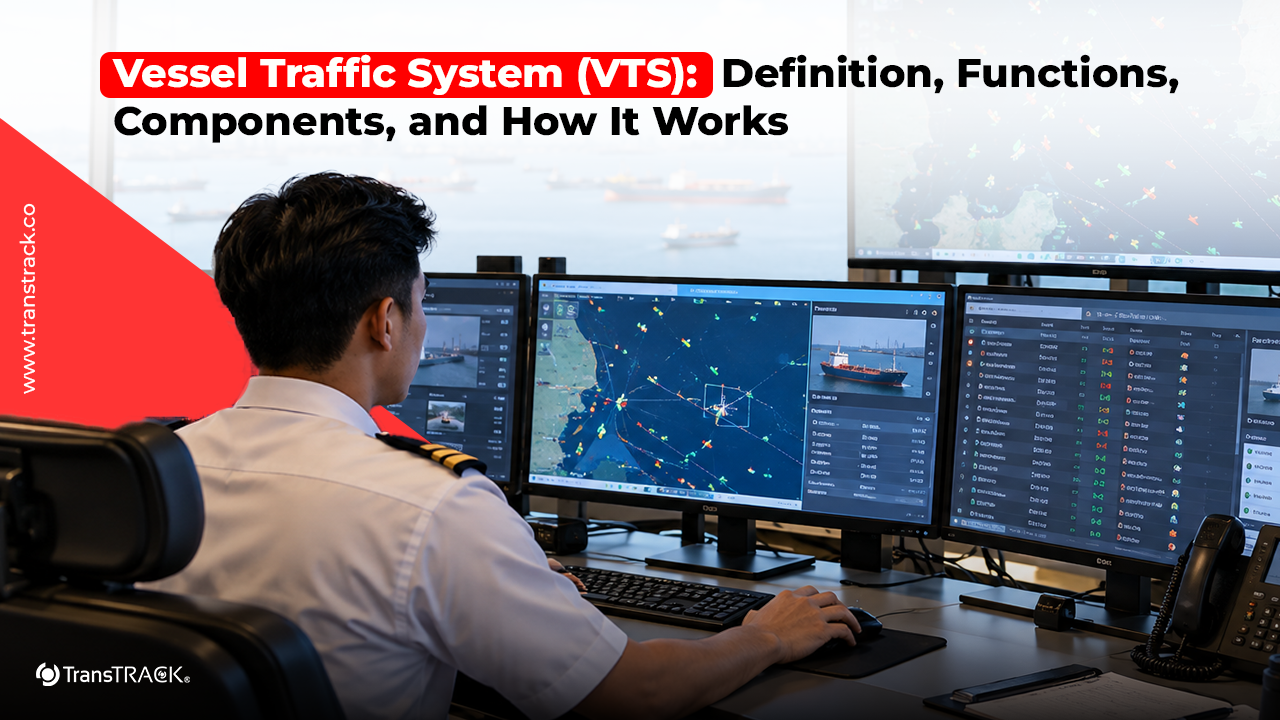
A VTS operates by collecting information from various monitoring devices and displaying it at the control center. Operators can determine the position, course, speed, and identity of vessels, as well as traffic conditions in the monitored area.
With this information, VTS operators can provide safety information, warnings about potential hazards, and traffic services to vessels in accordance with their functions and authority.
VTS are generally implemented in areas with high shipping activity, such as ports, shipping lanes, straits, coastal waters, and other areas that require vessel traffic monitoring.
Key Roles and Functions of the Vessel Traffic System
VTS has several key, integrated functions designed to help ensure safer and more orderly maritime traffic.
Vessel Traffic Monitoring System
The monitoring function allows operators to get a more comprehensive view of vessel traffic conditions. Data from radar, AIS, and cameras can be used to monitor the position, direction, speed, and movement of vessels.
Real-time monitoring helps operators stay informed about traffic conditions and identify situations that require further attention.
Vessel Traffic Management System
In addition to monitoring, the VTS assists in managing vessel traffic in the monitored area. Information regarding vessel density and movement can be used to help regulate traffic to ensure it remains safe and orderly.
This function is becoming increasingly important in areas with heavy vessel traffic, particularly around ports and shipping lanes where there is a risk of collisions between vessels.
Vessel Traffic Information System
VTS also serves as a source of information for vessels. The information provided may include traffic conditions, weather, sea conditions, potential navigational hazards, and other operational information.
With more comprehensive and timely information, the crew can take these conditions into account when deciding on course of action during the voyage.
Technological Components of the Vessel Traffic System
VTS does not rely on a single device. The system combines various technologies to provide a more comprehensive picture of vessel traffic conditions.
- Radar — used to detect and track objects or vessels within the monitoring area, including helping to detect vessels that are not transmitting AIS information.
- AIS (Automatic Identification System) — provides data such as the identity, position, course, and speed of vessels equipped with AIS.
- CCTV and Electro-Optical/Infrared Cameras — provide a visual view of conditions on the ground and help operators verify specific objects or situations.
- VHF Radio Communication — used as a means of communication between VTS operators and vessels in the monitoring area.
- Weather Stations and Hydro-Oceanographic Sensors — provide environmental information such as wind, waves, currents, and water conditions that can affect navigation safety.
The integration of these various devices enables the VTS to provide more comprehensive information than if it relied on just one monitoring technology.
How Does the Vessel Traffic System Work?
In general, a VTS operates by collecting, processing, and transmitting information to vessels and operators.
Phase 1: Data Collection
Devices such as radar, AIS, CCTV, VHF, and environmental sensors collect various types of data from the monitored waterways.
This data may include a vessel’s position and identity, direction of travel, speed, visual conditions, as well as information on weather and sea conditions.
Phase 2: Data Processing and Analysis
Data from various devices is then collected and displayed through the VTS system. The software helps operators view vessel traffic in an integrated manner.
This information can be used to understand vessel movement patterns, monitor traffic density, and help identify potential risks, such as vessel movements that could lead to conflicts.
Stage 3: Providing Information and Warnings
Based on the observed conditions, VTS operators can provide information or warnings to vessels through available communication channels.
Information may relate to traffic conditions, navigational hazards, weather, or other situations that vessels need to be aware of. Under certain circumstances, communication with vessels can also help coordinate efforts to ensure the safety and smooth flow of traffic.
The Benefits of the Vessel Traffic System for Shipping
The implementation of VTS provides benefits for safety and the management of shipping activities, particularly in areas with heavy vessel traffic.
Improving vessel traffic visibility 75 Operators can gain a more comprehensive overview of vessel movements in the monitored area.
Supporting maritime safetyReal-time information on traffic and water conditions helps operators and vessels identify potential risks early on.
Helps reduce the risk of accidents Integrated monitoring can help identify situations that could lead to conflicts or navigation hazards.
Speeding Up the Response to Emergencies in the Information on a vessel’s location and movements can assist in monitoring and coordination during an incident.
Supporting Operational Efficiency Integrated traffic information can help manage vessel movements and activities in port areas and waters.
Conclusion
The Vessel Traffic System (VTS) is a system that integrates various technologies to monitor, manage, and provide information related to vessel traffic in a specific waterway. By combining radar, AIS, CCTV, VHF communications, and environmental sensors, VTS provides a more comprehensive view of maritime activities.
For ports and maritime authorities, the implementation of VTS can play a key role in improving safety, supporting vessel traffic management, and accelerating data-driven decision-making.
To support the need for more integrated maritime monitoring, TransTRACK provides a Port Surveillance System that integrates technologies such as CCTV and AIS to help improve visibility of activities in and around port areas.
FAQ
What is a Vessel Traffic System (VTS)?
A Vessel Traffic System (VTS) is a service system used to monitor and help manage vessel traffic in specific waterways. VTS integrates data from various devices such as radar, AIS, CCTV, and radio communications.
What is the difference between a VTS and a regular radar?
Radar is primarily used to detect and track objects based on radar wave reflections. Meanwhile, VTS is a more comprehensive system because it can integrate radar with AIS, CCTV, VHF communications, as well as weather data and other sensors to provide a comprehensive overview of vessel traffic.
Who operates the Vessel Traffic System?
A VTS is operated by an operator or officer responsible for vessel traffic services in a specific area. The operator monitors incoming data and provides information or warnings to vessels in accordance with the functions and authority of the VTS.
Are all vessels required to comply with instructions from the VTS?
A vessel’s obligation to comply with VTS services or instructions depends on the applicable rules and regulations in that area. Therefore, vessels within a VTS service area must follow the communication and reporting procedures established by the relevant authorities.
Where are Vessel Traffic Systems typically installed?
VTS systems are generally implemented in areas with heavy vessel traffic or that require special monitoring, such as ports, shipping lanes, straits, coastal waters, and other strategic areas.
Recent Post
How Does Port Digitization Improve Efficiency and Safety?
October 30, 2026

What Is a Hydraulic Brake? How It Works and Its Main Components
October 28, 2026


Topic :