Bahasa Indonesia
Proper Truck Tire Maintenance to Extend Service Life and Improve Operational Efficiency
Posted on June 17, 2026 by Nur Wachda Mihmidati
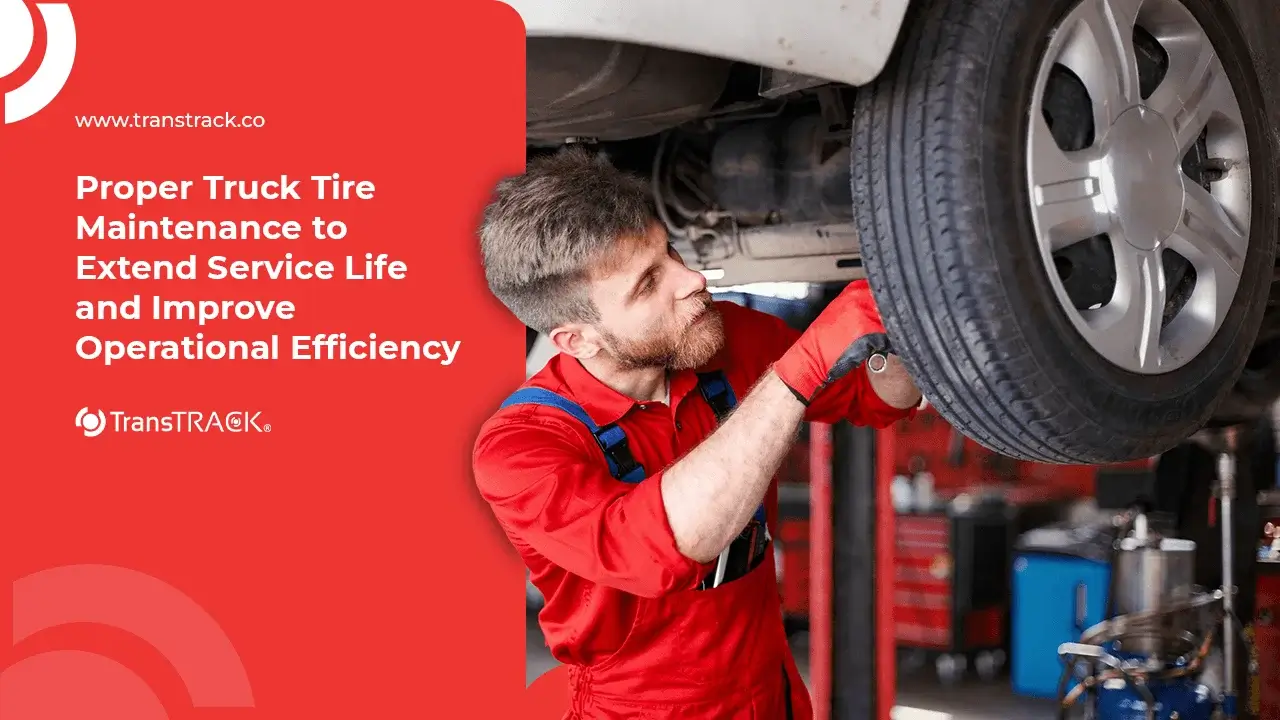
Truck tire maintenance and care are essential for ensuring safety, operational efficiency, and the longevity of your fleet. By regularly checking tire pressure, rotating tires, performing wheel alignment, and monitoring tread condition, companies can reduce the risk of damage, lower operating costs, and improve vehicle productivity in the long term. Read more about it in the following TransTRACK article!
What is meant by truck tire maintenance and care?
Truck tire maintenance and care is a series of routine inspections, maintenance tasks, and management practices designed to ensure that tires remain safe, durable, and capable of supporting optimal vehicle performance. The goal is to prevent premature damage, reduce the risk of accidents, improve fuel efficiency, and lower fleet operating costs.
The 5 Key Pillars of Truck Tire Maintenance
To ensure that truck tires have a longer service life, are safe to use, and support fleet operational efficiency, companies need to implement the following maintenance practices:
1. Tire Pressure Management
Make sure the tire pressure is always in line with the manufacturer’s recommendations. Pressure that is too low or too high can accelerate tire wear and increase fuel consumption.
2. Regular Tire Rotation
Rotate your tires regularly to ensure even wear and maximize their lifespan.
3. Spooring & Balancing (Wheel Alignment)
Check the wheel alignment and balance regularly to prevent uneven wear and maintain vehicle stability.
4. Tread Depth Monitoring
Monitor your tire tread depth to ensure good traction and determine the right time to replace your tires.
5. Load and Speed Control
Avoid overloading and speeding, as these can increase the risk of damage, including tire blowouts.
Tire Pressure Maintenance Interval & Standardization Matrix
Implementing a consistent inspection schedule and maintaining proper tire pressure helps improve safety, extend tire life, and reduce fleet operating costs.
| Maintenance Activities | Screening Interval | Purpose |
| Tire Pressure Check | Daily (before surgery) | Ensuring that the pressure meets standards to prevent premature wear and improve fuel efficiency |
| Visual Tire Inspection | Weekly | Identifying cracks, tears, lumps, foreign objects, and other damage at an early stage |
| Tread Depth Measurement | Monthly | Ensuring optimal traction and determining when tires need to be replaced |
| Tire Rotation | Every 10,000–20,000 km* | Even out tire wear and extend tire life |
| Spooring & Balancing | Every 20,000–40,000 km* or as needed | Maintaining vehicle stability and preventing uneven wear |
| Operational Cost Review | Every journey | Ensure that the load does not exceed the recommended capacity |
| Tire Pressure Standards | Based on the manufacturer’s specifications and load conditions | Maintaining fleet performance, safety, and operational efficiency |
*The interval may vary depending on the type of vehicle, road conditions, operating patterns, and the tire manufacturer’s recommendations.
Calculating the Cost per Kilometer (CPK) of Truck Tires
Calculating Cost per Kilometer (CPK) helps companies determine the cost of tire usage per kilometer traveled. This metric is essential for evaluating the efficiency of tire management and controlling fleet operating costs.
CPK Formula for Truck Tires

Sample Calculation
For example, a truck tire costs Rp8,000,000 and can last for 120,000 km before needing to be replaced.
CPK = Rp8,000,000 ÷ 120,000 km = Rp66.7/km
This means that every kilometer driven results in tire costs of approximately Rp67 per km.
By monitoring the CPK on a regular basis, companies can identify cost-saving opportunities, evaluate tire performance, and make more effective decisions regarding tire procurement and maintenance.
Conclusion
Effective truck tire maintenance focuses not only on replacing tires when they are worn out, but also includes managing tire pressure, performing regular tire rotations, wheel alignment and balancing, monitoring tread depth, and controlling vehicle load and speed. By implementing a structured maintenance program, companies can extend tire life, improve operational safety, reduce downtime, and lower overall fleet operating costs.
To optimize this process, companies can utilize the Vehicle Maintenance System (VMS) from TransTRACK. This solution helps centrally monitor vehicle maintenance schedules, manage routine inspections, record maintenance history, and provide automatic reminders for upcoming maintenance activities. With better visibility into the condition of the fleet, companies can make more informed maintenance decisions, improve operational efficiency, and maximize the service life of both vehicle assets and truck tires.
FAQ
When is the best time to rotate truck tires?
Truck tires should ideally be rotated every 10,000 to 15,000 kilometers or at least once every three months. However, this interval may vary depending on road conditions, operational loads, and the tire manufacturer’s recommendations.
How can I make sure my truck tires last longer and don’t wear unevenly?
Check your tire pressure regularly, have your tires aligned and balanced periodically, rotate your tires according to the schedule, and avoid overloading, which can cause uneven wear.
Are retreaded truck tires safe to use for logistics operations?
Retreaded tires manufactured to quality standards can be used for logistics operations. However, retreaded tires are generally recommended for the drive axle or trailer and should not be used on the front steering axle, which plays a critical role in vehicle control.
Why should truck tire pressure be checked regularly?
Incorrect tire pressure can accelerate tire wear, increase fuel consumption, reduce vehicle stability, and increase the risk of tire damage or blowouts while driving.
How do you calculate the cost per kilometer (CPK) for tires?
CPK is calculated by dividing the total tire cost over the tire’s service life by the total mileage achieved. This metric helps companies evaluate tire efficiency and control fleet operating costs.
Recent Post




Topic :