Bahasa Indonesia
Understanding Mining Digitalization and Its Impact on Operations
Posted on August 28, 2026 by Nur Wachda Mihmidati
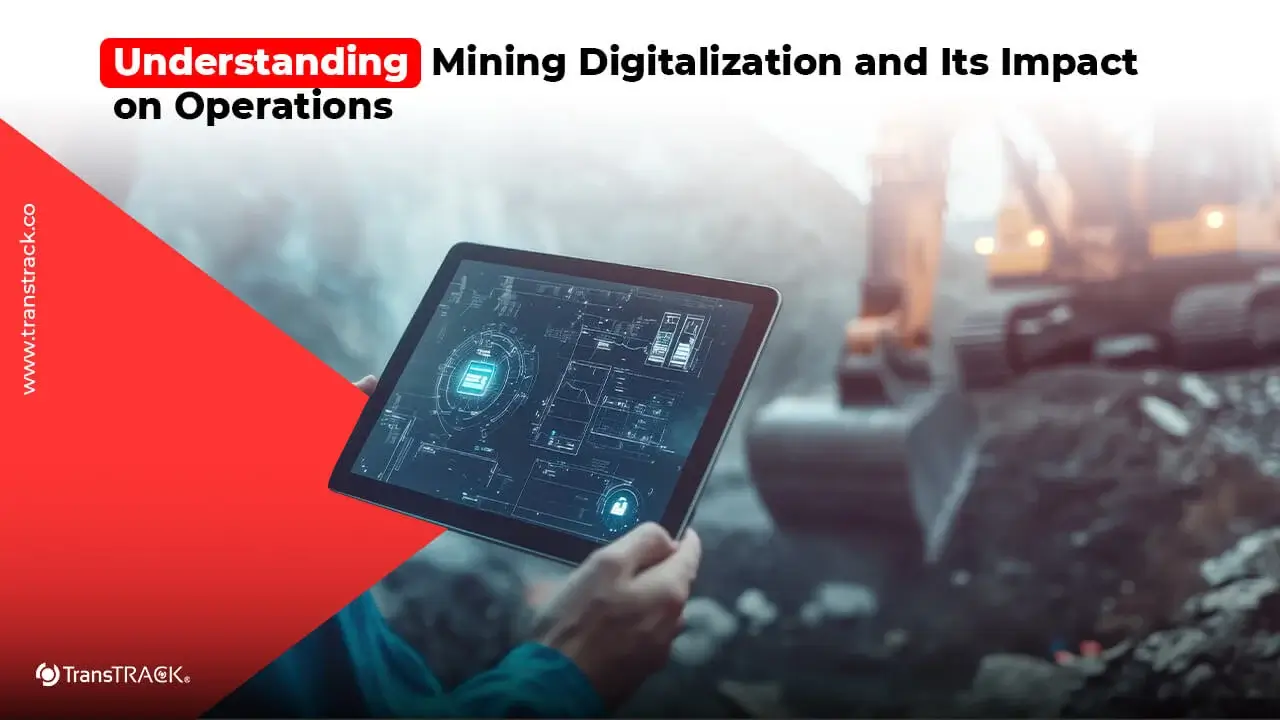
Mining digitalization is the process of applying digital technologies such as IoT, GPS, AI, sensors, telematics, and data analytics to optimize various mining activities. These technologies enable companies to monitor their fleets and heavy equipment in real time, improve workplace safety, control operating costs, and support data-driven decision-making to create more efficient and sustainable mining operations. Read the full explanation in the following article TransTRACK!
What Is Mining Digitalization?
Mining digitization is the process of applying digital technology to transform how mining companies manage their operations—from vehicles and heavy equipment to the workforce, production, safety, and environmental monitoring.
By leveraging IoT, GPS, sensors, AI, telematics, cloud computing, and data analytics, companies can collect and analyze operational data in real time to improve efficiency, productivity, safety, and cost control.
Key Technology Pillars in the Digitalization of the Mining Sector
Various digital technologies serve as the foundation for creating mining operations that are more measurable, integrated, efficient, and safe. Here are some of the key technologies that are widely used:
Fleet Management System (FMS) & Heavy Equipment Telematics
Monitor the location, activity, utilization, fuel consumption, and condition of heavy equipment in real time to improve operational efficiency. This data helps companies optimize fleet usage and reduce operating costs.
Internet of Things (IoT) & Wireless Sensors
Connecting machines and sensors to automatically collect operational data, so that asset conditions can be monitored and potential problems detected early. This technology enables more accurate asset monitoring without relying on manual inspections.
Autonomous Vehicles & Artificial Intelligence (AI)
Supports vehicle automation and data analysis to optimize routes, productivity, predictive maintenance, and workplace safety. AI can also help companies make decisions based on available patterns and operational data.
Drones & GIS for Aerial Imaging
Generates aerial data and imagery to monitor mining areas, track operational progress, assess land conditions, and support mining surveys and planning. The spatial information generated helps companies gain a clearer and more accurate understanding of mining areas more quickly.
The Real Impact of Mining Digitization on Business Operations
The adoption of digital technology not only speeds up work processes but also has a direct impact on productivity, safety, operating costs, and sustainability in the mining industry.
- Improving Operational Efficiency Real-time data helps optimize heavy equipment utilization, vehicle routes, working hours, and operational productivity.
- Workplace Safety & Zero Harm GoalB Monitoring vehicles, driver behavior, and operational conditions helps identify and reduce potential accident risks.
- Cost Savings & Effective Maintenance Monitoring fuel consumption and vehicle condition supports cost control and the implementation of predictive maintenance to prevent unexpected breakdowns.
- ESG Compliance & Sustainability Collecting data on emissions, energy consumption, and operational activities helps companies meet their ESG targets and implement more sustainable mining practices.
Conclusion
The digitization of mining is a crucial step toward creating operations that are more efficient, safe, measurable, and sustainable. By leveraging technologies such as the IoT, telematics, AI, and monitoring systems, mining companies can optimize their fleets, control costs, improve safety, and make decisions based on real-time data.
To support this transformation, TransTRACK offers a Fleet Management System and a Vehicle Surveillance System that help companies monitor their fleets and vehicle activities more comprehensively. From vehicle locations and activities to monitoring conditions in the field, all of this information can be used to improve control and operational efficiency at the mine.
Ready to take your mining operations to a more digital level? Use TransTRACK’s Fleet Management System and Vehicle Surveillance System to gain better fleet visibility and support safer, more efficient mining operations.
FAQ
What does the digitization of mining actually mean?
Mining digitization is the application of digital technologies such as IoT, GPS, AI, sensors, and data analytics to monitor, automate, and optimize various mining activities. The goal is to improve efficiency, safety, productivity, and data-driven decision-making.
Will the digitization of mining replace the human workforce?
Not entirely. Digitalization plays a greater role in reducing manual labor, aiding decision-making, and improving workplace safety. The workforce continues to play a vital role, particularly in supervision, operating technology, and tasks that require human expertise and decision-making.
What is the biggest challenge in implementing digitalization at mining sites?
Common challenges include network and infrastructure limitations, human resource readiness, integration with existing systems, investment costs, and the geographical conditions of the mining site. Therefore, implementation should be carried out in phases according to operational needs and readiness.
How can you begin the digitization process at a medium-scale mining site?
Start with the processes that have the greatest impact, such as fleet monitoring, fuel consumption, vehicle safety, and asset maintenance. Companies can use a Fleet Management System to collect operational data in real time, and then expand digitization to other processes as needed.
Recent Post



Topic :