Bahasa Indonesia

Tank Container for Flammable Liquids: Risks and Prevention Measures
Posted on October 26, 2026 by Nur Wachda Mihmidati
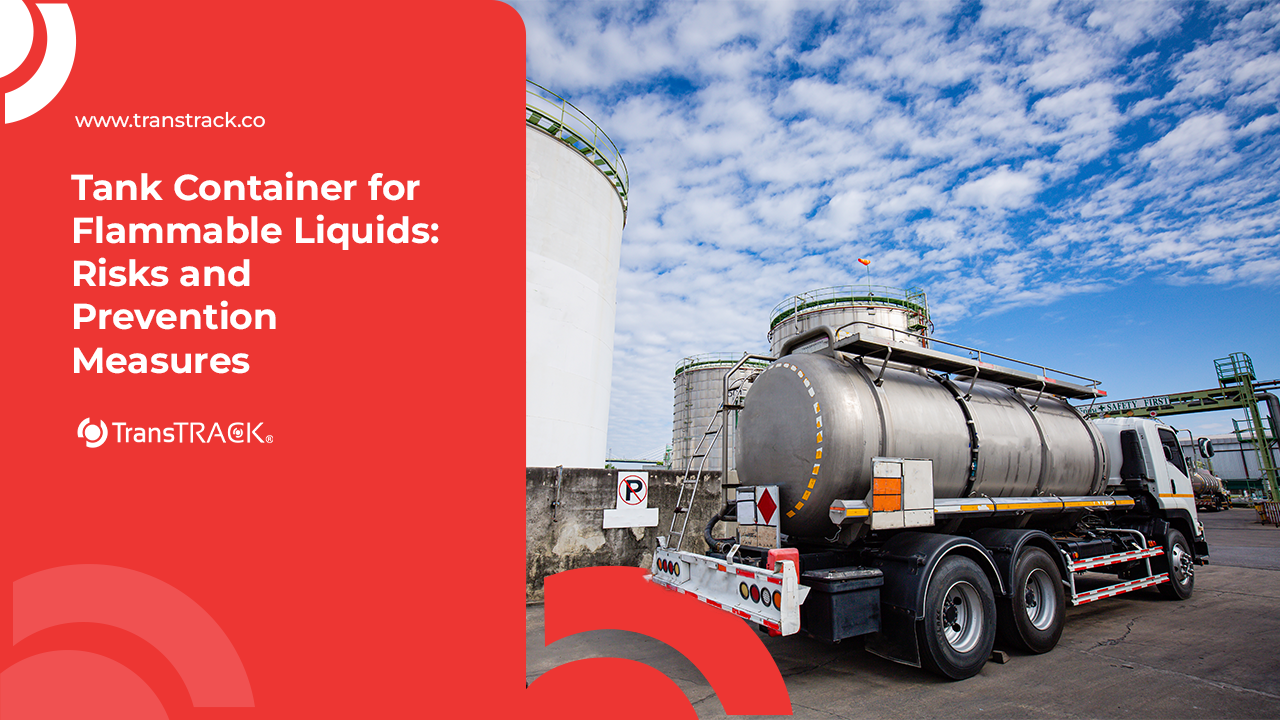
Tank containers are used to transport liquids, gases, and chemicals by sea and land. For dangerous goods shipments, inspection, segregation, and emergency response procedures are essential, especially following the tank container fire incident at NPCT1 Tanjung Priok in September 2026. Learn more with TransTRACK!
What Is a Tank Container?
A tank container, or ISO tank container, is a tank-shaped transport unit mounted on a standard container frame. It is designed to transport liquids, gases, chemicals, and specialized cargo efficiently and safely across different modes of transportation.
The Function of Tank Containers in the Logistics Industry
The following are the functions of tank containers in the logistics industry:
- Transport large volumes of bulk liquids more efficiently than drums or IBCs.
- Support multimodal transportation, allowing cargo to move from ships to trucks or trains without repeated transfer processes.
- Maintain product quality and safety through sealed, standardized tank designs.
- Reduce the risk of spills and contamination compared with secondary packaging.
- Speed up loading and unloading through integrated valves, manholes, and fittings.
Types of Cargo That Can Be Transported
Several types of cargo that can be transported include:
- Industrial chemical liquids, such as solvents, acids, and process chemicals.
- Crude oil, fuels, and petroleum-derived products.
- Vegetable oils, food-grade liquids, and food industry raw materials.
- Liquefied gases or pressurized gases, according to tank container specifications.
- Hazardous materials or dangerous goods that comply with the IMDG Code and relevant transportation regulations.
Understanding Tank Containers for Dangerous Goods
Tank containers for dangerous goods must meet specific design, testing, labeling, and handling standards. The goal is to ensure hazardous cargo does not cause leaks, chemical reactions, fires, or exposure that endangers workers and the environment.
What Are Dangerous Goods?
Dangerous goods are items or substances that may pose risks to safety, health, property, or the environment during storage and transportation. Their classification includes flammable materials, corrosives, toxic substances, oxidizers, pressurized gases, radioactive materials, and substances that may react dangerously.
Tank Containers for Flammable Liquids
Flammable liquids are generally classified as Class 3 dangerous goods. Tank containers carrying these materials must be equipped with appropriate safety systems, particularly to control pressure, vapor, static electricity, and potential ignition sources.
Lessons from the Tank Container Fire in Priok on September 21, 2026
The tank container fire at New Priok Container Terminal One (NPCT1) is a reminder that dangerous goods management requires comprehensive risk control, not only during transportation.
Brief Chronology of the NPCT1 Incident
The incident occurred at Berth 820, DG Block, NPCT1, North Jakarta, on Monday, September 21, 2026. Fire was observed coming from one container carrying crude oil at around 3:20 PM WIB, and the fire report was received at 3:44 PM WIB.
Number of Tank Containers and Dangerous Goods Containers Burned
According to initial reports, 51 ISO tank containers and one dangerous goods container were burned. Initial indications suggested that the fire originated from flammable crude oil cargo, although the exact cause is still under investigation.
Firefighting and Cooling Response
Responders deployed 14 fire trucks and approximately 70 personnel to handle the fire. The fire was reported extinguished at 4:45 PM WIB, after which the area entered a cooling phase to prevent secondary fires. There were no fatalities or injuries in the incident.
Tank Container Safety Risks
Tank container safety risks can occur during filling, storage, transfer, and delivery, including:
- Leaks: Damage to the tank, valve, or seal can cause hazardous material and flammable vapor leaks.
- Ignition sources: Open flames, sparks, cigarettes, and welding work can trigger fires.
- Static electricity: Without proper grounding and bonding, static electricity during loading and unloading can create sparks.
- Excessive pressure: Overfilling or uncontrolled pressure can damage the tank.
- Component damage: Worn or corroded valves, fittings, or seals increase leak risks.
- Cargo declaration errors: Inaccurate UN numbers or hazard classes can lead to improper handling.
- Improper segregation: Mixing incompatible cargo can increase the impact of an incident.
- Transportation accidents: Collisions or rollovers can damage tanks and cause leaks or fires.
Tank Container Safety at Terminals and Warehouses
Safety management at terminals and warehouses must be carried out systematically, especially in dangerous goods areas, including:
- Physical inspections: Check the condition of tanks, frames, valves, fittings, and seals before placement.
- Document verification: Ensure hazard labels, UN numbers, and cargo documents are accurate.
- Cargo segregation: Separate goods based on hazard class and chemical compatibility.
- Ignition source control: Restrict activities and equipment that may trigger fires.
- Grounding and bonding: Control static electricity during loading and unloading.
- Ventilation: Prevent the accumulation of flammable vapors and hazardous gases.
- Emergency readiness: Provide fire extinguishers, hydrants, spill kits, and evacuation routes.
- Access restrictions: Allow only authorized personnel wearing appropriate PPE.
- Condition monitoring: Check temperature and pressure regularly when required.
How to Prevent Tank Container Fires
Preventing tank container fires requires a combination of suitable equipment, operational discipline, and team preparedness, as follows:
Match the tank container: Choose a tank appropriate for the cargo’s characteristics, pressure, temperature, and hazard level.
Conduct inspections: Inspect the tank before filling and shipping, including valves, hoses, seals, and connections.
Avoid overfilling: Follow filling limits and ensure pressure safety systems are functioning.
Apply grounding and bonding: Control static electricity during liquid transfer.
Control ignition sources: Prohibit smoking and monitor work that generates heat or sparks.
Ensure proper labeling: Use correct hazard labels, placards, and UN numbers.
Segregate dangerous goods: Group cargo based on hazard class and chemical compatibility.
Use PPE: Ensure operators wear PPE according to Safety Data Sheet (SDS) guidance.
Prepare emergency response: Establish procedures for leaks, fires, chemical exposure, and evacuation.
Conduct regular training: Train operators, drivers, and terminal staff through training and emergency drills.
Handling Tank Containers with Flammable Liquids During an Incident
Actions that can be taken during an incident include:
- Activate emergency response procedures according to terminal and company SOPs.
- Isolate the area and restrict access for unauthorized personnel.
- Remove ignition sources if it is safe to do so.
- Evacuate personnel to assembly points through designated routes.
- Contact firefighters and HAZMAT teams for further handling.
- Use extinguishing agents appropriate to the material and as directed by authorized responders.
- Do not open or approach the tank without authorization.
- Carry out cooling and follow-up monitoring by authorized personnel to prevent reignition.
- Document and report the incident for investigation and procedure evaluation.
Conclusion
Tank containers are an important solution for liquid and chemical logistics, but their management requires strict safety standards. The tank container fire at NPCT1 underscores that equipment inspection, document verification, cargo segregation, ignition source control, and emergency preparedness must be applied consistently across the supply chain.
To support more controlled and integrated logistics operations, ensure your company uses a Logistic Service Integrator system. Visit TransTRACK to learn more about digital solutions that help companies manage transportation, fleet, and supply chain operations more transparently and efficiently.
FAQ
What Is the Safe Procedure for Loading and Unloading Tank Containers?
Safe procedures include inspecting the tank container’s condition, verifying cargo documents and labels, applying grounding and bonding, using PPE according to the SDS, controlling ignition sources, and monitoring pressure and leaks during transfer.
What Documents Are Required for Dangerous Goods Transportation?
Commonly required documents include a Dangerous Goods Declaration, Material Safety Data Sheet (SDS), shipping documents, UN number information, hazard class, packing group, and labels and placards that comply with transportation regulations.
What Is Class 3 Classification for Dangerous Goods?
Class 3 is the dangerous goods classification for flammable liquids. Examples include gasoline, solvents, alcohol, and certain petroleum products that can produce easily ignitable vapors.
Recent Post
How Does Port Digitization Improve Efficiency and Safety?
October 30, 2026

What Is a Hydraulic Brake? How It Works and Its Main Components
October 28, 2026


Topic :