Bahasa Indonesia
Understanding Port Management and Its Role in the Global Logistics Chain
Posted on May 13, 2026 by Nur Wachda Mihmidati
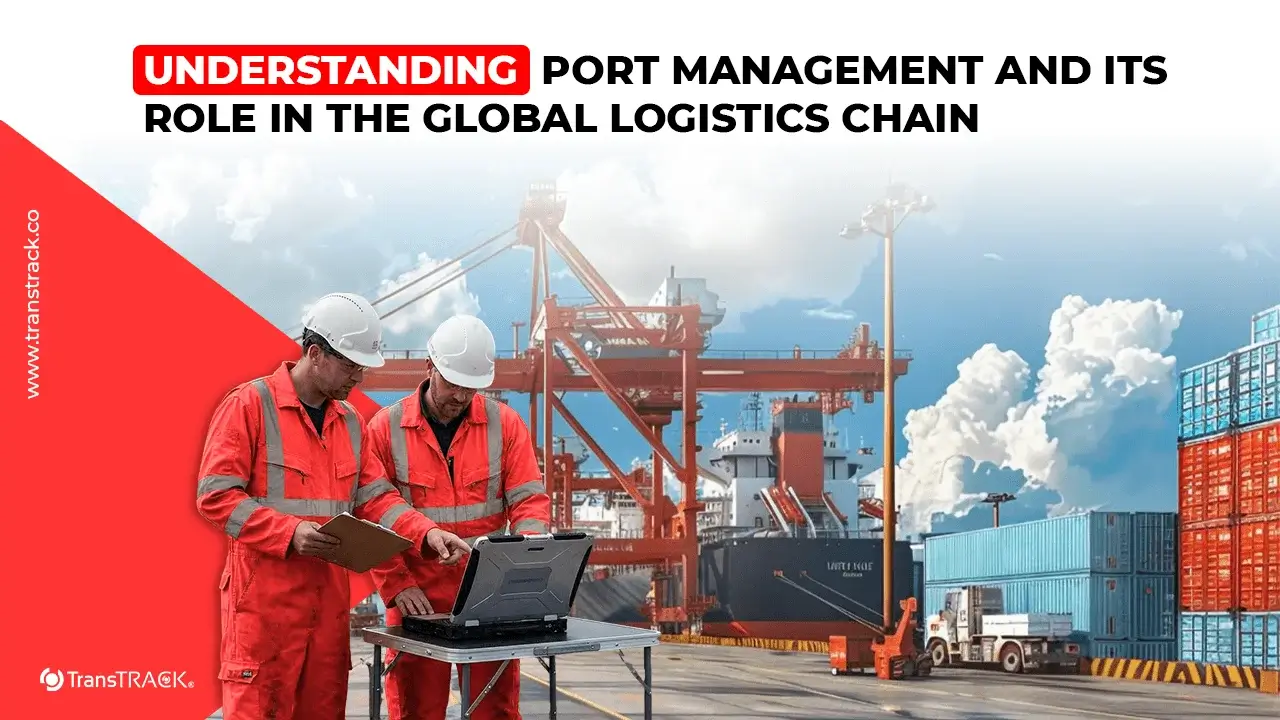
Port management is an integrated management system that regulates the operations of ships, cargo, and logistics services at ports to ensure they run safely, efficiently, and in a coordinated manner. This system encompasses administrative functions, terminal operations, and connectivity with the inland supply chain to support the smooth flow of national and international trade. Read the full explanation in the following TransTRACK article!
What is Port Management?
Port management is the process of managing all operational, administrative, logistical, and infrastructure activities at a port to ensure that the flow of ships, cargo, vehicles, and passengers proceeds safely, efficiently, and in an integrated manner.
A well-managed port can support both national and international supply chains more effectively, particularly in the logistics, import-export, energy, mining, and maritime sectors
The Cornerstones of Modern Port Management
Modern port management focuses not only on cargo handling activities, but also on the integration of services, regulations, and logistics connectivity to ensure more efficient operations.
1. Functions of Government
Government functions at the port play a role in ensuring that all maritime activities are conducted in accordance with regulations, safely, and in an orderly manner. These functions typically involve port authorities, the harbor master, immigration, quarantine, and customs.
Some of his major roles include:
- Regulation of vessel traffic entering and leaving the port
- Maritime safety oversight by the port authority
- Inspection of ship and cargo documents
- Customs and Excise Oversight
- Port Area Security Control
- Enforcement of national and international maritime regulations
Government functions are essential for ensuring smooth operations while also ensuring compliance with safety standards and international trade regulations.
2. Business Functions
The operational function focuses on port operations and services to ensure that logistics processes run efficiently and productively. This management is typically carried out by port operators or terminal companies.
Services included in the management function include:
- Container and bulk terminal operations
- Cargo loading and unloading services
- Ship pilotage
- Vessel delay (towage)
- Warehouse and storage area management
- Provision of heavy equipment and port infrastructure
- Digital logistics monitoring and tracking system
Optimizing warehouse operations helps reduce dwell time, speed up the flow of goods, and improve supply chain efficiency.
3. Hinterland Connectivity
Hinterland connectivity refers to a port’s connections to industrial zones, distribution centers, warehouses, and inland transportation networks. This aspect is a key factor in the effectiveness of the national logistics system.
Hinterland connectivity includes:
- Integration of ports with highways and railways
- Access to industrial and warehousing areas
- Distribution of goods to regional logistics centers
- Coordination between maritime and land transportation
- The use of technology to monitor vehicle and cargo traffic
A port with good hinterland connectivity can speed up the distribution of goods, reduce logistics costs, and better support regional economic growth.
How Does Port Management Work?
Port management operates as an integrated system that coordinates the movement of ships, cargo, and vehicles from sea to land in a coordinated and real-time manner.
1. Vessel Planning & Scheduling
Before a ship arrives, the port coordinates the berthing schedule, dock availability, and service requirements such as pilotage and towing. This step is crucial for avoiding queues and bottlenecks.
2. Arrival & Ship Handling
When a ship enters the port area, the harbor master and pilot coordinate the navigation until the ship safely docks at the pier. This process ensures safety and regulatory compliance.
3. Loading and Unloading Process
After docking, loading and unloading operations are carried out using cranes, heavy equipment, and terminal systems. Goods or containers are moved from the ship to the yard—or vice versa—in a controlled manner.
4. Yard & Warehouse Management
Goods that have been unloaded are temporarily stored in a yard or warehouse before being distributed. A yard management system helps organize the placement and flow of goods to prevent congestion.
5. Distribution to the Hinterland
The goods are then distributed to industrial zones or logistics hubs by truck, train, or other modes of transportation. This stage connects the port to the inland supply chain.
6. Monitoring & Digital Control
The entire process is monitored using digital systems such as the Terminal Operating System (TOS), cargo tracking, and fleet monitoring to ensure efficiency, transparency, and the accuracy of operational data.
Challenges and Trends in Port Management Digitalization
Digital transformation in the port sector continues to evolve to meet the need for operational efficiency, transparency, and sustainability in the era of Industry 4.0.
Implementasi Inaportnet dan NLE (National Logistics Ecosystem)
The digitization of bureaucratic processes through Inaportnet and the National Logistics Ecosystem (NLE) aims to streamline licensing procedures, documentation, and interagency coordination. This system helps accelerate the flow of goods, reduce logistics costs, and enhance the transparency of port services.
Sustainability (Green Port)
The Green Port concept focuses on environmentally friendly port management, including ship waste management, energy efficiency, and the reduction of carbon emissions from operational activities. This approach supports the long-term sustainability of the maritime industry.
Cybersecurity
As digitalization advances, cybersecurity has become a priority for protecting logistics data, operational systems, and cross-platform communications. This protection is essential to prevent operational disruptions caused by cyberattacks at ports.
Smart Port Transformation: The Future of Port Management
The transformation of Smart Port is moving toward full digitalization and automation to enhance the efficiency, safety, and sustainability of modern port operations.
Implementation of IoT and AI
The use of the Internet of Things (IoT) and Artificial Intelligence (AI) enables sensors to be installed on port assets for real-time monitoring, such as the location of heavy equipment, the condition of cargo, and operational activities. This technology facilitates faster and more accurate decision-making.
Terminal Automation
Terminal automation is achieved through the use of Autonomous Guided Vehicles (AGVs) and robotic systems to transport containers automatically. This increases loading and unloading speeds while reducing reliance on manual labor.
Green Port
The Green Port concept focuses on sustainable energy management through the use of low-emission electricity, fuel optimization, and the reduction of the carbon footprint from all port activities. This approach supports more environmentally friendly and sustainable operations.
Conclusion
Modern port management is an integrated system that combines administrative, operational, and logistics connectivity functions to ensure the safe, efficient, and sustainable flow of ships and cargo. With the support of digital technologies such as IoT, AI, terminal automation, and the Green Port concept, ports are now evolving into smart logistics hubs (smart ports) capable of addressing global industry challenges.
Optimize oversight and operational efficiency at your port with integrated digital solutions.
Use the TransTRACK Vessel Monitoring System to monitor vessel movements in real time, improve operational visibility, and ensure safety and compliance across all maritime activities.
Complement this with the Port Surveillance System from TransTRACK to enhance comprehensive surveillance of the port area—from dock activities and vehicles to the movement of assets on-site—in a safer and more controlled manner.
It’s time to transition to smarter, more transparent, and better-managed port operations with integrated monitoring technology.
FAQ
What are the main functions of port management?
Port management has four main functions: Regulatory Function (Regulator), Operational Function (Operator), Logistics Service Function, and Economic Driver Function (Hinterland). These four functions work together to ensure that the port operates safely, efficiently, and productively.
What are the primary responsibilities of port management?
Key responsibilities include infrastructure asset management, vessel berthing scheduling (berth planning), coordination of terminal operations, and ensuring the smooth flow of documents and goods to prevent congestion.
How can we improve efficiency at the port?
Efficiency can be improved through the implementation of a Port Community System (PCS), the automation of cargo-handling equipment such as Automated Stacking Cranes, the adoption of Single Submission (SSm) for documents, and the optimization of yard layout management.
What is a Smart Port in port management?
A Smart Port is a technology-driven port concept that leverages IoT, Big Data, and AI to automate business processes, reduce carbon emissions, and enhance security in real time.
How does a Port Management System work?
The Port Management System works by integrating various operational processes into a single digital platform to track vessel locations, manage container inventory, and automate billing, thereby making all port activities more transparent and efficient.
Recent Post




Topic :