Bahasa Indonesia
Understanding Port Management in Modern Port Operations
Posted on May 1, 2026 by Nur Wachda Mihmidati
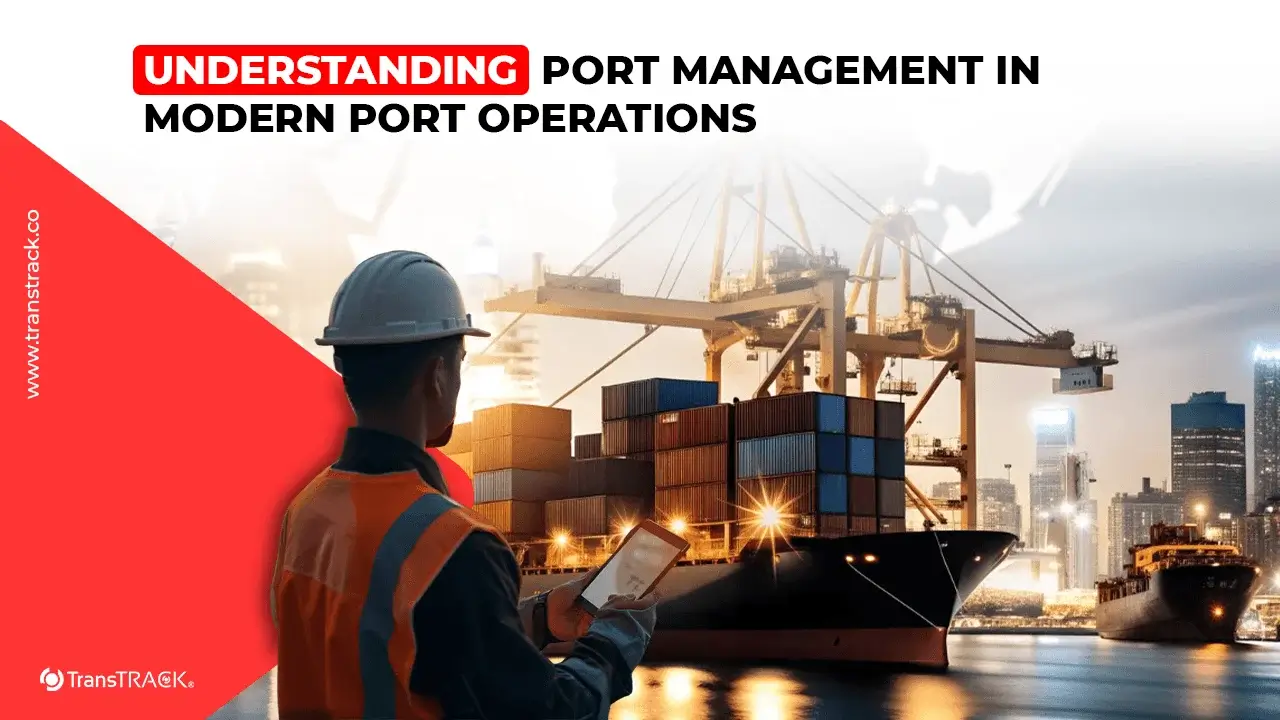
Port management is the process of managing and controlling all operational activities at a port, ranging from vessel movements and cargo loading and unloading to terminal management and coordination among stakeholders. The goal is to ensure that logistics flows run efficiently, safely, and in compliance with regulations, thereby supporting the smooth flow of both domestic and international trade. Read the full explanation in the following TransTRACK article!
What is port management?
Port management is the process of managing all operational, administrative, and logistical activities at a port to ensure that the flow of goods, ships, and passengers is efficient, safe, and compliant with regulations.
Simply put, port management encompasses how a port is organized and operated, from the arrival and berthing of ships, cargo loading and unloading, terminal operations, to coordination with customs and other logistics providers.
For example, at major ports like Tanjung Priok, port management plays a crucial role in coordinating the movement of thousands of ships and millions of containers each year to prevent congestion and delays.
The Cornerstone of Port Management Operations?
In modern port operations, port management focuses not only on physical activities such as the arrival and departure of ships and cargo, but also on the coordination of complex systems among various parties. To ensure that ports operate efficiently, safely, and in an integrated manner, there are several key pillars that form the foundation of their operations, namely:
- Marine Operations Management of vessel navigation, including pilotage, route planning, and berthing, to ensure safe and efficient operations.
- Terminal Operations Management of cargo loading and unloading processes (containers, bulk, and liquid cargo) with a focus on speed, accuracy, and efficient vessel turnaround time.
- Information Management—Utilization of the Port Community System (PCS) for data integration and synchronization among stakeholders such as shipping lines, terminal operators, customs, and logistics providers.
- Safety & Security Implementation of port safety and security standards in accordance with national and international regulations to protect crews, vessels, cargo, and port infrastructure.
Smart Port Transformation and Digitalization
In recent years, ports have undergone a major transformation toward the concept of a smart port, which relies on digital technology to improve efficiency, transparency, and service speed. These changes not only replace manual processes but also integrate the entire port ecosystem in real time.
- Terminal Automation The use of Automated Guided Vehicles (AGVs), unmanned cranes, and other automated systems to speed up loading and unloading processes and reduce reliance on manual labor.
- Internet of Things (IoT) The use of real-time sensors to accurately and continuously monitor the condition of assets, cargo movements, and the operational status of port equipment.
- Blockchain in Logistics The application of blockchain technology to enhance the transparency and security of digital documents such as e-Bills of Lading, thereby making administrative processes faster, more secure, and less susceptible to data manipulation.
Port Governance Model
In modern port management, there are several governance models used in various countries. Each model involves different levels of government and private-sector participation, depending on the desired strategies for efficiency and operational control.
Landlord Port
Port authorities own and manage the land, while operational activities such as terminal and cargo services are carried out by private entities through concession or lease arrangements.
Tool Port
Port authorities own the land and provide key equipment such as cranes and terminal facilities, while day-to-day operations and the workforce are typically managed by the private sector.
Service Port
The port authority manages all aspects of the port, from land ownership and equipment to operations. This is a traditional model characterized by a very high level of government involvement.
Conclusion
Port management is the cornerstone of ensuring the smooth operation of all port activities, from vessel movements and cargo handling to coordination among stakeholders. As global logistics flows become increasingly complex, ports are required to be not only efficient but also integrated, secure, and data-driven. The transformation toward smart ports is a crucial step in addressing these challenges through digitalization and automation.
However, operational efficiency cannot be optimized without real-time visibility into vessel movements and activities at sea. This is where technology plays a crucial role in improving the accuracy of decision-making and port operational coordination.
Improve Port Management Efficiency with a Vessel Monitoring System
Optimize your port management with the Vessel Monitoring System (VMS) from TransTRACK. With real-time vessel monitoring, you can improve visibility into your fleet’s movements, reduce berthing delays, and enhance overall port safety and operational efficiency.
It’s time to switch to a smarter, more integrated, and data-driven port management system with TransTRACK.
FAQ
What are the main responsibilities of a Port Manager?
His primary responsibilities include overseeing daily operations, ensuring compliance with international safety standards, managing relations with customs authorities, and planning port infrastructure development.
Why is port management so crucial to the national economy?
Ports serve as gateways for international trade. Efficient management can reduce logistics costs, enhance the competitiveness of exports, and ensure the availability of goods in the domestic market.
What does “dwelling time” mean in the context of a port?
Dwelling time is the period of time from when a container is unloaded from a ship until it leaves the port terminal area. The lower the value, the more efficient the port’s operations and management.
What role does digitalization play in improving port efficiency?
Digitization helps integrate data across stakeholders, streamline administrative processes, reduce human error, and enhance real-time operational visibility through systems such as the Port Community System (PCS) and IoT.
What are the main challenges in modern port management?
The main challenges include heavy vessel traffic, infrastructure limitations, complex coordination among stakeholders, and the need for significant investment in the transition to smart ports and technology-based systems.
Recent Post




Topic :