Bahasa Indonesia
Logistics Truck Maintenance Guide for More Efficient Operations
Posted on June 15, 2026 by Nur Wachda Mihmidati
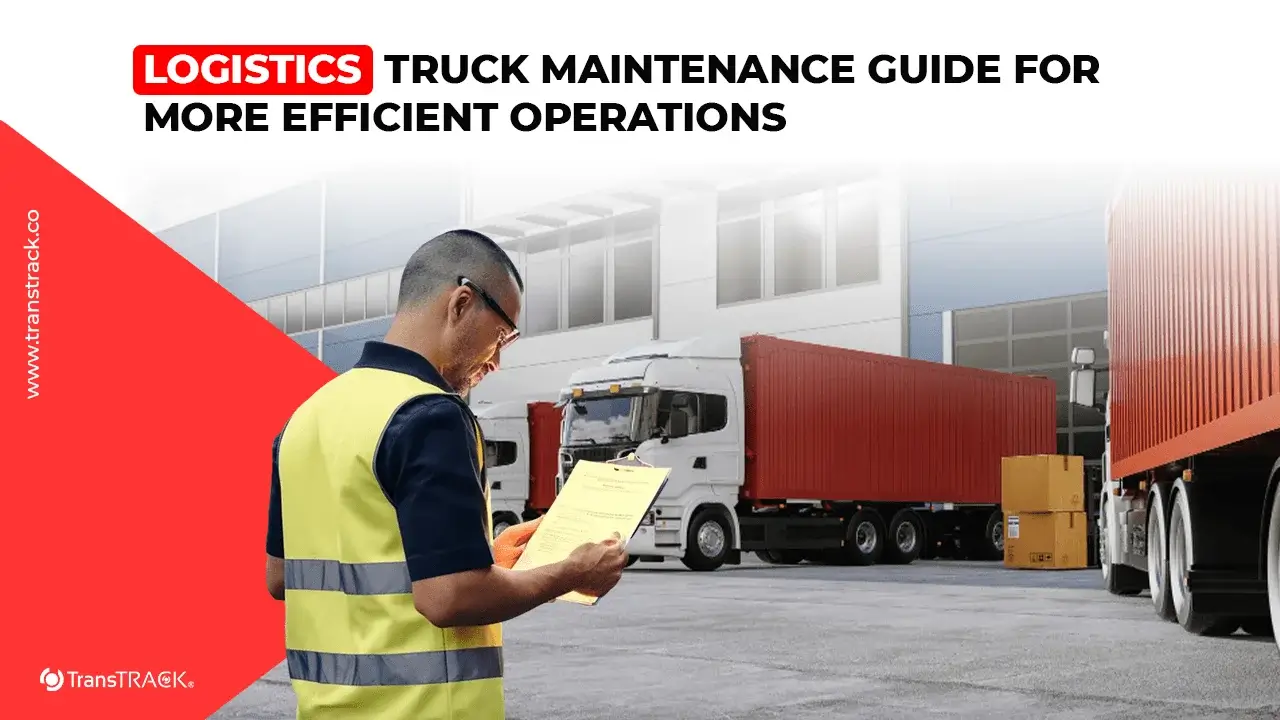
Logistics truck maintenance is a critical factor in ensuring the smooth operation of goods distribution. A poorly maintained fleet is at risk of sudden breakdowns, which can increase repair costs, cause delivery delays, and disrupt overall business productivity. Therefore, companies need to implement a planned maintenance strategy to ensure that every vehicle is always in optimal condition.
Through routine inspections, regular maintenance, and the use of digital technologies such as Vehicle Maintenance Systems, companies can improve fleet reliability, reduce downtime, and optimize operating costs. This article discusses the importance of logistics truck maintenance, commonly used methods, maintenance checklists, and the role of digitalization in modern fleet management. Read the full explanation in the following TransTRACK article!
What is Logistics Truck Maintenance?
Logistics truck maintenance is a series of routine inspections, maintenance tasks, and repairs performed to keep vehicles in optimal condition, safe, and ready for use in goods distribution operations. This maintenance includes inspections of the engine, braking system, tires, oil, electrical system, suspension, and other safety components.
In the logistics industry, truck maintenance plays a critical role in preventing sudden breakdowns, reducing major repair costs, improving driver safety, and ensuring on-time delivery of goods. By implementing a scheduled maintenance program, companies can extend the lifespan of their vehicles, improve fuel efficiency, and minimize fleet downtime.
What Is the Purpose of Logistics Truck Maintenance?
Logistics truck maintenance is performed to ensure that vehicles are always in optimal condition so that freight operations can run safely, smoothly, and efficiently.
The main objectives of logistics truck maintenance include:
- Ensuring the safety of the driver and the cargo.
- Preventing sudden breakdowns that could disrupt operations.
- Reduce long-term repair and maintenance costs.
- Extend the vehicle’s service life.
- Improving fuel efficiency and fleet performance.
- Ensuring that shipments remain on time.
With regular maintenance, companies can improve the reliability of their fleets while minimizing the risk of downtime and reducing operating costs.
Why Is Logistics Truck Maintenance Vital to Your Business?
Logistics truck maintenance is not merely a routine maintenance activity, but a strategic investment that directly impacts operational efficiency, workplace safety, and the company’s compliance with regulations. A well-maintained fleet can help businesses reduce costs, minimize risks, and ensure the smooth distribution of goods.
Total Cost of Ownership (TCO) & Downtime
- Reduce the cost of major repairs caused by undetected damage.
- Extend the service life of vehicles and major components.
- Reducing fuel consumption through optimal vehicle performance.
- Reducing downtime that can hinder distribution and delivery processes.
- Improving fleet productivity and the utilization of company assets.
Occupational Health and Safety (OHS) for Maritime and Land Operations
- Ensure that the vehicle is always safe to operate.
- Reduce the risk of accidents caused by component failures, such as those involving brakes, tires, or the steering system.
- Protecting the safety of drivers, operational crews, and other road users.
- Ensuring the safety of goods during transport.
- Supporting the implementation of a safety culture in logistics operations.
Legal and Regulatory Compliance
- Ensuring that vehicles meet applicable roadworthiness standards.
- Supporting compliance with land transportation and logistics safety regulations.
- Minimizing the risk of penalties, fines, or operational suspensions resulting from violations.
- Helps ensure that vehicle inspection and maintenance records are complete.
- Enhancing the company’s credibility in the eyes of customers, business partners, and regulators.
3 Methods for Maintaining Logistics Trucks
To keep their fleet reliable and ready for operation, companies need to implement maintenance methods that are appropriate for the condition of their vehicles and their operational needs. Here are the three most commonly used maintenance methods for logistics trucks:
Preventive Maintenance
- Conducted on a scheduled basis based on time or distance traveled.
- The goal is to prevent damage before it occurs.
- Includes oil changes, brake inspections, tire checks, and routine maintenance.
- Helps reduce the risk of breakdowns and operational downtime.
Predictive Maintenance
- Using real-time vehicle data and condition monitoring.
- The goal is to detect potential damage early on.
- Utilizing sensors, telematics, or vehicle performance analysis.
- Helps improve maintenance efficiency and optimize operating costs.
Corrective Maintenance
- This is done after damage or a malfunction is detected in the vehicle.
- The goal is to restore the vehicle’s functionality so that it can operate normally again.
- Includes repair or replacement of damaged components.
- It is important to address issues that cannot be prevented through routine care.
Logistics Truck Maintenance SOP Checklist
A maintenance checklist helps ensure that the fleet is always safe, reliable, and ready for operation. Here are the steps typically followed:
1. Driver’s Daily Inspection (Pre-Trip Inspection)
- Check your tires and tire pressure.
- Check the vehicle’s brakes and lights.
- Check the engine oil, radiator fluid, and battery.
- Make sure there are no leaks or visible damage.
2. Light Routine Maintenance (Moderate Mileage)
- Change the oil and filter regularly.
- Check the brake and electrical systems.
- Check the condition of the tires, suspension, and steering.
- Clean or replace the air filter.
3. Major Maintenance (Overhaul & Heavy Maintenance)
- A thorough inspection of the engine and transmission.
- Replace worn-out parts.
- Check the cooling and fuel systems.
- Perform an overhaul if necessary.
Logistics Truck Maintenance Interval Matrix
A maintenance interval matrix helps companies schedule fleet maintenance consistently to maintain vehicle performance and prevent unexpected breakdowns.
| Component/Item | Daily | Monthly | 6 Months | Annual |
| Ban | ✓ | ✓ | ✓ | ✓ |
| Brake System | ✓ | ✓ | ✓ | ✓ |
| Engine Oil | – | ✓ | ✓ | ✓ |
| Oil & Air Filters | – | ✓ | ✓ | ✓ |
| Batteries & Electrical Systems | – | ✓ | ✓ | ✓ |
| Suspension & Steering | – | ✓ | ✓ | ✓ |
| Cooling System | – | ✓ | ✓ | ✓ |
| Transmission & Drivetrain | – | – | ✓ | ✓ |
| Comprehensive Engine Inspection | – | – | ✓ | ✓ |
| Overhaul/Heavy Maintenance | – | – | – | ✓ |
Note:
- Daily: Performed before the vehicle is put into service (pre-trip inspection).
- Monthly: Routine checkups and minor maintenance.
- 6 Months: Thorough inspection of the vehicle’s major components.
- Annual: Comprehensive evaluation and major maintenance to ensure the long-term reliability of the fleet.
Peran Digitalisasi: Vehicle Maintenance System
As fleet operations become increasingly complex, many companies are turning to Vehicle Maintenance Systems (VMS) to manage vehicle maintenance more effectively and systematically. These systems help automate maintenance processes, from scheduling services to monitoring vehicle condition in real time.
The main benefits of the Vehicle Maintenance System include:
- Automatic Maintenance Scheduling based on time, mileage, or vehicle operating hours.
- Fleet Condition Monitoring to detect potential issues early on.
- Service and Inspection Reminders to reduce the risk of missed maintenance.
- Digital Maintenance Logs that simplify audits and cost tracking.
- Fleet Performance Analysis to support data-driven decision-making.
- Reducing Downtime and Operating Costs through more systematic maintenance.
By implementing a Vehicle Maintenance System, companies can improve fleet reliability and extend
Conclusion
Logistics truck maintenance is a critical factor in ensuring smooth operations, workplace safety, and cost-effective transportation. By implementing proper maintenance methods, consistently following standard operating procedures (SOPs), and conducting regular inspections and servicing, companies can reduce the risk of downtime, extend the lifespan of their fleet, and boost business productivity.
In the digital age, vehicle maintenance management no longer has to be done manually. With TransTRACK’s Vehicle Maintenance System, companies can automate service schedules, monitor fleet conditions in real time, centrally manage maintenance histories, and gain data-driven insights for more effective decision-making.
Want to optimize the maintenance of your truck fleet? Take advantage ofTransTRACK’s Vehicle Maintenance System to improve vehicle reliability, reduce operating costs, and ensure your fleet is always ready to operate whenever needed. Contact the TransTRACK team for a demo and consultation tailored to your business needs.
FAQ
What are the logistics truck components that are most likely to break down if they aren’t properly maintained?
The components most prone to failure include the braking system, truck tires, the battery, the fuel filter, and the suspension system. Damage to these components can increase the risk of accidents, downtime, and higher repair costs.
Why is preventive maintenance for logistics trucks so crucial in Indonesia?
Varied road conditions, traffic congestion, heavy loads, and intensive vehicle use cause truck components to wear out more quickly. Therefore, preventive maintenance is necessary to maintain the performance and reliability of the fleet.
How can we reduce the maintenance costs of logistics trucks?
Companies can implement daily inspections, perform scheduled maintenance, use high-quality parts, improve drivers’ skills through eco-driving practices, and utilize fleet management systems to monitor and manage vehicle maintenance more effectively.
What is the difference between preventive maintenance and corrective maintenance?
Preventive maintenance is performed on a scheduled basis to prevent breakdowns before they occur, whereas corrective maintenance is performed after a vehicle has experienced a malfunction or breakdown and requires repairs.
How does a Vehicle Maintenance System help with fleet management?
The Vehicle Maintenance System helps automate service schedules, send maintenance reminders, store maintenance records digitally, and monitor vehicle condition, enabling companies to reduce downtime and improve fleet operational efficiency.
Recent Post





Topic :