Bahasa Indonesia

E-Seal TransTRACK for Jastip Delivery Security
Posted on September 28, 2026 by Nur Wachda Mihmidati
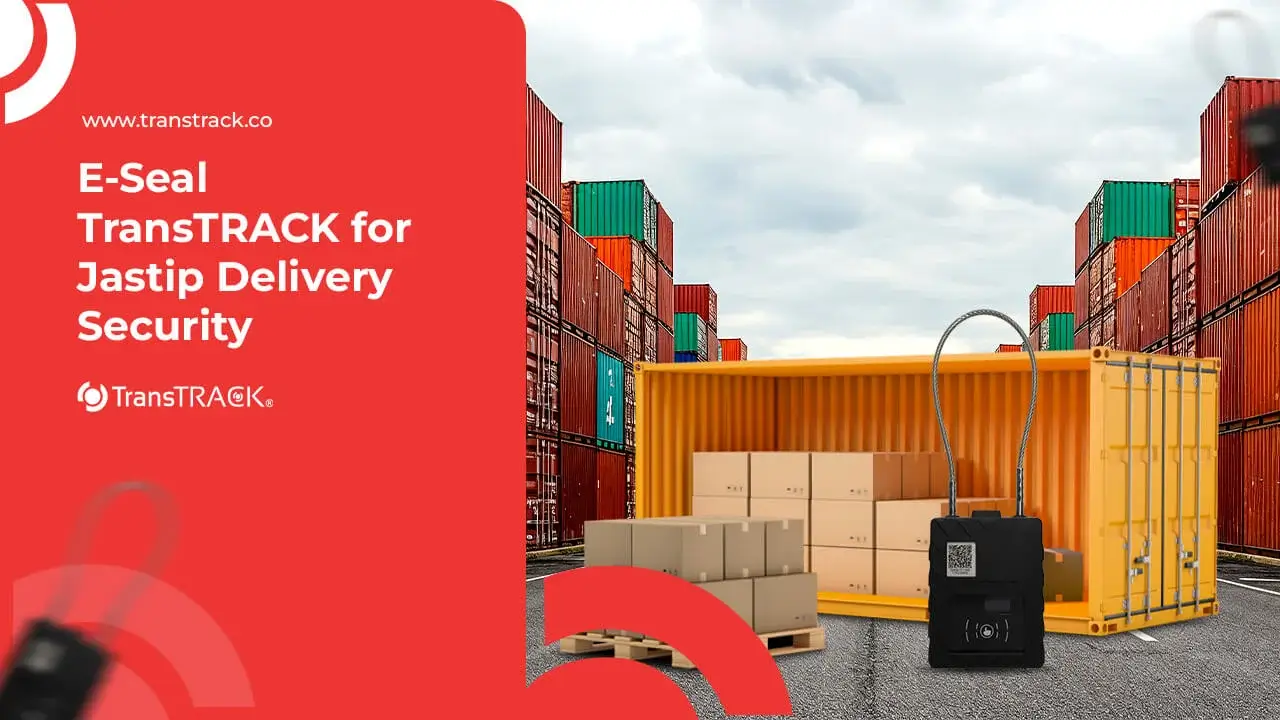
Jastip businesses—short for jasa titip, or personal shopper/proxy-shopping services—face significant challenges in keeping items secure from the time they are purchased and packed, throughout transit, until they are received by customers. The risk of lost items, unauthorized removal, misdelivery, or disputes over package condition can reduce customer trust and disrupt jastip operations.
One solution is E-Seal TransTRACK. Unlike conventional physical seals, an e-seal, or electronic seal, helps jastip operators monitor cargo security status digitally. Depending on the configuration and operational requirements, the system can provide information on when a seal is opened, the device location, and the shipment’s travel history.
How Does TransTRACK E-Seal Ensure the Security of Jastip?
E-Seal TransTRACK helps jastip businesses establish stronger security controls for delivery bags, cartons, small containers, and cargo vehicles. Every seal-opening activity can be recorded as part of a digital shipment trail.
Security Challenges in Jastip Deliveries
Jastip deliveries are more complex because a single shipment may contain items belonging to multiple customers, with varying product types, values, sizes, and final destinations.
Common jastip cargo security issues include:
- Items being mixed up because multiple packages are handled during one trip.
- Packages being lost or left behind during transit.
- Goods being removed without authorization during storage or transfer.
- Physical seals being damaged without a record of when they were opened or by whom.
- Difficulty identifying where a loss occurred when a customer complaint arises.
- Limited visibility into the location of high-value items during transit.
- The risk of disputes among jastip providers, couriers, transport partners, and customers.
A physical seal only indicates that a package may have been opened. It does not provide information about the time, location, or person who accessed the cargo, making loss investigations more difficult.
E-Seal TransTRACK Solution for Jastip
E-Seal TransTrack can be used as an electronic seal on bags, boxes, vehicles, or cargo containers to create a more structured jastip cargo security process.
In practice, e-seals can support jastip deliveries safety through the following functions:
- Securing access to shipping containers through an electronic sealing mechanism.
- Sending notifications when a seal is opened outside approved procedures.
- Recording seal opening and closing activities as a digital history.
- Helping monitor device location during transit through available tracking features.
- Providing data for investigations involving loss, damage, or route deviations.
- Supporting the monitoring of high-value goods, such as electronics, branded products, premium cosmetics, and limited-edition collectibles.
- Making it easier for jastip operators to define authorized personnel for opening cargo at specific checkpoints.
For example, a jastip operator may carry 30 customer orders from another city. All packages can be grouped in a delivery box and secured using E-Seal TransTRACK. If the box is opened outside a designated process point, the operator can receive an alert and immediately conduct a check.
Impact on Reducing Item Loss
Using E-Seal TransTRACK does not only secure cargo; it can also help prevent unauthorized access by digitally recording every cargo-opening event.
Potential benefits of e-seal implementation for jastip businesses safety include:
- Reducing the risk of item loss during transit and distribution.
- Accelerating the identification of the location or process stage where an issue occurred.
- Minimized disputes due to available jastip cargo security records.
- Improving operational discipline during handover processes.
- Helping jastip operators provide additional security evidence to customers.
- Strengthening the reputation of a jastip business as a professional and reliable service.
- Reducing potential replacement costs caused by lost or untraceable items.
For jastip businesses that handle high-value products, preventing even one loss incident can have a significant financial impact. Therefore, investment in jastip security system should be viewed as part of a broader strategy to protect customer trust and ensure business continuity.
Advantages of E-Seal vs. Physical Seals for Jastip Deliveries
Physical seals are still widely used because they are simple and easy to apply. However, as a jastip operation grows, physical seals have limitations in terms of visibility, recordkeeping, and incident response.
Key Security Comparison
| Aspect | Physical Seal | E-Seal TransTRACK |
| Security Status | Checked manually | Can be monitored through a digital system |
| Seal-Opening Information | Generally unavailable | Can be recorded as an activity history |
| Incident Notifications | Not available automatically | Can support notifications when opening or tampering occurs |
| Location Tracking | Not available | Can be connected to location-monitoring features, depending on the device and configuration |
| Shipment Audit | Depends on manual records | Provides a digital data trail that is easier to review |
| Loss Investigation | More difficult due to limited evidence | |
| Manipulation Risk | Higher if not checked routinely | More controlled through a digital monitoring system |
Physical seals are suitable for simple, low-risk shipments. However, e-seals are more appropriate for high-volume operations, high-value goods, or shipments that pass through multiple transit points.
Additional Advantages of E-Seal
Beyond improving jastip cargo security, E-Seal TransTRACK can support the digitalization of jastip logistics processes. Data generated by the device can be used to evaluate and improve operational procedures, route planning, and cargo handover systems.
Additional advantages include:
- Better visibility into cargo security status.
- Digital recordkeeping that reduces dependence on manual reports.
- Easier auditing for specific shipments.
- Data support for handling customer complaints more transparently.
- Greater accountability among partners or personnel involved in deliveries.
- Potential integration with transportation management systems and operational dashboards.
- Scalability for jastip businesses handling intercity, inter-island, or cross-border deliveries.
How E-Seal TransTRACK Works for Jastip Cargo Security
In general, E-Seal TransTRACK works by attaching an electronic sealing device to a door, container, bag, or delivery box. The device becomes part of a monitoring system that helps operators understand the security status of cargo throughout the distribution process.
Key Components of an E-Seal System
Implementing e-seals for jastip cargo security typically includes the following key components:
- An e-seal device, which is an electronic seal installed at a cargo access point.
- A communication system that sends device data to a monitoring platform.
- Seal-status sensors that detect whether the seal is locked, opened, or potentially tampered with.
- Location-tracking features to monitor cargo or vehicle movement when available under the solution configuration.
- A monitoring dashboard to view shipment status, location, alerts, and activity history.
- A notification system to inform operators when conditions require attention.
- Data logs that record security activities and shipment journeys.
With these components, jastip operators do not need to rely solely on visual checks when goods arrive. They can access more structured information to monitor the delivery process from start to finish.
Integration with Jastip Operations
E-Seal TransTRACK can be implemented as part of a jastip cargo security SOP. Integration does not need to be complex from the beginning; businesses can start with high-value shipments, high-risk routes, or deliveries involving large cargo volumes.
An example of the implementation flow is as follows:
- The jastip operator receives, checks, and records customer items.
- Items are grouped by destination, shipment type, or risk level.
- Packages are placed in designated delivery boxes or bags.
- The e-seal is installed, and the jastip cargo security status is recorded in the system.
- The operator monitors the journey and receives alerts if the seal is opened outside approved procedures.
- At the handover point, authorized personnel open the seal according to the established process.
- The shipment history can be used as documentation for transaction completion or investigation when needed.
To ensure effective implementation, jastip businesses need to clearly define who is authorized to install, open, and verify the e-seal. The SOP should also cover procedures for seal-opening alerts, route changes, delivery delays, and device failures.
E-Seal Implementation Costs for Jastip
E-Seal TransTrack costs depend on the number of units, usage duration, operating area, connectivity, integration requirements, and monitoring features. Cost calculations should align with operational scale and jastip cargo security risk levels.
Implementation Cost Components
Several cost components should be considered when implementing e-seals for jastip operations:
- Purchasing, renting, or using e-seal devices.
- Device activation and connectivity fees.
- Access to the monitoring platform or dashboard.
- Notification configuration and security parameters.
- Integration with operational systems, where required.
- Team training for installation, monitoring, and incident handling.
- Maintenance, device replacement, or technical support.
- Development of security SOPs and shipment audit processes.
For small-scale jastip businesses, e-seals can be implemented gradually. Start with high-value shipments, inter-island deliveries, or shipments that pass through multiple transit points, then expand implementation after the benefits have been demonstrated.
Cost Estimates and ROI
The ROI of E-Seal TransTRACK should be measured by its impact on risk reduction and operational efficiency. This can be assessed by comparing implementation costs with potential losses that may be prevented.
A simple calculation is:
E-Seal ROI = S + OE − IC : IC x 100%
Where:
S = Savings from Prevented Losses
OE = Operational Efficiency
IC = Implementation Cost
For example, a jastip business may face average potential losses of IDR 15 million per year due to lost items, handling errors, and customer-complaint compensation. If e-seal usage helps reduce those risks while also shortening investigation time and administrative costs, the investment may generate more value than its initial cost.
However, actual ROI depends on shipment volume, average item value, incident frequency, SOP quality, and how consistently the monitoring dashboard is used. E-seals provide the greatest value when they are integrated with disciplined handover procedures and consistent operational oversight.
Conclusion
E-Seal TransTrack offers a digital jastip cargo security solution for businesses seeking to reduce item loss, improve transparency, and strengthen customer trust. Compared to physical seals, e-seals provide better visibility through security status information, incident alerts, activity data, and cargo-monitoring support.
For jastip operators, implementing e-seals is not only about installing a security device. The technology should be supported by clear SOPs, defined authorization roles, handover documentation, and rapid follow-up when anomalies occur. With this approach, jastip businesses can build a safer, more professional, and more scalable service.
FAQ
What Is an E-Seal?
An e-seal is an electronic seal used to secure and monitor access to cargo, vehicles, containers, delivery bags, or shipping boxes. Unlike standard physical seals, e-seals can support seal-status records, activity history, tampering alerts, and shipment monitoring through a digital platform.
Is E-Seal TransTRACK Suitable for Small Jastip Businesses?
Yes. E-Seal TransTRACK can be implemented gradually based on business needs. Small jastip operators can prioritize e-seal use for high-value shipments, higher-risk routes, or deliveries involving multiple customer packages. A phased approach helps businesses control costs while measuring operational benefits.
Can E-Seal Replace a Jastip Delivery Security SOP?
No. An e-seal is a supporting tool that strengthens a security SOP; it does not replace one. Jastip businesses still need procedures for receiving items, packaging, seal installation, opening authorization, handovers, complaint handling, and incident investigation to ensure that the overall security system works effectively.
Recent Post





Topic :