Bahasa Indonesia

The Application of IoT in Logistics for Supply Chain Optimization
Posted on September 3, 2026 by Nur Wachda Mihmidati
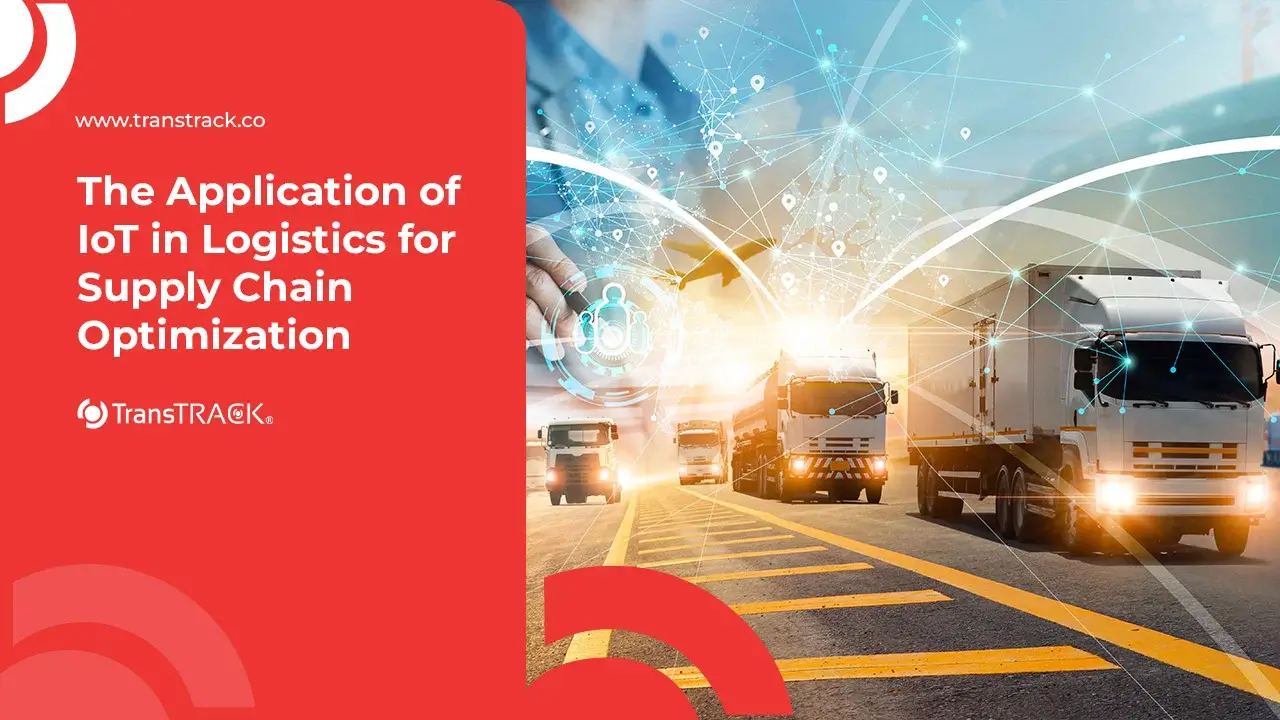
IoT in logistics is a technology that connects vehicles, sensors, and assets via the internet to collect and transmit data in real time. Its implementation helps companies improve fleet visibility, operational efficiency, cargo security, and data-driven decision-making. Read more about it in the following article TransTRACK!
What Is the IoT and How Is It Structured?
The Internet of Things (IoT) is a technology that enables physical devices such as sensors, vehicles, machines, and assets to connect to the internet to automatically collect and transmit data. In general, the IoT architecture consists of four main layers. The Sensing/Device Layer is responsible for collecting data through devices such as temperature sensors, RFID tags, and GPS trackers. The Network Layer transmits this data via communication networks such as 4G/5G, LoRaWAN, or Wi-Fi. Next, the Data Processing Layer processes and analyzes the data using cloud computing, data analytics, or AI to generate information that businesses can use.
Meanwhile, the Application Layer presents the results of data processing through an application or dashboard to help users monitor operations and make decisions. In business, IoT devices can be used for a variety of purposes, such as GPS trackers to monitor fleet locations, temperature sensors to maintain product conditions in the cold chain, RFID tags to track inventory in warehouses, fuel sensors to monitor fuel consumption, and door sensors to monitor cargo security. By integrating these various devices, IoT can improve visibility, efficiency, security, and control over operational activities.
How Is IoT Applied in Modern Logistics and Distribution?
The IoT helps logistics companies monitor assets, maintain product quality, automate processes, and prevent operational disruptions through real-time data. Here are some examples of its applications:
Monitoring Armada Secara Real-Time (Fleet Management System)
The GPS tracker sends real-time data on the vehicle’s location, speed, and trip details to the Fleet Management System (FMS). This data helps companies monitor their fleets, optimize routes, and improve operational efficiency.
Cold Chain Visibility (Cold Chain Logistics)
Temperature and humidity sensors are used to monitor the condition of goods during storage and shipping. If the temperature deviates beyond the specified limits, the system can send automatic notifications.
Smart Warehouse Automation (Smart Warehousing)
Devices such as RFID, barcode scanners, and IoT sensors help track the movement of goods and monitor inventory more accurately and efficiently.
Predictive Maintenance
IoT sensors monitor the condition of vehicles or equipment, such as engine temperature, RPM, and vibration. This data can be used to detect potential failures early and determine the appropriate maintenance schedule.
Key Benefits of IoT for Supply Chain Efficiency
The IoT helps make supply chains more transparent, efficient, and responsive by providing real-time operational data. Some of its key benefits include:
- End-to-End Visibility: Enables transparent shipment tracking, from the factory through the last-mile delivery process.
- Operational Cost Efficiency: Reducing fuel waste, unexpected fleet repair costs, and the risk of human error.
- Cargo Damage Risk Mitigation: Provides instant notifications in the event of extreme temperature changes, vibrations, or other conditions that could potentially damage the goods.
- Data-Driven Decision Making: Providing accurate data to improve Estimated Time of Arrival (ETA) predictions and optimize delivery routes.
Challenges in Implementing IoT in the Logistics Industry
Although it offers a variety of benefits, the implementation of IoT in the logistics industry also requires financial readiness, security, and technological infrastructure. Some challenges to consider include:
- Initial Investment Costs (CAPEX): These costs include expenses for IoT devices, sensors, networks, platforms, as well as installation and maintenance.
- Data Security: Companies need to protect their data and IoT devices from unauthorized access and potential cyberattacks.
- Integration with Legacy Systems: IoT devices need to integrate with existing systems, such as ERP, TMS, and WMS, to ensure optimal data flow.
Conclusion
The implementation of the Internet of Things (IoT) in logistics helps companies improve visibility, efficiency, security, and decision-making through real-time operational data. From fleet monitoring and cargo condition tracking to route optimization and predictive maintenance, IoT can serve as a critical foundation for building a more integrated and responsive supply chain.
To optimize fleet management, companies can utilize the Fleet Management System from TransTRACK, which integrates IoT technology to monitor vehicles and operational activities on a single platform. Improve fleet visibility, optimize operations, and make data-driven decisions with TransTRACK.
FAQ
Why is IoT technology so important in the modern logistics industry?
The IoT is important because it enables companies to monitor their fleets, assets, and the condition of their goods in real time. This data helps improve operational efficiency, reduce risk, and support data-driven decision-making.
What is the difference between IoT and standard GPS systems in logistics?
Conventional GPS systems generally focus on tracking vehicle locations. Meanwhile, IoT has a broader scope because it can integrate GPS with various sensors to monitor temperature, fuel levels, vehicle condition, and even operational activities in real time.
Is IoT technology suitable for small-scale logistics businesses or SMEs?
Yes. IoT can be implemented in phases based on business needs and scale. SMEs can start with simple devices such as GPS trackers to improve fleet visibility, and then add sensors or other features as operational needs evolve.
How does the IoT help improve customer satisfaction in the logistics industry?
The IoT provides more accurate and transparent shipping information, such as vehicle location and estimated time of arrival (ETA). With this information, companies can provide updates to customers more quickly and reduce uncertainty during the shipping process.
Recent Post




Topic :