Bahasa Indonesia

Distribution Channel: Definition, Functions, Types, and Examples
Posted on September 24, 2026 by Nur Wachda Mihmidati
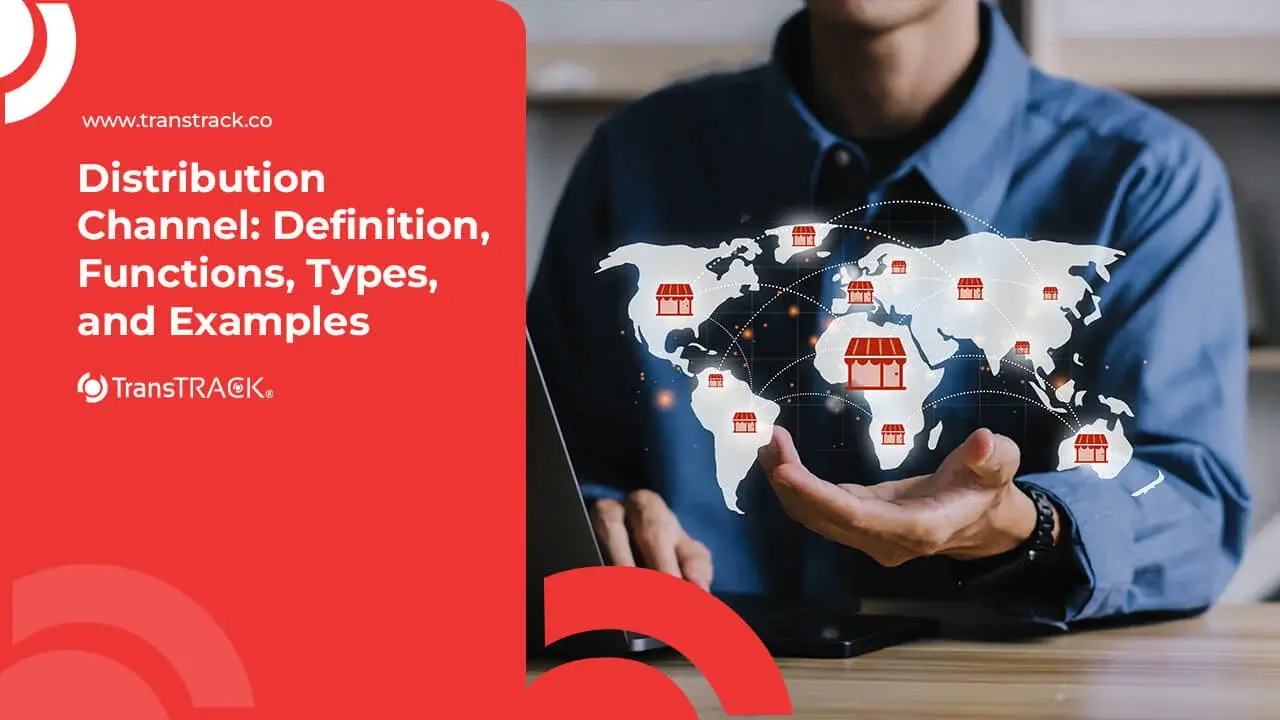
A distribution channel is the path a company uses to deliver products or services from producers to end customers. This path may operate directly through the company’s own channels or involve intermediaries such as distributors, wholesalers, agents, and retailers. Explore the complete explanation with TransTRACK.
What is a Distribution Channel?
A distribution channel is a series of routes, parties, and processes that help products move from the point of production or storage to the end consumer. In practice, a distribution channel is not limited to transportation. It also includes inventory management, warehousing, packaging, labeling, order processing, and delivery.
For example, snack products may follow this route:
Producer → Distributor → Wholesaler → Retailer → Consumer
Meanwhile, a company that sells products through its own website may use the following route:
Producer → Consumer
Key Components of a Distribution Channel
Several important components in a distribution channel include:
- Producer: The party that manufactures or supplies products.
- Distributor: The party that purchases, stores, and distributes products to specific regions or customers.
- Wholesaler: The party that purchases products in large quantities for resale.
- Agent or broker: An intermediary that helps facilitate transactions between producers and buyers.
- Retailer: The party that sells products directly to consumers.
- Logistics service provider: The party responsible for transportation, warehousing, fulfillment, and delivery.
- End consumer: The final user or buyer of the product.
Not every distribution channel includes all of these components. The channel structure is generally determined by product characteristics, target markets, geographical coverage, distribution costs, and the level of control a company wants to maintain.
Why Are Distribution Channels Important?
Distribution channels are important because they help companies ensure that products are available in the right place, at the right time, and in the right condition. A well-designed channel can also expand market reach, accelerate order fulfillment, and improve customer experience.
In addition, distribution channels help companies:
- Reduce the distance between producers and consumers.
- Reach customers across different regions.
- Control transportation and storage costs.
- Manage inventory levels more effectively.
- Improve delivery speed.
- Select sales channels that align with customer behavior.
- Increase product competitiveness in the market.
Functions of Distribution Channels in Logistics
In logistics, distribution channels serve as a link between production, storage, transportation, sales, and consumption activities.
Core Functions in the Supply Chain
The main functions of distribution channels in the supply chain include:
- Transportation: Moving products from factories, warehouses, or distribution centers to customer locations.
- Warehousing: Storing products before they are shipped or sold.
- Inventory management: Maintaining stock availability based on demand.
- Load consolidation and break-bulk: Combining goods from multiple sources or dividing large shipments into smaller deliveries.
- Order processing: Receiving, verifying, preparing, and fulfilling customer orders.
- Packaging and labeling: Protecting products and providing necessary information throughout the distribution process.
- Demand fulfillment: Ensuring products are available according to market needs.
Distribution channels also perform transactional, logistical, and facilitation functions. Transactional functions include buying and selling activities, while logistical functions include product collection, storage, and transportation.
Additional Functions
Beyond logistics activities, distribution channels can provide additional functions such as:
- Promotion: Helping introduce products to the market.
- Financing: Providing or supporting payment arrangements throughout the distribution process.
- Market information sharing: Providing insights into demand trends, pricing, and customer behavior.
- Risk bearing: Managing risks such as damage, depreciation, or unsold products.
- Customer service: Supporting returns, exchanges, installation, and after-sales service.
- Reverse logistics: Managing returned goods, damaged products, packaging, or items that need to be recycled.
Role in Operational Efficiency
An effective distribution channel can improve operational efficiency by reducing waiting times, storage costs, travel distances, and unnecessary delivery frequency.
Several indicators that can be used to evaluate distribution channel performance include:
- Order fulfillment rate: The percentage of orders successfully fulfilled.
- On-time delivery: The percentage of deliveries that arrive as scheduled.
- Order cycle time: The time from order receipt until delivery to the customer.
- Inventory turnover: The rate at which inventory is sold and replenished.
- Distribution cost per order: The cost of distribution for each order.
- Perfect order rate: The percentage of orders delivered on time, complete, damage-free, and with accurate documentation.
Types of Distribution Channels and Examples
In general, distribution channels are categorized based on the number of intermediaries involved and the way a company reaches its customers. Four commonly used models are direct channels, indirect channels, dual channels, and hybrid channels.
Direct Channel
- Definition
A direct channel is a distribution channel in which producers sell products directly to consumers without involving intermediaries such as distributors, wholesalers, or retailers.
The basic flow is:
Producer → Consumer
- Examples
- A brand selling products through its official website.
- Farmers selling their harvest directly to consumers.
- A B2B company selling machinery directly to industrial customers.
Indirect Channel
- Definition
An indirect channel is a distribution channel that uses one or more intermediaries to deliver products to consumers. These intermediaries may include agents, distributors, wholesalers, retailers, or marketplaces.
A typical flow is:
Producer → Distributor → Retailer → Consumer
- Examples
- A beverage producer distributing products through regional distributors to supermarkets.
- A clothing factory selling products through wholesalers and retail stores.
- An electronics manufacturer partnering with authorized retailers.
Dual Channel
- Definition
A dual channel is a model in which a company uses direct and indirect distribution channels at the same time. A company may sell through its own website while also working with distributors, retailers, or marketplaces.
- Examples
Producer → Consumer through the official website
At the same time:
Producer → Distributor or Retailer → Consumer
For example, a camera manufacturer may sell products through its official website while also making them available through electronics stores and authorized retailers.
Hybrid Channel
- Definition
A hybrid channel is a distribution strategy that combines multiple channels, partners, technologies, and fulfillment methods based on customer segments or market conditions. In practice, hybrid channels often combine physical stores, e-commerce, marketplaces, distributors, social commerce, and third-party fulfillment services.
- Examples
- A brand selling through its website, marketplaces, physical stores, and distributors.
- Customers placing orders online and picking up products in-store.
- A company using its own warehouse for certain customers and a third-party logistics provider for other regions.
Differences Between Supply Chain and Distribution Channel
Supply chain and distribution channel are closely related, but they are not the same. Supply chain has a broader scope, while distribution channels focus on the route through which products reach customers.
Definition of Supply Chain and Distribution Channel
- A supply chain is a network of activities, organizations, resources, information, and processes involved from raw material procurement, production, storage, and distribution to the final use of products by consumers.
- A distribution channel is the route or structure of parties used to move products from producers to end customers. Therefore, a distribution channel is one part of the broader supply chain.
Key Differences
| Aspect | Supply Chain | Distribution Channel |
| Scope | Covers procurement, production, inventory, distribution, sales, and returns | Focuses on the route used to move products from producers to customers |
| Focus | Managing the overall flow of goods, information, and finances | Determining how products are made available and reach the market |
| Parties Involves | Suppliers, producers, warehouses, 3PL providers, distributors, retailers, customers, and other supporting parties | Producers, distributors, agents, wholesalers, retailers, marketplaces, and customers |
| Objective | Creating an efficient, responsive, and integrated supply flow | Ensuring products reach customers with suitable cost, timing, and service levels |
| Example Activities | Raw material sourcing, production planning, procurement, inventory control, and reverse logistics | Distributor selection, retailer management, delivery, and marketplace sales |
Why Are They Often Confused?
Supply chain and distribution channels are often confused because both involve the movement of products from one party to another.
A simple way to distinguish them is:
- A supply chain answers: “How is the overall supply process managed from start to finish?”
- A distribution channel answers: “Through which routes and parties do products reach customers?”
For example, purchasing raw materials from suppliers, manufacturing products, storing them in a warehouse, and delivering them to retailers are all part of the supply chain. The route producer → distributor → retailer → consumer is a distribution channel.
Conclusion
Distribution channels are an essential part of logistics and supply chain operations because they determine how products move from producers to customers. Choosing the right channel can help companies expand market reach, reduce operational costs, accelerate delivery, and improve customer satisfaction.
To optimize distribution services, companies need operational visibility, delivery monitoring, fleet management, and accurate data analysis. Visit the transtrack.co to learn more about digital solutions that can help improve the efficiency, transparency, and performance of your business distribution operations.
What Is the Difference Between Distribution and Logistics?
Distribution is the process of delivering products from producers or warehouses to customers. It includes channel selection, distributor management, transportation, and order fulfillment.
Logistics has a broader scope in managing the flow of goods, information, and supporting activities. It can include inbound logistics, warehousing, inventory control, transportation, outbound distribution, reverse logistics, and returns management.
What Are Distribution Channel Strategies?
Common distribution channel strategies include:
Intensive distribution
Selective distribution
Exclusive distribution
Direct-to-consumer
Omnichannel distribution
Marketplace distribution
Hybrid distribution
How Do You Choose the Right Distribution Channel?
Choosing the right distribution channel should be based on product type, target customers, market coverage, operational costs, the desired level of control, and the company’s ability to manage distribution operations.
Recent Post




Topic :