Bahasa Indonesia
Understanding Container Depots and Their Role in the Supply Chain
Posted on August 13, 2026 by Nur Wachda Mihmidati
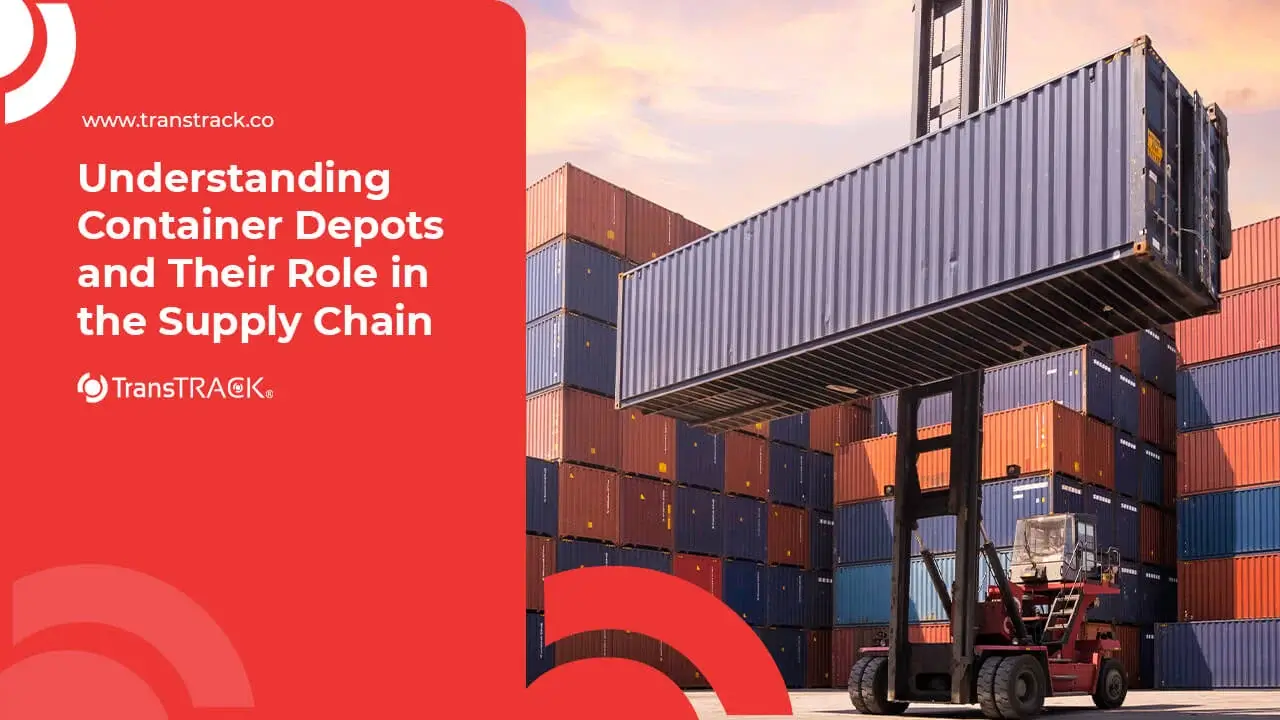
A container depot is a location or facility used to store, maintain, repair, and manage containers before or after they are used in the shipping process. Container depots play a vital role in the logistics chain because they help ensure that containers are available in good condition and ready for reuse. Read more about this in the following article TransTRACK!
Strategic Functions and Services at the Container Depot
Container depots play a crucial role in ensuring that containers are available, well-maintained, and ready for use in the distribution of goods. Some of their key services include:
Empty Container Storage
A container depot is used to store empty containers after they have been used. The containers are stored in an organized manner so they can be easily located and are ready for the next shipment.
Inspection & Repair (Survey, Cleaning & Maintenance)
Containers are inspected to assess their physical condition, then cleaned and repaired if any damage is found. This process ensures that the containers continue to meet serviceability standards before being reused.
Stuffing and Stripping Activities
The depot can provide stuffing services—loading goods into containers—as well as stripping services—unloading goods from containers. These activities are carried out with due regard for the safety of the goods and the condition of the containers.
Specialized Services (Reefer & ISO Tank Handling)
Some container depots offer specialized handling for reefer containers and ISO tank containers. These services require specialized facilities and procedures to maintain the condition of the cargo and ensure safety during the handling process.
Workflow and Stages of Container Depot Operations
Container depot operations involve several steps to ensure that each container is recorded, inspected, stored, maintained, and released as needed.
- Gate-In Process & Initial Survey— Incoming containers are recorded and their physical condition is inspected through an initial survey to identify any damage or special conditions.
- Organization at the Stacking and Storage Yard Containers are placed in the storage area based on type, size, status, and operational needs so they can be easily located and moved.
- Maintenance and Repair Process (Maintenance & Repair) Damaged containers undergo cleaning, maintenance, or repair before being declared ready for reuse.
- Gate-Out Process (Unit Release) Containers that have met the requirements are released from the depot. Release data and the final condition of the containers are recorded as part of the operational documentation.
The Difference Between a Container Depot and a Port Temporary Storage Area (TPS)
Although both are used to store containers, container depots and Temporary Storage Facilities (TPS) serve different purposes. Container depots focus on the management and maintenance of containers, while TPS serve as temporary storage facilities for goods that are still undergoing customs clearance.
| Aspek | Container Depot | Port Polling Station |
| Main functions | Storing, maintaining, repairing, and managing containers | Temporary storage of imported or exported goods undergoing customs clearance |
| Managed objects | Empty containers and containers requiring handling | Goods or cargo in containers or other packaging |
| Main Activities | Empty storage, survey, cleaning, maintenance, repair, dan gate-in/gate-out | Storage, inspection, transfer, and customs services |
| Customs | It is not its primary function | Directly related to the customs process |
| Location | May be located outside the port area | Generally located within or around the port area |
| Objective | Ensuring that containers are ready and suitable for reuse | Temporarily storing goods until they meet the requirements for release or shipment |
Conclusion
Container depots play a crucial role in supporting the smooth operation of logistics, from the storage of empty containers to inspections, maintenance, repairs, and the gate-out process. Well-organized management helps ensure container availability while improving the efficiency of movement within the supply chain.
To optimize coordination and visibility of logistics processes, companies can utilize the Logistics Service Integrator from TransTRACK. This solution helps integrate various logistics data and processes into a single system, making it easier to monitor operational activities in a structured and efficient manner.
FAQ
What is the difference between a container depot and a regular container yard?
Essentially, container depot and container yard refer to the same facility—a place for storing, inspecting, maintaining, and repairing containers. The term container depot is more commonly used in operational and logistical contexts.
Why must empty containers be returned to the container depot?
Empty containers are returned to a designated depot so that the condition, location, and status of the containers can be recorded. The depot can then inspect, clean, or repair the containers before they are reused.
Apa itu EIR (Equipment Interchange Receipt) dalam container depot operations?
An Equipment Interchange Receipt (EIR) is a document that records the condition and details of a container at the time of handover, such as during gate-in or gate-out. The EIR serves as evidence of the container’s condition and helps reduce the potential for disputes regarding damage.
How does the Depot Management System (CDMS) technology improve depot efficiency?
The Container Depot Management System (CDMS) helps manage depot activities digitally, from recording gate-in/gate-out events and monitoring container locations to inventory and maintenance. With integrated, real-time data, depot operations can become more organized, efficient, and easy to monitor.
Recent Post




Topic :