Bahasa Indonesia

How a Fleet Management System Helps Car Rental Companies
Posted on October 22, 2026 by Nur Wachda Mihmidati
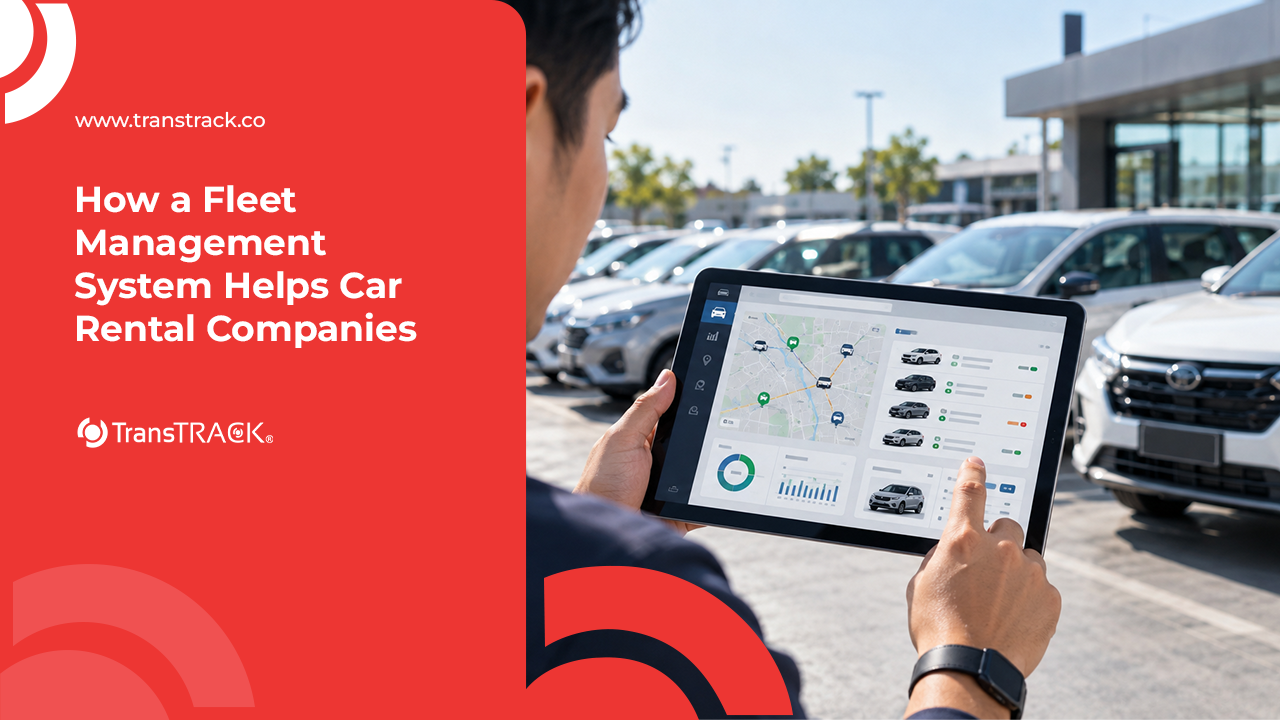
A vehicle rental company is a business that provides vehicles for rent to customers for a specific period of time. Managing this business involves fleet monitoring, vehicle security, maintenance, and operational management to ensure that each vehicle can be used safely and optimally. Read more about it in the following article TransTRACK!
What Is a Car Rental Company?
A vehicle rental company is a business that provides vehicles for customers to use for a specific period of time through a rental system. The fleet offered can include passenger cars, commercial vehicles, and even operational vehicles for corporate needs.
When running a rental business, a company must do more than just ensure that vehicles are available and roadworthy. It must also manage vehicle locations, fleet condition, service schedules, driver behavior, and vehicle security. The more vehicles a company manages, the more complex the monitoring process becomes.
Therefore, vehicle rental companies need a system that can help them manage their fleets centrally. One technology that can be used is the Fleet Management System (FMS).
Operational Challenges Faced by Car Rental Companies
Managing rental vehicles involves different risks than managing vehicles owned and operated by the company itself. The vehicles are outside the company’s direct supervision during the rental period, so visibility into the units is crucial.
Some common challenges faced by car rental companies include:
- The risk of theft, embezzlement, and misuse of vehicles by renters. The company may have difficulty determining whether vehicles are being used as agreed, especially when units are taken to unauthorized locations.
- High maintenance costs due to delayed routine servicing. Vehicles that are used intensively require scheduled maintenance. If servicing is delayed, damage can become more severe and increase operating costs.
- It is difficult to monitor customers’ locations, mileage, and driving styles in real time. Information such as vehicle location, mileage, speed, and braking patterns can be difficult to obtain without a telematics system.
- Reporting and unit management are still done manually or in a fragmented manner. Scattered data on vehicles, trips, maintenance, and operational reports can slow down decision-making.
How Does a Fleet Management System Help Car Rental Companies?
The Fleet Management System enables companies to monitor and manage their vehicles through a single integrated system. With GPS, telematics, and a variety of fleet management features, companies can gain better visibility into their rental fleet.
Pelacakan Real-Time dan Geofencing
GPS tracking allows companies to track the location of vehicles in real time via a dashboard. This information helps companies monitor the whereabouts of their vehicles during the rental period.
The geofencing feature can also be used to define a vehicle’s operating area. When a vehicle exits or enters a specific area, the system can send a notification to the fleet manager.
As a result, the company can more quickly identify instances of vehicle use that violate the rules and take the necessary action.
Scheduled Fleet Maintenance
FMS can help companies manage preventive maintenance schedules based on time, mileage, or specific vehicle parameters.
Companies can receive reminders when a vehicle is nearing its scheduled service, so maintenance isn’t performed only after the vehicle breaks down. Maintenance history can also be recorded digitally to help monitor the condition of each vehicle.
A preventive maintenance approach can help reduce the risk of downtime and keep vehicles in optimal condition for rental.
Analysis of Driving Behavior and Telematics
In addition to tracking a vehicle’s location, FMS can provide information about driving behavior. Data such as speed, acceleration, sudden braking, and vehicle usage patterns can be used to evaluate how a vehicle is operated.
This information helps companies identify risky vehicle usage. Telematics data can also serve as a basis for improving vehicle safety and help anticipate maintenance costs that may arise from improper use.
Remote Engine Immobilizer
In vehicles equipped with supporting devices, the remote engine immobilizer feature allows companies to remotely control engine functions based on operational conditions and policies.
This feature can serve as an additional layer of security when a vehicle is suspected of being used in an unusual manner or is in a situation that requires safety measures. Its implementation must be tailored to vehicle safety considerations and company procedures.
Report Digitization and Invoice Management Integration
FMS helps transform various vehicle operational data into digital information that is easier to monitor. Trip data, vehicle usage, mileage, and fleet activity can all be consolidated into a single platform.
When integrated with other business systems, this data can also support administrative processes, including expense and invoice management. This helps reduce reliance on manual record-keeping and makes it easier for companies to monitor their operations.
The Benefits of Using FMS for a Car Rental Business
The implementation of a Fleet Management System offers a number of benefits for rental companies, including:
- Improving fleet security through GPS tracking, geofencing, and vehicle security features.
- Increase vehicle visibility while the vehicle is in the renter’s possession.
- Optimize maintenance with a more structured preventive maintenance schedule.
- Controlling vehicle usage based on trip data and driving behavior.
- Reducing administrative work through the digitization of data and reports.
- Supporting data-driven decision-making with more centralized fleet information.
- Improves operational efficiency because the company can manage more units through a more structured monitoring process.
A Guide to Selecting and Implementing a Fleet Management System
Before selecting an FMS, rental companies need to ensure that the system they use is appropriate for the scale and needs of their business. Some factors to consider include:
- Identify fleet needs. Determine the number of vehicles, vehicle types, usage patterns, and the operational risks you wish to manage.
- Pay attention to security features. Make sure the system supports GPS tracking, geofencing, alerts, and appropriate security features.
- Make sure maintenance features are available. The system should be able to track service history and provide reminders for preventive maintenance.
- Evaluation of telematics capabilities. Data such as mileage and driving behavior can help companies optimize vehicle usage.
- Consider system integration. An FMS that can connect to other business systems will make data management easier.
- Choose a scalable system. Make sure the system can keep pace with the growth of your fleet without making operational processes more complex.
- Prepare for the implementation process. Device integration, system configuration, user training, and the establishment of standard operating procedures (SOPs) must be prepared so that the technology can be used optimally.
Conclusion
Managing a vehicle rental business isn’t just about providing vehicles for rent—it’s also about ensuring that every vehicle remains safe, well-maintained, and used to its full potential. Without adequate visibility, the risks of theft, vehicle misuse, delayed maintenance, and rising operating costs can increase.
The Fleet Management System helps rental companies gain better control through real-time tracking, geofencing, preventive maintenance, vehicle telematics, and digital reporting. With centralized fleet data, companies can manage operations more efficiently while improving vehicle safety.
To support more integrated fleet management, TransTRACK Fleet Management System provides GPS-, IoT-, and telematics-based technology to help companies gain visibility and control over their fleets. With data-driven management, rental businesses can improve safety, efficiency, and operational productivity.
FAQ
What is a car rental?
Vehicle rental is a business that provides vehicles to customers for use over a specific period through a rental system. Vehicles can be rented for personal use, travel, or business operations.
Why do car rental companies need a Fleet Management System?
FMS helps rental companies track vehicle locations and usage, manage maintenance, monitor driving behavior, improve fleet safety, and manage operational data in a more centralized manner.
How does the FMS system prevent car theft in the rental business?
FMS helps improve security through GPS tracking, geofencing, notifications when a vehicle leaves a specific area, and security features such as a remote engine immobilizer on compatible vehicles. The system does not guarantee that theft can be completely prevented, but it helps companies detect and respond to suspicious activity more quickly.
How much does it cost to use a Fleet Management System for a rental fleet?
FMS costs depend on the number of vehicles, the devices used, the features, integration requirements, and the service model selected. Companies should weigh their needs against the benefits before deciding on a solution.
Is FMS suitable for small-scale car rental businesses?
Yes. FMS can be used by rental businesses with both small and large fleets. For small-scale businesses, companies can start with core features such as GPS tracking, geofencing, and mileage monitoring, and then expand their use of the features as their fleet grows.
Recent Post
How Does Port Digitization Improve Efficiency and Safety?
October 30, 2026
What Is a Hydraulic Brake? How It Works and Its Main Components
October 28, 2026


Topic :