Bahasa Indonesia
How to Address Bus Blind Spots with ADAS Technology and Vehicle Surveillance Systems
Posted on July 3, 2026 by Nur Wachda Mihmidati
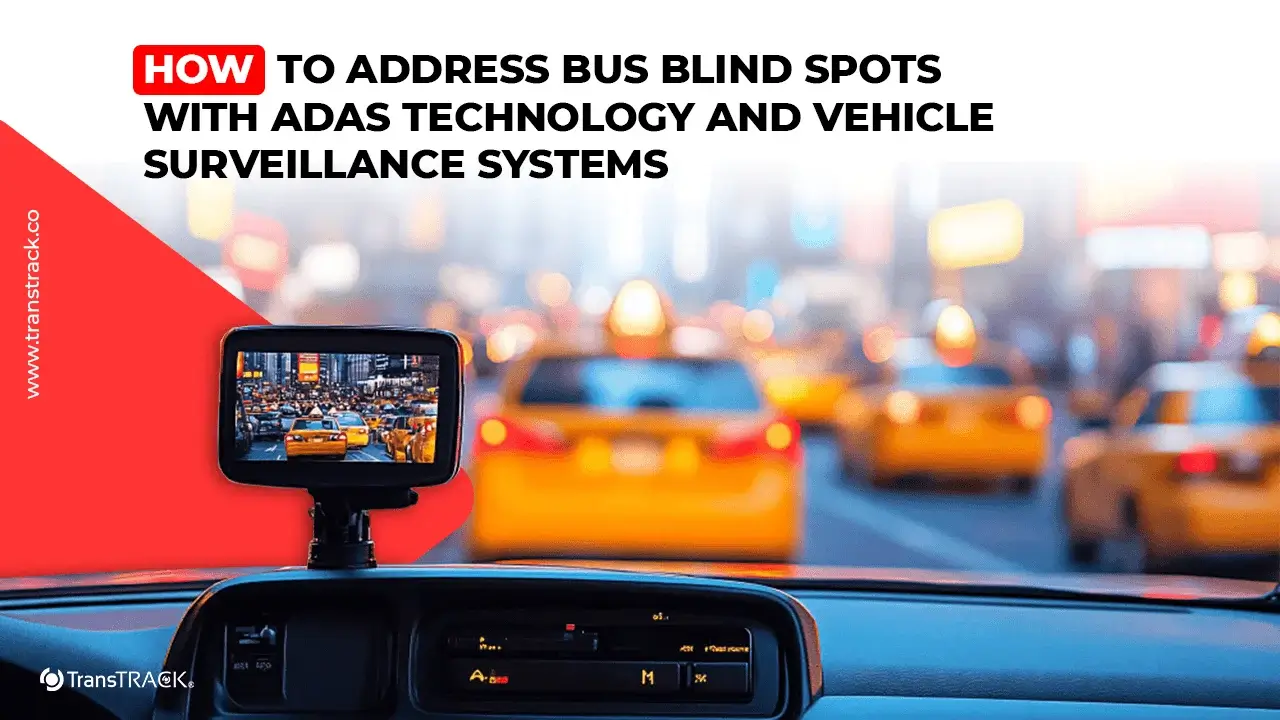
A bus’s blind spot is the area around the vehicle that the driver cannot see directly through the windshield or side mirrors. This increases the risk of accidents, especially when the bus is turning, changing lanes, stopping at a bus stop, or backing up. To reduce this risk, fleet operators can utilize technologies such as 360° cameras, ADAS, and Vehicle Surveillance Systems, which help expand visibility and detect objects around the bus in real time. Read the full explanation in the following TransTRACK article!
What Is a Blind Spot on a Bus?
A bus’s blind spot is an area around the bus that the driver cannot see directly through the windshield, side windows, or side mirrors. Other vehicles, motorcycles, cyclists, or pedestrians in this area are at risk of going unnoticed, thereby increasing the potential for accidents, especially when the bus is turning, changing lanes, or backing up.
Because buses are large and long, their blind spots are generally larger than those of ordinary passenger vehicles.
Why Are Bus Blind Spots More Dangerous in Urban Areas?
Bus blind spots pose a greater risk in urban areas due to heavy traffic and the large number of road users, such as motorcyclists, cyclists, and pedestrians. Vehicles or people can quickly enter areas that are out of the driver’s sight, especially when the bus is turning, changing lanes, or stopping at a bus stop.
This risk is even higher during rush hour, at intersections, and on narrow roads. Therefore, the proper use of mirrors, blind-spot cameras, and an AI-based Vehicle Surveillance System is a crucial solution to help drivers detect objects around the bus and prevent accidents.
Mapping the 4 Main Blind Spots on Buses and the Dangers of Tail Swing
Before improving driving safety, it is important to understand which areas are blind spots on a bus. In addition to the four main blind spots that are difficult for the driver to see, there is also the risk of tail swing—or rear impact—which is often overlooked but can cause accidents.
Blind Spot Depan (Front Danger Zone)
The area directly in front of the bus is often out of the driver’s sight due to the high position of the cab. Pedestrians, cyclists, or small vehicles that stop too close run the risk of going unnoticed when the bus starts moving.
Blind Spot Sisi Kiri (Blind Side)
The left side is the bus’s largest blind spot. Motorcycles or pedestrians on the side of the bus are particularly likely to go unnoticed, especially when the bus is turning left or stopping at a bus stop.
Blind Spot Sisi Kanan (Driver’s Side)
Although it is easier to monitor through the rearview mirror, the right side still has areas that are not fully visible. Vehicles traveling alongside the bus may be out of sight when the bus changes lanes.
Rear Blind Spot
The driver does not have a direct view behind the bus. This area becomes extremely dangerous when the bus is backing up or exiting a parking space without the aid of cameras or sensors.
Specific Hazard: Tail Swing
Tail swing is the movement of the rear of a bus that sweeps outward as the bus turns. This can strike vehicles, poles, or pedestrians that are too close to the rear of the bus, even if they are not directly in the path of the wheels.
How to Deal with Blind Spots on Buses
Reducing the risk of blind spots on buses requires a combination of safe driving habits and the use of technology. Here are some steps that can be taken:
1. Adjust the Rearview Mirror Properly
Make sure all the mirrors are adjusted before the trip begins so that you can see as much of the area around the bus as possible.
2. Check Before Turning or Changing Lanes
Always check your surroundings in your mirrors and perform an additional visual check before turning, changing lanes, or pulling away from a stop.
3. Use the Vehicle’s Camera and Sensors
Blind-spot cameras, 360° cameras, and parking sensors help expand the driver’s field of view and detect objects that are not visible in the side mirrors.
4. Take Advantage of an AI-Based Vehicle Surveillance System
The AI-based vehicle monitoring system can detect pedestrians, motorcycles, and other vehicles around the bus in real time, and then alert the driver to help prevent potential accidents.
4 Modern Technology Solutions to Address Bus Blind Spots
As transportation technology has advanced, various safety systems have been designed to help drivers reduce the risk of accidents caused by blind spots. Here are four technologies widely used in modern bus fleets.
1. Acoustic Warning System & Sensor Ultrasonik (AVAS)
Ultrasonic sensors detect objects around the bus and then emit an acoustic warning to the driver when a vehicle, pedestrian, or obstacle is in the blind spot.
2. Camera Monitoring System (CMS / E-Mirror)
CMS, or electronic mirror, replaces conventional side mirrors with high-resolution cameras that display the area around the bus on a screen inside the cabin. This system provides a wider field of view and reduces blind spots.
3. Around View Monitor (AVM) 360 Derajat
AVM combines multiple cameras into a 360-degree view (bird’s-eye view), allowing the driver to monitor the entire area around the bus while maneuvering, parking, or navigating narrow streets.
4. Vulnerable Road User (VRU) Detection dengan ADAS
Advanced Driver Assistance System (ADAS) technology can detect vulnerable road users, such as pedestrians, cyclists, and motorcyclists. If a potential collision is detected, the system will issue a real-time warning so that the driver can take immediate action.
Conclusion
Blind spots on buses are one of the factors that can increase the risk of accidents, especially in densely populated urban areas. Understanding the location of blind spots, practicing safe driving techniques, and utilizing modern safety technology are important steps in protecting drivers, passengers, and other road users.
To help minimize these risks, TransTRACK’s Vehicle Surveillance System offers an AI-based vehicle monitoring solution equipped with ADAS, Driver Monitoring System (DMS), 360-degree cameras, and real-time notifications. With broader visibility and automatic object detection, fleet operators can improve operational safety while reducing the potential for accidents caused by blind spots.
Optimize the security of your bus fleet with the Vehicle Surveillance System TransTRACK and achieve safer, more efficient, and more reliable transportation operations.
FAQ
Where is the largest blind spot on a bus?
The largest blind spot on a bus is generally on the left side. Drivers often have difficulty seeing motorcycles, cyclists, or pedestrians who are too close to the bus, especially when turning left or stopping at a bus stop.
What is a “tail swing” on a bus?
Tail swing is the outward movement of the rear of a bus as it turns. This can pose a danger to vehicles or pedestrians that are too close to the rear of the bus, even if they are not in the path of the wheels.
What are the safety rules for driving near a bus to avoid blind spots?
Avoid driving too close in front of, beside, or behind a bus for extended periods of time. Maintain a safe distance, do not pass on the left when the bus is about to turn or stop, and make sure the driver can see your vehicle in the rearview mirror before changing position around the bus.
Recent Post





Topic :