Bahasa Indonesia
Carbon Offsets for Businesses: How to Manage Carbon Emissions?
Posted on August 7, 2026 by Nur Wachda Mihmidati
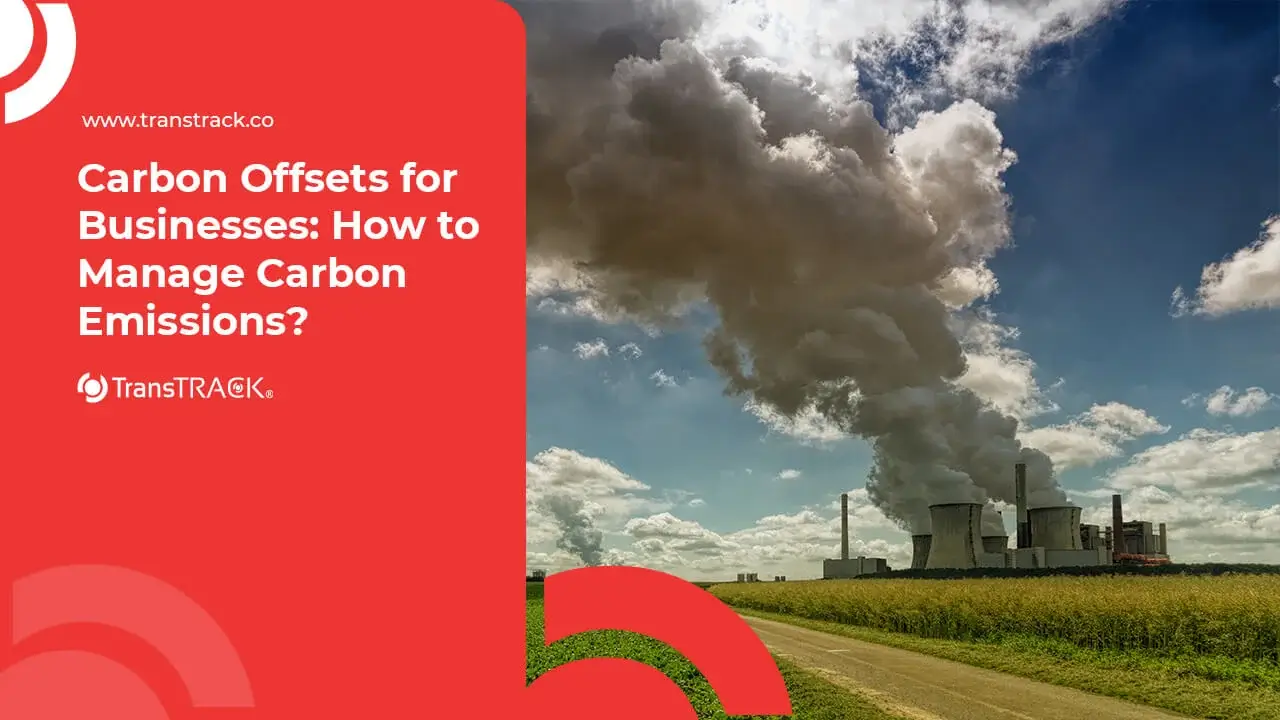
Carbon offsets is an effort to offset carbon emissions by supporting projects that reduce or absorb an equivalent amount of emissions. The process involves calculating emissions, selecting carbon credits, and retiring those credits to ensure that emissions are offset in a measurable and transparent manner. Read the full explanation in the following TransTRACK article!
What Is a Carbon Offset?
Carbon offsets is an effort to offset carbon emissions generated by an activity by supporting projects that reduce, absorb, or prevent an equivalent amount of greenhouse gas emissions.
Simply put, when a company generates emissions that are difficult to eliminate directly, it can contribute to emission-reduction projects to offset some or all of those emissions.
How Do Carbon Offsets Work?
Carbon offsetting is carried out in several stages to ensure that the emissions generated can be calculated, offset with appropriate carbon credits, and recorded transparently.
Step 1: Carbon Footprint Calculation
The company calculates the total emissions generated by its operational activities, such as fuel consumption, electricity use, transportation, and production processes. These calculations serve as the basis for determining the amount of emissions that need to be offset.
Step 2: Selecting and Purchasing Offset Certificates
After determining the amount of emissions, the company selects credible carbon offset projects, such as reforestation, forest conservation, or renewable energy. Next, the company purchases carbon credits corresponding to the amount of emissions it wishes to offset.
Step 3: Cancellation/Retirement of Credits
Carbon credits that have been used are then retired or canceled in the accounting system. This process ensures that the credits cannot be used or reclaimed by another party, thereby helping to prevent double counting.
Types of Carbon Offset Solutions Projects
Carbon offset projects come in various forms, depending on how they reduce or absorb greenhouse gas emissions. In general, carbon offset projects can be categorized into the following types:
Nature-Based Solutions (NBS) Projects
This project utilizes natural ecosystems to absorb or store carbon, such as reforestation, mangrove restoration, forest conservation, and sustainable land management.
Renewable Energy & Energy Efficiency Projects
This project focuses on reducing emissions by replacing fossil fuel-based energy sources or improving energy efficiency. Examples include solar power plants, wind power plants, hydroelectric power plants, and energy efficiency programs.
Carbon Capture and Storage (CCS) Project
This project uses technology to capture CO₂ emissions from specific industrial sources or processes, then transport and permanently store them at suitable locations to prevent carbon from being released into the atmosphere.
The Difference Between Carbon Offsets and Carbon Credits
Carbon credits and carbon offsets are often considered the same, even though they serve different purposes. A carbon credit is a unit that represents a reduction or absorption of emissions, while a carbon offset is the act of using those credits to offset the emissions produced.
| Aspek | Carbon Credit | Carbon Offset |
| Definition | A unit representing a reduction or removal of emissions, generally equivalent to 1 metric ton of CO₂e | The process of offsetting emissions using carbon credits |
| Functions | To be an instrument that can be bought, sold, or used | Offsetting the emissions produced |
| Source | Generated from an emissions reduction or offset project | Conducted by companies or individuals that generate emissions |
| Example | Credits from reforestation or renewable energy projects | The company uses credits to offset its operational emissions |
Simply put, a carbon credit is the unit itself, while a carbon offset is its use to offset emissions.
The Implementation of Carbon Offset Solutions in Corporate ESG Strategies
Carbon offset solutions can be part of a company’s Environmental, Social, and Governance (ESG) strategy, particularly in managing and reducing environmental impacts. They can be implemented through the following steps:
1. Measuring the Carbon Footprint
Companies need to know the amount of emissions generated by their operational activities, such as fuel consumption, energy use, transportation, and production processes. This data serves as the basis for setting emission reduction targets.
2. Reducing Operational Emissions
Before engaging in carbon offsetting, companies need to prioritize direct emissions reductions. For example, by improving energy efficiency, using renewable energy, optimizing transportation, and reducing the use of fossil fuels.
3. Offsetting Residual Emissions
Emissions that are still difficult to eliminate can be offset through carbon offset solutions. Companies can choose credible carbon offset projects that align with their sustainability goals.
4. Supporting the Net-Zero Target
Carbon offsets can be used to help address residual emissions as a company works toward its net-zero goal. However, offsets should complement emission reduction efforts, not serve as a substitute for decarbonization.
5. Improving ESG Transparency
All activities related to measuring, reducing, and offsetting emissions must be properly documented. Transparent data helps companies demonstrate progress toward their ESG goals while enhancing the credibility of their sustainability reports.
Conclusion
Carbon offsetting is one way to offset a company’s carbon emissions by supporting projects that reduce or absorb emissions. However, the most important step is to measure and reduce emissions from operational activities before offsetting residual emissions.
To support these efforts, companies can utilize the Fleet Management System from TransTRACK to monitor vehicle carbon emissions while optimizing fuel usage. With visibility into fuel consumption and fleet activity, companies can identify efficiency opportunities and directly reduce carbon emissions.
Start managing your fleet’s emissions more effectively with the TransTRACK Fleet Management System and support your company’s decarbonization strategy more effectively.
FAQ
What does “carbon offset” mean?
Carbon offsetting is an effort to offset carbon emissions by supporting projects that reduce or absorb an equivalent amount of emissions, such as reforestation and renewable energy.
Is carbon offsetting the same as greenwashing?
No. Carbon offsetting is a mechanism for offsetting emissions, whereas greenwashing refers to environmental claims that are not supported by adequate actions, data, or evidence.
What are some popular examples of carbon offsets for individuals?
Examples include afforestation and forest restoration, mangrove conservation, renewable energy, and waste management projects. Individuals can choose projects based on the amount of emissions they wish to offset.
What are carbon offset solutions for the B2B industry?
B2B carbon offset solutions are solutions designed to help companies manage their emissions—from calculating their carbon footprint and selecting and purchasing carbon credits to retiring them and reporting on their use.
Recent Post
Understanding Carbon Tracking and Its Role in Sustainability
August 31, 2026
Understanding Mining Digitalization and Its Impact on Operations
August 28, 2026


Topic :