Bahasa Indonesia
Port and Fleet Data Interoperability for More Efficient Logistics
Posted on August 21, 2026 by Nur Wachda Mihmidati
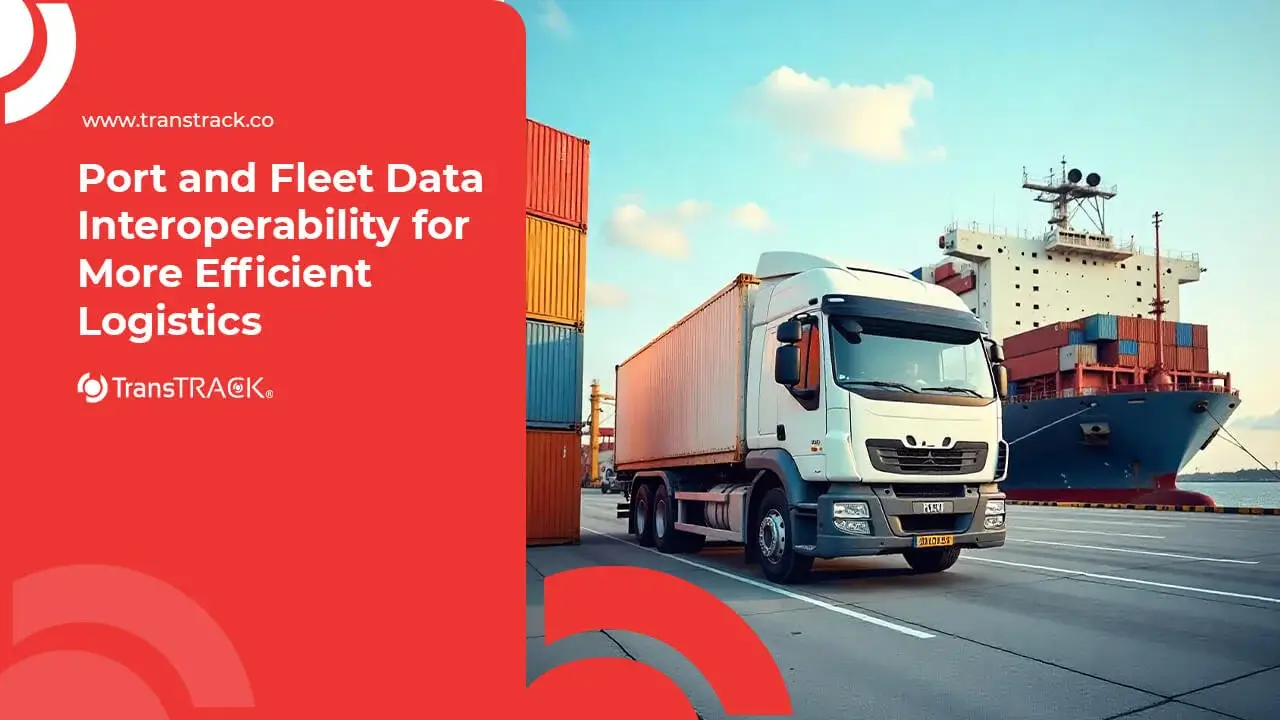
Port and fleet data interoperability is the ability of various digital systems to connect with one another, exchange data, and utilize that data in an integrated manner. Through this integration, information such as vessel schedules, container data, truck appointments, fleet locations, trip statuses, and estimated times of arrival (ETAs) can be exchanged in real time. Its implementation helps improve operational visibility, reduce manual processes and data errors, and support efficiency and decision-making in port and transportation activities. Read more about it in the following TransTRACK article!
Why Is Data Interoperability Between Ports and Fleets So Crucial?
Data integration between ports and fleets helps create a more coordinated operational workflow, from scheduling arrivals to vehicle movements. Here are some of the key benefits:
Arrival Schedule Synchronization (Just-In-Time Arrival)
Integrated data on ship schedules, port activities, and fleet locations helps vehicles arrive on time, thereby reducing potential lines and wait times.
Reduction in Dwell Time
Real-time operational information allows the fleet to adjust arrival times based on port conditions, thereby making service processes and vehicle movements more efficient.
Fuel Efficiency & Carbon Emissions
More accurate trip planning can reduce idle time and unnecessary trips, thereby lowering fuel consumption and carbon emissions.
Examples of Data Interoperability in the Maritime and Logistics Sectors
Data interoperability can be applied to various activities involving ports, ships, fleets, and cargo. Some examples of its application include:
Vessel and Port Data Integration
Vessel position data, ETAs, and arrival schedules can be integrated with the port’s operational system to help prepare services and facilities before the vessel arrives.
Truck Appointment and Fleet Management Integration
The schedule for picking up or delivering containers from the port system can be linked to the fleet system. This information helps companies manage their vehicles, routes, and arrival times more accurately.
Real-Time Cargo Tracking
GPS data, sensor data, and cargo information can be integrated to provide visibility into the location, condition, and status of goods throughout the shipping process.
Operational Data Integration and Dashboards
Various data sources can be consolidated into a single dashboard, allowing operators to monitor vessel, fleet, and cargo activities more comprehensively and make decisions based on real-time conditions.
Operational Comparison: No Interoperability vs. Fully Integrated
Differences in interoperability can be seen in how data is managed and used in port and fleet operations. Here is a comparison of the two:
| Aspek | Without Interoperability | Fully Integrated |
| Data Exchange | Manual and separate | Automated and real-time |
| Fleet Visibility | Limited | Monitored comprehensively |
| Scheduling | Based on data that is not always up to date | Based on real-time data |
| Waiting Time | Potentially higher | More efficient and controlled |
| Decision Making | Slow and reliant on manual reports | Fast, based on real-time data |
| Operational Efficiency | Suboptimal | More efficient and coordinated |
| Fuel Consumption | Potentially increased due to idling and suboptimal driving | More control through accurate planning |
| Scalability | It’s difficult when operational volume increases | Easier to develop and integrate |
Key Pillars for Building Data Interoperability Between Ports and Fleets
Building interoperability requires a technological and governance foundation that ensures data can be exchanged securely, consistently, and in real time. The three main pillars include:
Data Format Standardization
- Standardizing data structures and formats across systems.
- Using compatible protocols and APIs.
- Establish standards for data naming, units, and definitions.
- Reduces duplication and errors during data exchange.
Data Security & Access (Cybersecurity)
- Implement role-based authentication and authorization.
- Encrypt data both during transmission and while it is stored.
- Set access rights based on user needs.
- Monitor and audit data access activities.
Cloud Architecture & Cloud-to-Cloud APIs
- Flexibly connecting various platforms via APIs.
- Enables real-time data exchange between cloud systems.
- Supports integration with port, fleet, vessel, and logistics systems.
- Facilitates the development and scalability of the digital ecosystem.
Conclusion
Data interoperability is a critical foundation for creating a more integrated maritime and logistics ecosystem. By connecting data on ships, ports, fleets, and cargo, companies can improve operational visibility, optimize transit times, reduce waiting times, and improve fuel efficiency and emissions. To support these needs, TransTRACK Vessel Monitoring System is equipped with AIS Global Integration, which enables broader and more integrated monitoring of vessel positions and movements. With more comprehensive data visibility, maritime operations can be managed more effectively and in a data-driven manner.
FAQ
What is the difference between data integration and data interoperability?
Data integration focuses on connecting and combining data from multiple systems, while data interoperability refers to the ability of different systems to exchange, understand, and use data effectively.
What are some examples of data interoperability in everyday life?
One example is a transportation app that combines GPS data, maps, traffic information, and vehicle data to provide real-time arrival estimates. Different systems can exchange data with one another even if they were developed by different parties.
What is the biggest challenge in implementing data interoperability between ports and fleets?
The main challenges include differences in data formats and standards, inconsistent systems, data security, limitations in API integration, and the quality and consistency of data from various sources.
Why are APIs important for data interoperability?
APIs enable various applications and systems to exchange data automatically and in a structured manner without having to use the same platform. In the port and fleet ecosystem, APIs can connect systems such as the Fleet Management System, the Truck Appointment System, and port operational systems.
Recent Post

Understanding Carbon Tracking and Its Role in Sustainability
August 31, 2026
Understanding Mining Digitalization and Its Impact on Operations
August 28, 2026


Topic :