Bahasa Indonesia
Understanding Lane Departure Warning to Improve Driving Safety
Posted on August 24, 2026 by Nur Wachda Mihmidati
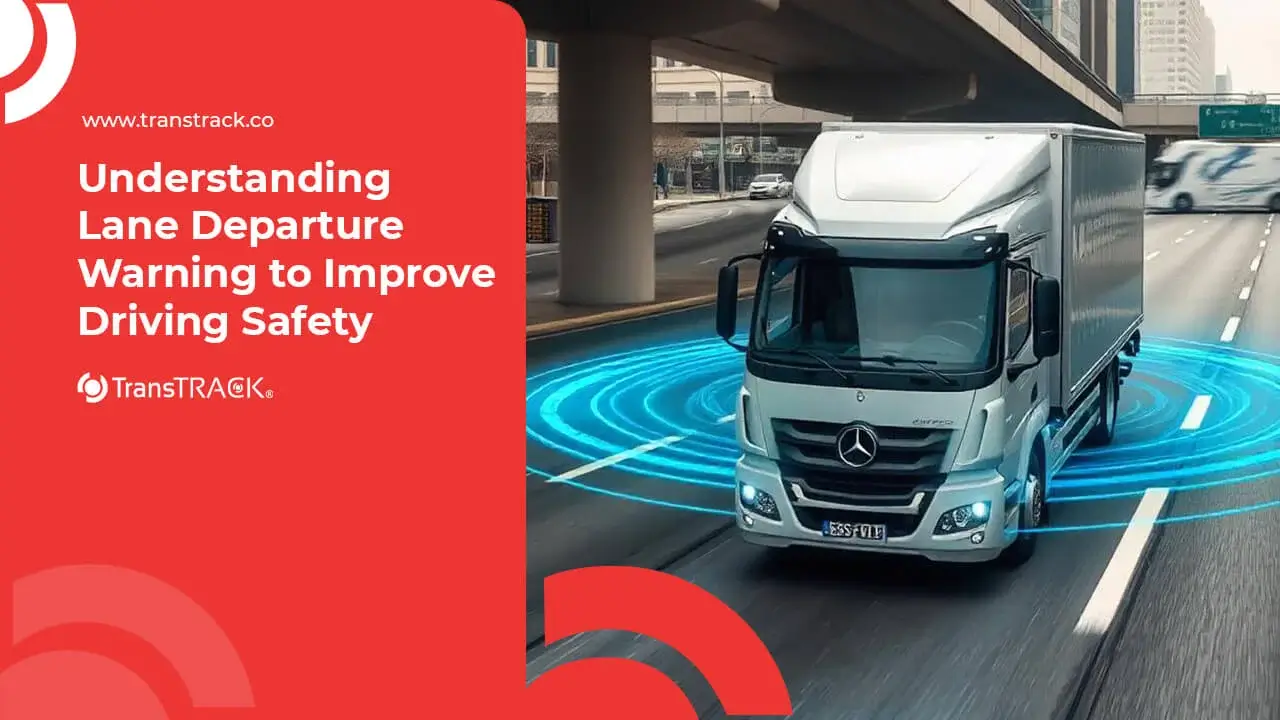
Lane Departure Warning (LDW) is a vehicle safety feature that helps prevent accidents caused by the vehicle unintentionally drifting out of its lane. This system uses a camera or sensors to detect lane markings and alerts the driver when the vehicle begins to drift out of its lane. Read more about it in the following article on TransTRACK!
Apa Itu Lane Departure Warning System?
The Lane Departure Warning System (LDWS) is a vehicle safety system that alerts the driver when the vehicle begins to unintentionally drift out of its lane.
This system typically uses a camera to read road markings and monitor the vehicle’s position within the lane. If the vehicle is detected drifting or veering out of its lane without activating the turn signal, the LDWS will issue a warning, such as an audible alert, a steering wheel vibration, or a visual notification.
How Does Lane Departure Warning Work in a Car?
The Lane Departure Warning System (LDWS) monitors the vehicle’s position relative to lane markings and issues a warning when the vehicle begins to drift out of its lane unintentionally.
Detection of Road Markings Using Sensors and Cameras
The front camera detects road markings and lane boundaries to determine the vehicle’s position. This data serves as the basis for the system to monitor the vehicle’s movement in real time.
Data Processing & Vehicle Position Calculation
The system analyzes the vehicle’s position and direction relative to the road markings. If the vehicle drifts out of its lane without activating the turn signal, the system will detect a potential lane departure.
Types of Warning Output
LDWS can provide warnings in the form of visual indicators, audible alerts, or vibrations in the steering wheel or seat. These warnings help the driver immediately correct the vehicle’s course and ensure driving safety.
Perbedaan Lane Departure Warning (LDW) dan Lane Keeping Assist (LKA)
Both help keep the vehicle in its lane, but they serve different functions.
| Aspek | Lane Departure Warning (LDW) | Lane Keeping Assist (LKA) |
| Main functions | Alerts the driver when the vehicle drifts out of its lane | Helps correct the vehicle’s direction to keep it on course |
| System actions | Failure to control the vehicle | Can make steering corrections |
| Output | Sound, visuals, or vibrations | Steering correction, which may be accompanied by a warning |
| The role of the driver | The driver must make a correction | The system helps make corrections, but the driver remains responsible |
| Fokus | Issuing a warning | Helps maintain the vehicle’s position |
In short, LDW alerts the driver when the vehicle begins to drift out of its lane, while LKA helps steer the vehicle back into its lane.
Advantages and Limitations of the Lane Departure Warning Feature
Lane Departure Warning (LDW) helps improve driving safety by issuing a warning when the vehicle is detected drifting out of its lane. However, this feature still has some limitations that need to be understood.
Benefits of Lane Departure Warning
- Improves driving safety by helping to prevent the vehicle from unintentionally veering off the road.
- Helps reduce the risks associated with driver fatigue, especially during long-distance drives.
- Provides real-time alerts so that drivers can make immediate corrections.
- Supporting fleet management by helping companies improve their driving safety standards.
Limitations of Lane Departure Warning
- Performance depends on the condition of the road markings, so it may decrease if the markings are faded or not visible.
- May be affected by weather and lighting conditions, such as heavy rain, fog, or roads that are too dark.
- It does not control the vehicle automatically, as the driver must still make corrections after receiving a warning.
- May provide inaccurate warnings under certain road conditions, such as sharp curves or non-standard road markings.
Conclusion
Lane Departure Warning is a safety feature that helps prevent accidents caused by vehicles unintentionally drifting out of their lane. Using cameras and data processing technology, the system can detect potential deviations and alert the driver in real time.
To improve overall fleet safety and visibility, companies can utilize the Vehicle Surveillance System from TransTRACK. This solution helps monitor vehicle conditions and activities through camera technology and an integrated monitoring system, enabling companies to support fleet safety, improve driver oversight, and optimize fleet operations.
FAQ
Can the lane departure warning be turned off manually?
Yes, on most vehicles, the Lane Departure Warning (LDW) feature can be disabled using a button or through the vehicle’s settings. However, the method for disabling it varies depending on the car’s make and model.
Why does the lane departure warning sound when I change lanes?
LDW can issue a warning if the vehicle changes lanes without detecting a turn signal. The system interprets this movement as a potential unintentional lane departure.
Can the lane departure warning system automatically apply the brakes?
Generally, no. LDW only alerts the driver, while features that can intervene in steering or braking are usually part of other active safety systems.
Does the LDW feature require periodic maintenance?
LDW generally does not require special maintenance, but the camera and sensors need to be kept clean and in good working order. If the camera shifts or malfunctions, the system may provide less accurate warnings.
Recent Post

Understanding Carbon Tracking and Its Role in Sustainability
August 31, 2026
Understanding Mining Digitalization and Its Impact on Operations
August 28, 2026


Topic :