Bahasa Indonesia
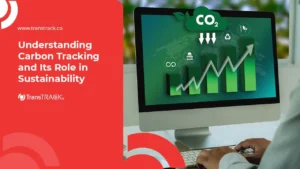
Understanding Carbon Tracking and Its Role in Sustainability
Posted on August 31, 2026 by Nur Wachda Mihmidati
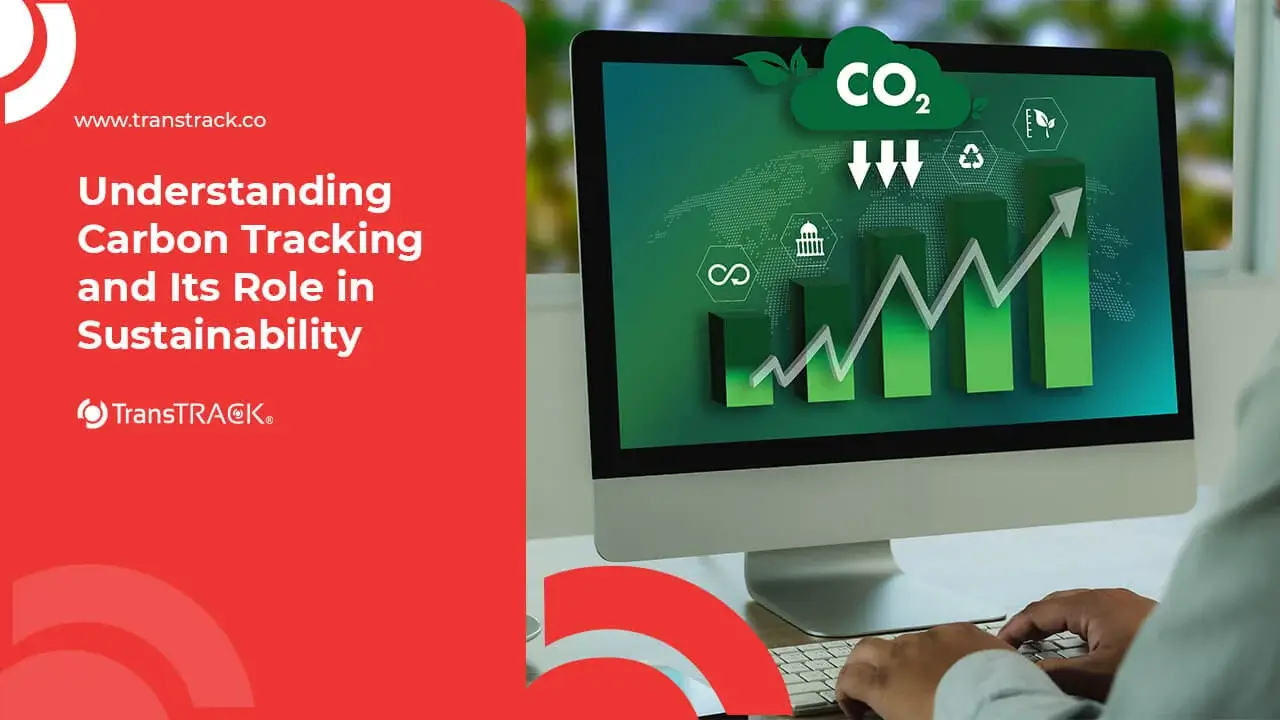
Carbon tracking is the process of measuring, monitoring, and analyzing the amount of carbon emissions generated by a company’s activities. Through carbon tracking, companies can identify their largest sources of emissions, monitor changes in emissions over time, and develop strategies to reduce them.
For modern companies, carbon tracking is becoming increasingly important because it helps improve operational efficiency, support sustainability goals, meet regulatory requirements, and strengthen a company’s reputation. In fleet and logistics operations, for example, data on fuel consumption, mileage, vehicle usage, and routes can be used to calculate and optimize carbon emissions. Read more about this in the following TransTRACK article!
Understanding the 3 Scopes of Carbon Emissions Tracking
In carbon emissions tracking, a company’s greenhouse gas emissions are generally categorized into three scopes based on their sources. This categorization helps companies understand where their emissions come from and develop more targeted reduction strategies.
Scope 1 – Direct Emissions
Scope 1 includes emissions generated directly from sources owned or controlled by the company. Examples include the combustion of fuel in company vehicles, boilers, generators, or equipment.
In fleet operations, vehicle fuel consumption is one of the primary sources of Scope 1 emissions. Data such as the amount of fuel used, mileage, and vehicle activity can help companies calculate and monitor emissions more accurately.
Scope 2 – Indirect Energy Emissions
Scope 2 emissions stem from energy purchased and used by the company, primarily electricity, steam, heating, or cooling. Although these emissions are not generated directly by the company’s facilities, the use of this energy indirectly results in emissions from the production processes.
Examples include electricity used to power offices, warehouses, production facilities, or electric vehicle charging stations.
Scope 3 – Value Chain Emissions
Scope 3 includes other indirect emissions resulting from a company’s activities throughout the value chain, including both upstream and downstream activities.
Examples include emissions from third-party transportation, business travel, product distribution, customer use of products, and supplier activities. Scope 3 is typically the most complex category because its data sources involve many parties beyond the company’s direct control.
Why Do Companies Need Carbon Emissions Tracking Software?
Carbon emissions tracking software helps companies measure, monitor, and reduce carbon emissions in a more structured way using operational data.
- Measuring emissions more accurately than fuel consumption, energy use, and operational activities.
- Monitor emissions regularly to identify changes and trends.
- Identify the largest sources of emissions so that reduction strategies can be more targeted.
- Supports decision-making to improve operational efficiency.
- Simplify sustainability and ESG reporting with documented data.
- Reducing operating costs through energy and fuel efficiency.
5 Steps to Implement Carbon Emissions Tracking in Your Company
For the process of tracking carbon emissions to be effective, companies need to establish a systematic workflow, starting from defining the scope of emissions to ensuring that measurement results can be properly audited and reported. Companies can implement carbon emissions tracking through the following steps:
- Define the Operational Boundary Identify the facilities, activities, and emission sources to be measured. Generally, companies refer to three scopes:
- Scope 1: Direct emissions from assets owned or controlled by the company, such as fuel for operational vehicles and generators.
- Scope 2: Indirect emissions from purchased energy, such as electricity for offices, warehouses, or production facilities.
- Scope 3: Indirect emissions from activities within the company’s value chain, such as third-party transportation, business travel, and supplier activities.
- Collect Activity Data Collect data such as fuel consumption, electricity usage, mileage, and other operational activities.
- Select the Appropriate Emission Factor (Emission Factor) Use the relevant emission factor to convert activity data into carbon emission estimates.
- Integrate the Carbon Tracker Tool Use carbon tracking software to automate the collection, calculation, and monitoring of emissions data.
- Audit & Ongoing Reporting Conduct periodic data validation, then use the tracking results for reporting, setting targets, and developing emission reduction strategies.
Key Features to Consider When Choosing Carbon Emissions Tracking Software
When selecting carbon emissions tracking software, companies should consider features that not only calculate emissions but also help monitor emission sources and take action. Some key features to look for include:
- Multi-Scope Emissions Tracking – supports Scope 1, 2, and 3 measurements.
- Automated Data Collection – automatically collects data from vehicles, energy systems, and operational activities.
- Real-Time Monitoring – monitors emissions data and changes in consumption periodically or in real time.
- Emission Calculation – calculates emissions based on activity data and relevant emission factors.
- Dashboard & Analytics – presents emissions data in the form of easy-to-understand dashboards and analytics.
- Reporting & Export – simplifies the creation of sustainability reports and the export of data for audit purposes.
- Integration & API – can connect with other operational systems to create more integrated emissions data.
- Target & Reduction Tracking – helps companies set targets and monitor progress toward reducing emissions.
Conclusion
Carbon tracking helps companies understand, monitor, and reduce emissions generated by their operational activities. With measurable data, companies can identify sources of emissions, improve efficiency, and support the achievement of sustainability goals.
For fleet operations, this process can be streamlined with theFleet Management System from TransTRACK, which helps monitor vehicle activity and track carbon emissions based on fleet operational data. With greater visibility, companies can optimize vehicle usage while taking steps to reduce fuel consumption and emissions.
Optimize your fleet while supporting shared sustainability goals with TransTRACK.
FAQ
What is the difference between carbon accounting and carbon tracking?
Carbon tracking focuses on regularly monitoring and recording emissions data, while carbon accounting encompasses a broader process of calculating, classifying, and reporting emissions based on specific standards. Simply put, tracking helps determine how much and where emissions come from, while accounting helps organize that data into emissions calculations and reports.
How much does it cost to implement carbon emissions tracking software?
The cost varies depending on the company’s needs, such as the number of vehicles or facilities, Scope 1–3 coverage, the number of users, system integration, and the required features. Software with automation and data integration typically requires a larger investment, but it can reduce manual processes and improve tracking accuracy.
What are the most commonly used standards for tracking carbon emissions?
One of the most commonly used frameworks is the GHG Protocol, which categorizes emissions into Scope 1, Scope 2, and Scope 3. Other standards, such as ISO 14064, are also widely used for measuring, reporting, and verifying greenhouse gas emissions.
Do small businesses (SMEs) need to use a carbon tracker?
Yes. SMEs can also use a carbon tracker to understand their emission sources and identify efficiency opportunities early on. Implementation doesn’t have to be complex; companies can start with key emission sources such as fuel consumption, electricity, and vehicle operations, then gradually expand their scope.
Recent Post
Understanding Carbon Tracking and Its Role in Sustainability
August 31, 2026
Understanding Mining Digitalization and Its Impact on Operations
August 28, 2026


Topic :