Bahasa Indonesia
Dynamic Route Optimization vs. Traditional Route Planning: What’s the Difference?
Posted on July 22, 2026 by Nur Wachda Mihmidati
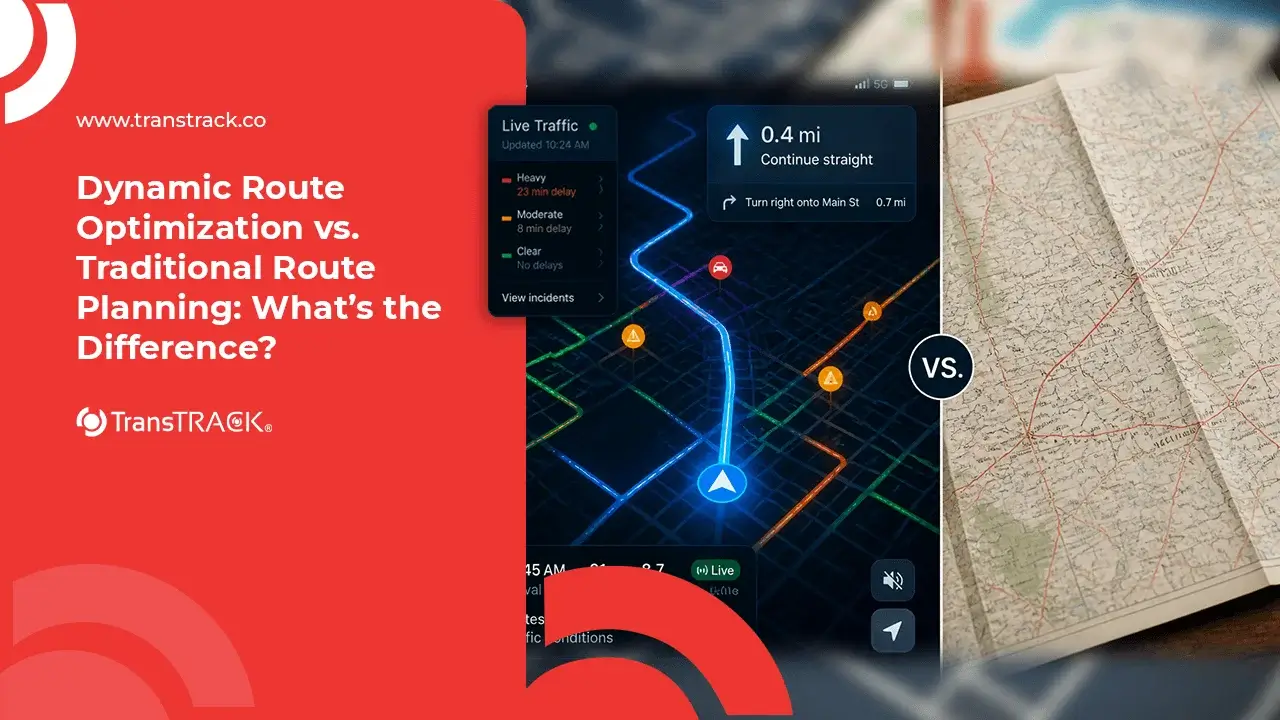
Dynamic Route Optimization is a technology that automatically optimizes delivery routes based on real-time conditions, such as traffic congestion, weather, road closures, and order changes. This solution helps logistics companies reduce operating costs, improve delivery timeliness, and maximize fleet productivity. Check out the full explanation in the following TransTRACK article!
What Is Dynamic Route Optimization?
Dynamic Route Optimization is the process of automatically optimizing vehicle routes in real time based on the latest on-the-ground conditions, such as traffic congestion, weather, road closures, changes in delivery locations, and even sudden order additions. This technology uses GPS data, AI, and optimization algorithms to continuously calculate the most efficient route as the trip progresses.
Unlike conventional route planning, which sets a route before a vehicle departs, dynamic route optimization can adjust the route in real time as conditions change. As a result, companies can reduce delays, save on fuel consumption, and improve fleet productivity.
Why Does Static Route Planning Cause Your Logistics Business to Lose Money?
Static route planning is done before a vehicle departs and does not account for changes in on-the-ground conditions, such as traffic congestion, road closures, or additional orders. As a result, the fleet continues to use less-than-efficient routes, leading to higher operating costs and slower deliveries.
Some of the main effects of static route planning include:
- Travel time is longer because traffic jams cannot be avoided.
- Operating costs have increased due to higher fuel consumption and more working hours.
- The risk of delivery delays that could reduce customer satisfaction.
- Fleet productivity has declined because vehicles are taking longer to complete their routes.
By implementing Dynamic Route Optimization, companies can adjust routes in real time based on the latest conditions, resulting in faster deliveries, more cost-efficient operations, and optimal fleet utilization.
Differences Between Traditional Route Planning and Dynamic Route Optimization
Although both aim to determine delivery routes, traditional route planning and dynamic route optimization work differently. Understanding these differences can help businesses choose a more efficient solution.
| Traditional Route Planning | Dynamic Route Optimization |
| The route is determined before the trip begins. | Routes are automatically updated based on real-time conditions. |
| Does not account for traffic congestion or changes on the ground. | Take traffic, weather, and order changes into account in real time. |
| Route changes are made manually by the dispatcher. | Route adjustments are made automatically using AI and optimization algorithms. |
| This risks increasing travel time and operating costs. | Helps save time, fuel, and operating costs. |
| Suitable for simple and stable operations. | Ideal for dynamic logistics operations with a high volume of shipments. |
How Does Dynamic Route Optimization Work?
Dynamic Route Optimization works by processing operational data and field conditions in real time to determine the most efficient delivery routes. Here are the steps in the process:
1. Consolidation of Incoming Order Data (Data Ingestion)
The system collects all order data—including delivery addresses, delivery schedules, customer priorities, and vehicle capacity—to serve as the basis for route calculations.
2. Implementation of the VRP (Vehicle Routing Problem) Algorithm
The optimization algorithm analyzes various variables, such as distance, fleet capacity, operating time, and the number of deliveries, to generate the most efficient route.
3. Field Data Collection (Real-Time External Ingestion)
The system continuously receives real-time data, such as traffic congestion, accidents, weather conditions, road closures, and changes to orders that may affect the trip.
4. Instant Distribution to the Driver App
Optimized routes are sent directly to the drivers’ apps so they can follow the latest routes without waiting for manual instructions from the dispatcher.
5. On-the-Fly Adjustments (Re-routing on the Fly)
If conditions change during the trip, the system will automatically recalculate the best route and direct the vehicle to a more efficient path to ensure on-time delivery.
What Are the Benefits of Using Dynamic Route Optimization?
By optimizing routes in real time, Dynamic Route Optimization helps logistics companies improve operational efficiency while reducing costs. Here are its main benefits:
1. Reducing Operating Costs
More efficient routes help save on fuel consumption, reduce mileage, and lower fleet operating costs.
2. Improving Delivery Timeliness
The system automatically selects the best route based on current conditions, thereby minimizing the risk of delays.
3. Improving Fleet Productivity
Vehicles can complete more deliveries in the same amount of time because travel times are shorter.
4. Faster Response to Change
Changes to orders, traffic jams, or road closures can be automatically accommodated through real-time route updates.
5. Improving Customer Satisfaction
Faster, on-time, and trackable deliveries improve service quality and customer trust.
6. Improving Operational Visibility
Operations teams can monitor vehicle locations, delivery progress, and route changes in real time, enabling faster and more accurate decision-making.
Conclusion
Dynamic Route Optimization helps logistics companies optimize delivery routes in real time based on traffic conditions, order changes, and various other operational factors. With this technology, businesses can reduce operating costs, improve delivery timeliness, and maximize fleet productivity.
To support its implementation, the Fleet Management System from TransTRACK provides real-time fleet monitoring, GPS tracking, trip analysis, geofencing, and an operational dashboard that offers comprehensive visibility into fleet activities. With accurate and integrated data, companies can make decisions faster and execute distribution processes more efficiently and on time. Contact TransTRACK to learn how the Fleet Management System solution can help optimize your business’s logistics operations.
FAQ
What is dynamic route optimization?
Dynamic route optimization is a technology that automatically optimizes delivery routes based on real-time conditions, such as traffic congestion, weather, road closures, or order changes. The system continuously updates the route so that vehicles take the most efficient path.
What is the difference between standard route planning and dynamic routing?
Route planning typically involves setting a route before the trip begins, and that route generally remains unchanged throughout the delivery. In contrast, dynamic routing can adjust the route in real time based on the latest conditions on the ground, making it more efficient and helping to reduce delays.
Can dynamic route optimization be used for motorcycle couriers?
Yes. Dynamic route optimization can be applied to various types of fleets, including motorcycle couriers, cars, vans, and even trucks. This technology is particularly useful for last-mile delivery services because it can select the fastest route and adapt to changing conditions during the trip.
Recent Post

Understanding Carbon Tracking and Its Role in Sustainability
August 31, 2026
Understanding Mining Digitalization and Its Impact on Operations
August 28, 2026


Topic :