Bahasa Indonesia
Understanding Logistics Management Systems in the Digital Transformation of Logistics
Posted on June 17, 2026 by Nur Wachda Mihmidati
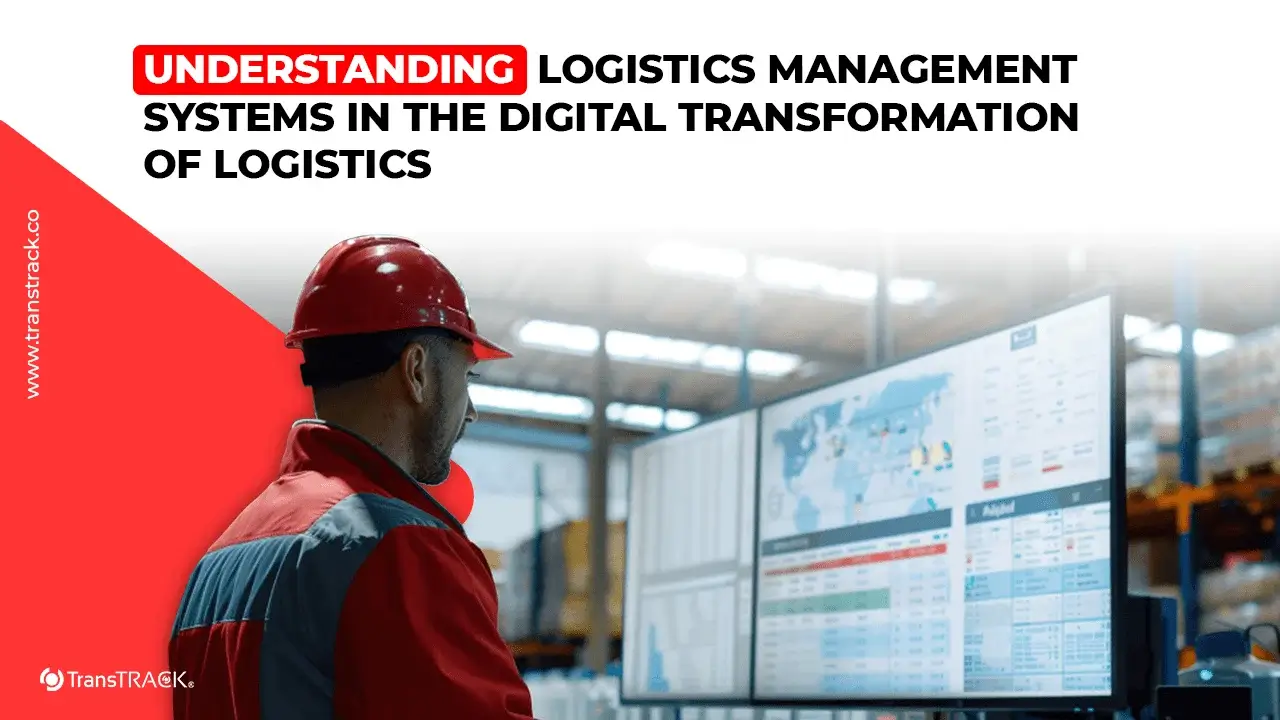
A Logistics Management System (LMS) is an integrated solution that helps companies manage their entire logistics process end-to-end, from warehousing and transportation to distribution. With an LMS, companies can improve operational efficiency, real-time visibility, and data accuracy throughout the supply chain. This system is key for businesses to address the increasingly complex and rapidly changing challenges of modern logistics. Read the full explanation in the following TransTRACK article!
Apa itu Logistic Management System?
A Logistics Management System (LMS) is a system used to manage, monitor, and optimize all logistics processes within the supply chain, from planning, procurement, and warehousing to transportation and delivery of goods to customers.
The primary goal of the LMS is to ensure that goods can be transported from their point of origin to their destination more quickly, accurately, efficiently, and under control, while reducing operational costs and improving visibility into logistics processes.
Why Does Your Company Need a Logistics Management System?
A Logistics Management System (LMS) helps companies integrate logistics processes, improve operational visibility, and optimize distribution. With a centralized system, companies can reduce costs, increase efficiency, and provide better service to customers.
Weaknesses of Traditional (Siloed) Logistics
- The data is scattered across various systems.
- Many processes are still done manually.
- It is difficult to track shipments in real time.
- Coordination between divisions is not optimal.
- Reporting is slow and inaccurate.
The Demands of the Modern Market
- Faster and more reliable delivery.
- Real-time visibility of shipment status.
- Operational cost efficiency.
- Better data integration.
- Data-driven decision-making.
Financial Impact
- Transportation costs are higher.
- A waste of time and resources.
- The risk of delivery delays is increasing.
- Operational productivity has declined.
- Potential loss of customers and revenue.
A Seamlessly Integrated LMS Ecosystem
A Logistics Management System (LMS) connects various logistics functions within a single integrated ecosystem, enabling information and operational flows to run more efficiently from end to end.
Order Management System (OMS)
Manage the entire customer order process.
- Order acceptance
- Order validation
- Stock allocation
- Monitoring status order
- Return Management
Warehouse Management System (WMS)
Optimizing warehouse operations.
- Receiving barang
- Putaway and storage
- Inventory management
- Picking & packing
- Inventory count
Transportation Management System (TMS)
Managing the transportation and distribution process.
- Route planning
- Scheduling of shipments
- Shipping tracking
- Proof of Delivery (POD)
- Distribution Performance Analysis
Fleet & Driver Management
Ensuring that the fleet and drivers operate at peak performance.
- Real-time vehicle monitoring
- Driver management
- Fuel consumption management
- Fleet maintenance
- Evaluation of vehicle and driver productivity
Metrics & Formulas for Measuring Logistics Success
Measuring logistics performance is essential to ensuring that operations run efficiently, costs are kept under control, and service levels remain optimal. Here are the two most commonly used KPIs.
On-Time In-Full (OTIF) Rate
Measuring the percentage of shipments that arrive on time and in the correct quantity.
Rumus:
OTIF Rate = (Number of On-Time and Complete Shipments ÷ Total Shipments) × 100%
Benefits:
- Measuring the quality of logistics services
- Monitoring customer satisfaction
- Identifying distribution issues
- Improving supply chain performance
Cost per Mile/Kilometer
Calculating the average cost incurred for each delivery distance.
Rumus:
Cost per Kilometer = Total Transportation Cost ÷ Total Kilometers Traveled
Benefits:
- Controlling distribution costs
- Evaluating fleet efficiency
- Optimizing delivery routes
- Improving operational profitability
Other Supporting KPIs
- Delivery Lead Time
- Fleet Utilization Rate
- Inventory Accuracy
- Order Fulfillment Rate
- Fuel Consumption Efficiency
- Warehouse Throughput Rate
- Return Rate
- Cost per Delivery
By consistently monitoring KPIs, companies can make data-driven decisions to continuously improve logistics efficiency and performance.
Implementation Guide for a Logistics Management System for Management
The implementation of the Logistics Management System (LMS) should be carried out in phases to ensure that the system operates optimally, meets operational needs, and is easily adopted by the team.
Step 1: Identify Bottlenecks
Identifying the main obstacles in the current logistics process.
- End-to-end process analysis (order, warehouse, transport)
- Identify the delay points
- Evaluation of inefficient manual processes
- Identify duplicate work and data errors
- Identify the areas that need to be digitized
Step 2: API Scalability
Ensuring that the system can be integrated and scaled to meet business needs.
- Check integration capabilities with ERP, WMS, TMS, and OMS
- Make sure the API supports real-time data exchange
- Build a scalable architecture for high volumes
- Ensure compatibility with third-party systems
- Ensure data security and system access
Step 3: User Experience (UX)
Ensuring that the system is easy to use for all operational users.
- A simple and intuitive dashboard
- Easy-to-read real-time information
- Minimize manual processes when using the system
- A workflow design that aligns with field operations
- Ensure it is mobile-friendly for field operations
Step 4: Onboarding & Training
Ensuring that the team can adopt the system effectively.
- Training for operational and managerial staff
- Simulation of system use in real-world work processes
- SOP Documentation for Using the LMS
- Support during the early stages of implementation
- Periodic evaluation of system adoption
With a structured implementation approach, an LMS can have the greatest impact on improving efficiency, visibility, and control over all of a company’s logistics processes.
Conclusion
A Logistics Management System (LMS) helps companies manage end-to-end logistics processes, improving efficiency, real-time visibility, and cost control within a single integrated ecosystem.
However, for the entire logistics system to operate more efficiently across platforms and stakeholders, an intermediary layer is needed to bring everything together.
TransTRACK’s Logistics Service Integrator serves as a bridge connecting LMS, TMS, WMS, ERP, and various logistics partners into a single, seamless data flow.
This enables companies to build a more integrated, efficient, and real-time logistics ecosystem.
FAQ
What is the difference between an ERP and a Logistics Management System (LMS)?
ERP (Enterprise Resource Planning) encompasses the comprehensive management of all business functions, such as finance, HR, and operations. Meanwhile, an LMS focuses more specifically and in greater depth on the management of logistics operations, such as warehousing, transportation, and goods distribution.
How does an LMS help reduce logistics costs?
An LMS helps reduce costs through optimized delivery routes, automated administrative processes, and more accurate inventory management, thereby reducing waste and storage costs.
Is an LMS suitable for small and medium-sized businesses (SMEs)?
Yes. With cloud-based technology (SaaS), the LMS can be accessed by medium-sized businesses without the need for significant infrastructure investments, making it more flexible and cost-effective.
Recent Post




Topic :