Bahasa Indonesia
Driver Monitoring System, A Smart Solution for Reducing Accident Risks
Posted on April 30, 2026 by Nur Wachda Mihmidati
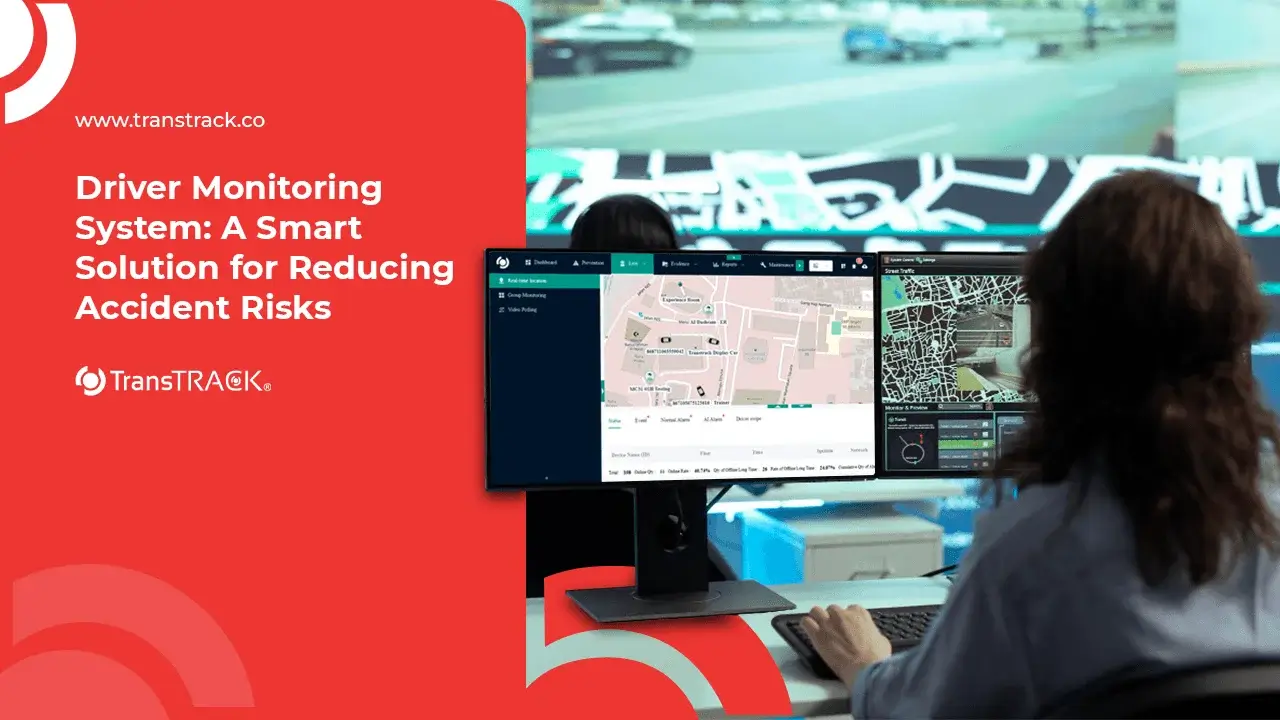
Technological advancements in the transportation and logistics industry are increasingly focused on improving safety, efficiency, and reducing the risk of human error. One innovation playing a key role in this regard is the Driver Monitoring System (DMS), a system capable of monitoring driver conditions in real time to ensure safe and controlled journeys. Read the full explanation in the following TransTRACK article!
What is a Driver Monitoring System?
The Driver Monitoring System (DMS) is a technology-based system used to monitor a driver’s condition and behavior in real time while driving.
This system typically uses cameras, sensors, and artificial intelligence (AI) to detect various safety indicators, such as:
- Driver alertness level (whether drowsy or distracted)
- Head and eye movements (to detect distractions)
- Using a cell phone while driving
- Signs of fatigue or microsleep
What Is the Primary Function of a Driver Monitoring System?
With increasing risks on the road, there is a need for a system capable of monitoring drivers in real time—namely, a Driver Monitoring System (DMS). Its functions include detecting drowsiness, distractions, and the driver’s identity.
- Detecting drowsiness The system monitors signs of driver drowsiness, such as frequent blinking, yawning, or loss of focus, and then issues a warning to take a break immediately.
- Detecting Distractions The DMS identifies when the driver is not focused on the road, such as looking away for too long, using a cell phone, or having their attention diverted from driving.
- Identifying the driver in real time The system can identify who is driving using a camera or biometric data, thereby helping to ensure that only authorized drivers operate the vehicle.
How Are Users of Driver Monitoring Systems Regulated?
Regulations governing the use of the Driver Monitoring System (DMS) generally do not yet exist as a single, specific rule in all countries, but are instead governed by vehicle safety standards, telematics systems, and transportation safety regulations.
In general, the provisions include:
- Vehicle safety standards In some countries, DMS is becoming mandatory or recommended for commercial vehicles and autonomous vehicles as part of safety features (driver attention monitoring).
- Data protection and privacy Since DMS uses cameras and biometric data, its use must comply with personal data protection regulations (such as the GDPR in Europe), including driver consent and restrictions on data use.
- Transportation regulations and fleet management Many transportation and logistics companies have adopted DMS as an internal standard for workplace safety, particularly to prevent accidents caused by driver fatigue.
- Integration with other safety systems In some modern vehicle regulations, DMS is part of Advanced Driver Assistance Systems (ADAS) that support active safety.
Benefits of Implementation for Companies and Individuals
As safety and efficiency requirements in the transportation industry become increasingly stringent, the implementation of a Driver Monitoring System (DMS) has a significant direct impact on both companies and individuals. The benefits include:
- Road Safety: Reducing the number of accidents caused by human error.
- Fleet Efficiency: Reducing repair costs resulting from collisions and lowering insurance premiums.
- Legal Compliance: Meeting international safety standards for the automotive and logistics industries.
How Does a Driver Monitoring System Work?
To understand how the Driver Monitoring System (DMS) works, the process is carried out in stages, from data collection to issuing warnings to the driver:
Phase 1: Data Capture
Using an infrared (IR) camera capable of operating in the dark or when the driver is wearing sunglasses.
Step 2: Facial Landmark Tracking
The system monitors eye movement, head position, and blink rate to assess the driver’s condition.
Step 3: Analysis of the AI Algorithm
The collected data is analyzed by AI to identify any signs of fatigue or difficulty concentrating.
Stage 4: Intervention/Warning
If a risk is detected, the system will issue a warning in the form of an audible alert, a seat vibration, or a visual notification on the dashboard.
What Are the Key Features of the Driver Monitoring System?
To support comprehensive driving safety, the Driver Monitoring System (DMS) comes with a range of key features designed to monitor the driver’s condition in real time. These features include:
- Drowsiness Detection: Detects signs of driver drowsiness to prevent accidents.
- Distraction Alerts: Alerts the driver when they lose focus on the road.
- Yawning Detection: Identifying yawning frequency as an indicator of fatigue.
- Driver Identification: Automatically identifies and verifies the driver’s identity.
The Impact of DMS on the Logistics and Transportation Industry
As the need for safety and operational efficiency grows, the use of Driver Monitoring Systems (DMS) is also having a significant impact on the logistics and transportation industries, particularly in the following three key areas:
- Fleet Monitoring: Integrated with a telematics system to help fleet managers monitor driver conditions in real time.
- Lower Insurance Costs: Improving vehicle safety features can reduce the risk of accidents, which in turn leads to lower insurance premiums.
- Driver Well-being: Helps ensure drivers receive timely alerts and breaks to prevent fatigue.
Conclusion
The Driver Monitoring System (DMS) is a critical technology for enhancing driving safety by monitoring driver conditions in real time, including drowsiness detection, distraction monitoring, and driver identification. The implementation of DMS not only helps reduce the risk of accidents but also improves operational efficiency and driver well-being in the logistics and transportation industries.
Improving driving safety depends not only on driver monitoring, but also on comprehensive visibility into vehicles and field operations. To that end, you can optimize fleet safety with the Vehicle Surveillance System from TransTRACK, which is integrated to help monitor vehicle conditions in real-time, improve operational control, and support more comprehensive safety.
FAQ
What is the difference between DMS and ADAS?
DMS focuses on “who is driving” (internal), while ADAS focuses on “the vehicle’s surroundings” (external).
Can the DMS camera work at night?
Yes, it uses an infrared (IR) illuminator that is invisible to the human eye but can be clearly detected by the camera’s sensor.
What is “microsleep” and how does DMS detect it?
Micro-sleep is a very brief episode of sleep (lasting just a few seconds) during which a person appears to remain awake. DMS detects it through patterns of eye closure, abnormal blinking, and sudden loss of focus.
Can DMS be used in all types of vehicles?
Yes, DMS can be implemented in various types of vehicles, such as private cars, commercial vehicles, and logistics fleets, as long as they are equipped with the appropriate cameras and telematics systems.
Does the use of DMS violate drivers’ privacy?
No, as long as it is done in accordance with data protection regulations. Typically, data is processed for safety purposes and is not stored indiscriminately; it also requires consent in accordance with company policy.
Can DMS send automatic alerts to companies?
Yes, in an integrated system, the DMS can send real-time notifications to the control center or fleet management if risks such as driver drowsiness or distraction are detected.
Recent Post





Topic :