Bahasa Indonesia

What Is a Hydraulic Brake? How It Works and Its Main Components
Posted on October 28, 2026 by Nur Wachda Mihmidati
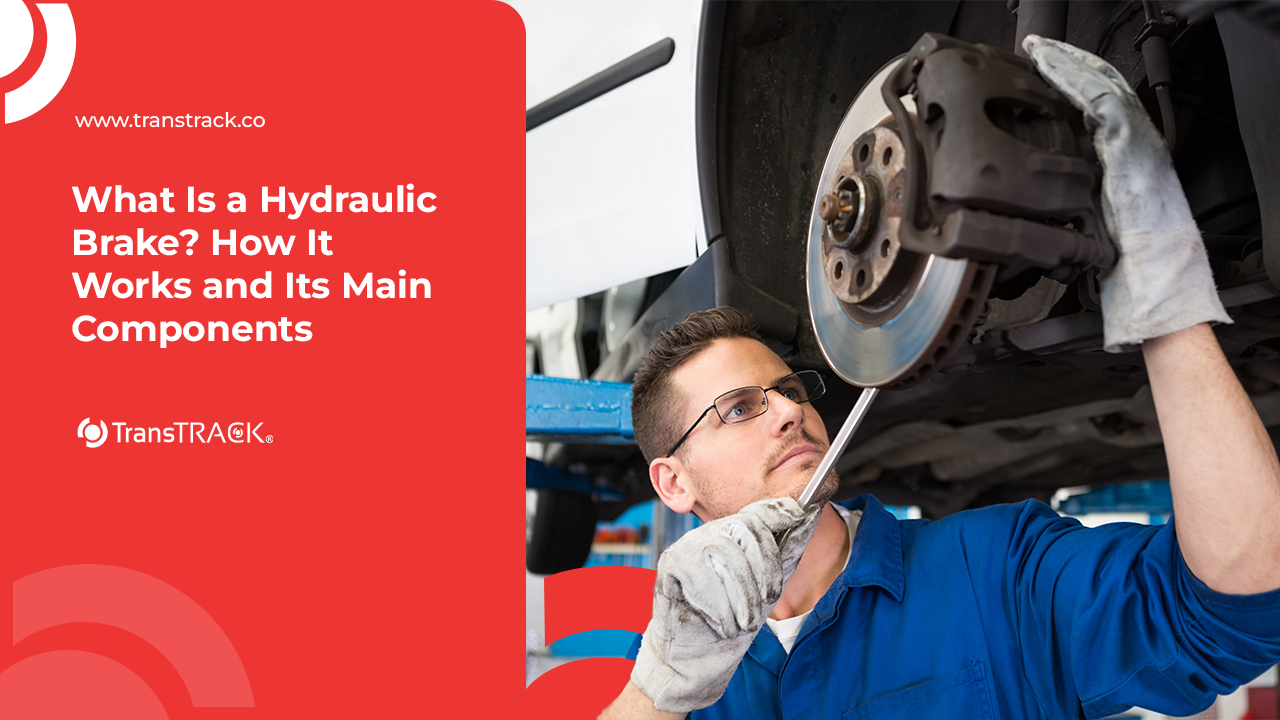
A hydraulic brake is a braking system that uses brake fluid pressure to transfer force from the brake pedal to the wheels, allowing the vehicle to slow down or stop smoothly and safely. Understanding how it works and its components is essential to ensure proper maintenance and minimize the risk of accidents caused by brake failure. Learn more with TransTRACK!
What Is a Hydraulic Brake?
A hydraulic brake is a braking system that uses brake fluid pressure to stop a vehicle responsively and smoothly. In fleet operations, understanding this system is important for detecting early signs of damage, maintaining driver safety, and supporting preventive maintenance.
Hydraulic Brake Is a Fluid-Based Braking System
A hydraulic brake is a braking system that uses fluid, specifically brake fluid, as a medium to transfer pressure. When the driver presses the brake pedal, mechanical force is converted into hydraulic pressure and transmitted to the caliper or wheel cylinder at the wheels.
This system is commonly used in vehicles with disc brakes as well as drum brakes. Its main advantage is that braking force can be distributed evenly, allowing the left and right wheels to receive relatively balanced pressure.
Hydraulic Brake System
A hydraulic brake system consists of the brake pedal, master cylinder, brake fluid reservoir, brake lines, and calipers or wheel cylinders that work together to slow down the wheels. Modern systems are also equipped with a brake booster to increase braking force and ABS to prevent wheel lock-up during sudden braking.
How a Hydraulic Brake Works
The way a hydraulic brake works can be explained through the following five main stages.
- The brake pedal applies pressure
When the driver presses the brake pedal, the force from their foot is transferred to the hydraulic system. In many vehicles, the brake booster amplifies this force before it reaches the master cylinder.
- The master cylinder generates hydraulic pressure
The master cylinder converts the mechanical movement of the brake pedal into hydraulic pressure. The piston inside the master cylinder pushes the brake fluid, increasing pressure throughout the brake lines.
- Brake fluid flows through the brake lines
Pressurized brake fluid flows through the brake lines and brake hoses toward the wheels. Because the fluid is not easily compressed, pressure can be transferred effectively to the braking components.
- The caliper or wheel cylinder presses the braking components
In a disc brake system, hydraulic pressure pushes the caliper piston so that the brake pad clamps the brake rotor. In a drum brake system, the wheel cylinder pushes the brake shoe against the inner surface of the brake drum.
- Friction slows down the rotation of the wheels
Friction between the brake pad and rotor, or between the brake shoe and drum, converts the vehicle’s kinetic energy into heat. As a result, the wheels slow down and the vehicle stops in a controlled manner.
Main Components of a Hydraulic Brake
The following are the main components that make up a hydraulic brake system.
1. Brake pedal
The brake pedal is the part pressed by the driver to activate the braking system. This component is the starting point for transferring force from the driver to the hydraulic system.
2. Master cylinder
The master cylinder converts the mechanical force from the brake pedal into hydraulic pressure. This component serves as the pressure-generating center of the entire braking system.
3. Brake fluid reservoir
The reservoir is a container that holds brake fluid. Its function is to maintain an adequate supply of brake fluid and make it easier to check the fluid level.
4. Brake fluid
Brake fluid is the medium that transfers pressure within the hydraulic system. It must have a high boiling point and resist contamination to maintain consistent braking performance.
5. Brake lines and brake hoses
Brake lines carry brake fluid from the master cylinder to the wheels. Flexible brake hoses connect rigid lines to the caliper or wheel cylinder, allowing the system to function properly as the suspension and steering move.
6. Brake caliper
The brake caliper contains pistons that receive hydraulic pressure. When activated, the caliper presses the brake pad against the brake rotor.
7. Brake pad
The brake pad is the friction component in a disc brake system. It presses against the rotor to create braking force.
8. Wheel cylinder and brake shoe
The wheel cylinder is used in drum brake systems. This component pushes the brake shoe against the inner surface of the brake drum.
9. Brake rotor or brake drum
The brake rotor is a metal disc clamped by the brake pads in a disc brake system. Meanwhile, the brake drum is a cylindrical component that rotates with the wheels in a drum brake system.
10. Brake booster
The brake booster helps amplify the force from the brake pedal before it is transferred to the master cylinder. This allows the driver to achieve optimal stopping power without pressing the pedal too hard.
How Hydraulic Brakes Work Based on Pascal’s Law
Hydraulic brakes work based on Pascal’s Law. This principle explains that pressure applied to fluid in an enclosed space is transmitted equally in all directions.
In the context of braking, pressure generated by the master cylinder is distributed evenly through the brake fluid to all brake lines. This is why hydraulic brakes can provide stable and balanced braking on each wheel.
Pascal’s Law in the Braking System
Pascal’s Law states that pressure applied to an enclosed fluid is transmitted without reduction to all parts of the fluid. In hydraulic brakes, a small force applied to the pedal can produce greater braking force at the wheels due to differences in piston surface area.
Simply put, this principle makes the braking system more efficient: the driver applies relatively little force, while the system produces strong and evenly distributed stopping power.
Conclusion
A hydraulic brake is a fluid-based braking system that operates based on Pascal’s Law. Through the combined work of the brake pedal, master cylinder, brake fluid, brake lines, calipers or wheel cylinders, and friction components, the force applied by the driver is converted into strong and evenly distributed braking force.
For fleet managers, understanding hydraulic brakes helps improve driving safety and vehicle maintenance efficiency. Make sure the level and quality of brake fluid are always monitored, and perform regular inspections on all braking components. Learn more about fleet management and vehicle maintenance solutions through the Vehicle Maintenance System at TransTRACK to support safer and more efficient fleet operations.

FAQ
1. What Are the Advantages of a Hydraulic Brake?
The advantages of hydraulic brakes include more responsive braking, more even stopping force across all wheels, and relatively low pedal effort. This system is also more efficient because hydraulic pressure can be transmitted consistently through the brake fluid.
2. What Are Common Hydraulic Brake Problems?
Common hydraulic brake problems include brake line leaks, low or contaminated brake fluid, worn brake pads, stuck calipers, and air entering the system. These conditions can cause a soft brake pedal, uneven braking, or longer stopping distances.
3. Which Is Better, a Hydraulic Brake or a Mechanical Brake?
Hydraulic brakes are generally better for cars and commercial vehicles because they provide stronger, more responsive, and more even braking force. Meanwhile, mechanical brakes are simpler and are often used on bicycles, certain motorcycles, or applications that require light braking. For modern motor vehicles, hydraulic brakes are usually the preferred choice.
Recent Post

How Does Port Digitization Improve Efficiency and Safety?
October 30, 2026
What Is a Hydraulic Brake? How It Works and Its Main Components
October 28, 2026


Topic :