Bahasa Indonesia

What Is a Collision Avoidance System? Here Are Its Functions and How It Works
Posted on October 27, 2026 by Nur Wachda Mihmidati
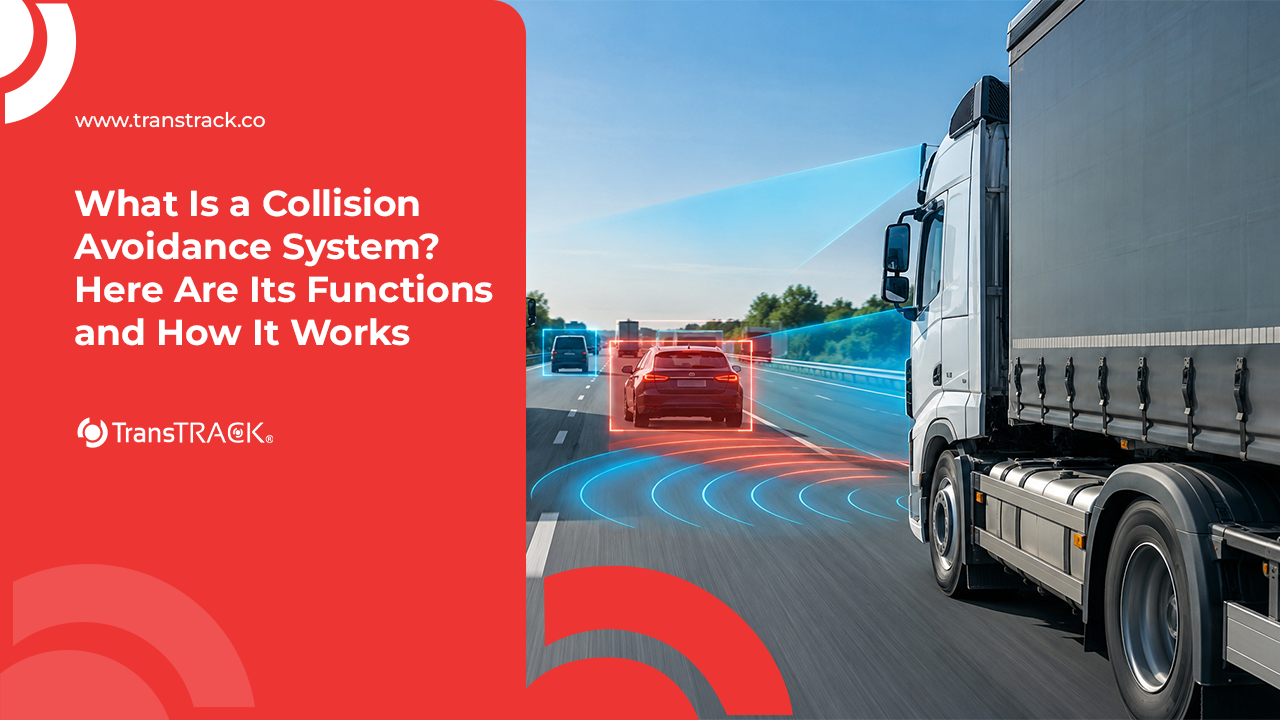
The Collision Avoidance System (CAS) is a safety technology that helps detect potential collisions and provides warnings or mitigation measures to reduce the risk of accidents. This technology can be applied to various modes of transportation, including both land vehicles and ships.
CAS utilizes technologies such as cameras, radar, LiDAR, ultrasonic sensors, GPS, and AIS to detect surrounding objects and analyze their movements. Its applications vary depending on the specific needs. In land vehicles, CAS helps drivers navigate around other vehicles, pedestrians, or other obstacles. Meanwhile, in the maritime sector, the system helps ship crews monitor traffic and potential collision risks. Check out the full explanation in the TransTRACK article below!
Collision Avoidance Systems in Land Vehicles (Automotive)
In land vehicles, collision avoidance systems are widely used as part of advanced driver assistance systems (ADAS). These systems help improve safety by providing information about the vehicle’s surroundings and alerting the driver when potential hazards are detected.
Forward Collision Avoidance System (FCAS)
The Forward Collision Avoidance System (FCAS) is designed to detect potential collisions ahead of the vehicle. The system may use cameras, radar, or a combination of sensors to detect vehicles, pedestrians, and other objects.
When a collision risk is detected, the system can issue an audio or visual warning. In vehicles equipped with active safety features, the system can also help apply the brakes automatically to reduce the risk or severity of an accident.
Obstacle Collision Avoidance System
The Obstacle Collision Avoidance System helps detect obstacles around the vehicle, not just objects directly in front of it.
Using cameras and distance sensors, the system can detect vehicles, road barriers, and other objects that could potentially interfere with the journey. This technology is particularly useful for commercial vehicles when parking, maneuvering, turning, or operating in confined spaces.
Collision Avoidance Systems in Maritime Navigation & Marine Affairs
In the maritime sector, collision avoidance plays a crucial role because ships require more time and distance to change course or come to a stop.
The system can integrate information from AIS, radar, GPS, cameras, and navigation devices to help the ship’s crew understand the surrounding traffic conditions and anticipate potential course conflicts.
Vessel & Maritime Collision Avoidance System
The Vessel Collision Avoidance System helps monitor the position, course, speed, and movements of other vessels in the vicinity.
This information can help the crew identify potential collision risks and make appropriate navigational decisions, especially when operating in busy shipping lanes, port areas, or under conditions of limited visibility.
Boat Collision Avoidance System
The Boat Collision Avoidance System is used to help detect other boats or objects around the boat.
The system can use GPS, AIS, radar, cameras, or other sensors as needed. This technology can be applied to various activities, such as passenger transportation, fishing, marine tourism, and small vessel operations.
Traffic Collision Avoidance System (TCAS / AIS)
The Traffic Collision Avoidance System (TCAS) is actually more commonly used in the aviation sector. In the maritime context, the more relevant technology is the Automatic Identification System (AIS).
AIS enables ships to exchange information regarding their identity, position, speed, and course. This data can be used as part of navigation and collision-avoidance systems.
However, AIS is not a system that automatically prevents collisions. AIS data must be combined with radar, visual observations, ECDIS, and navigation procedures to support decision-making.
How Does a Collision Avoidance System Work?
In general, CAS operates through three main stages, ranging from detecting objects to issuing alerts or taking mitigation measures.
Phase 1: Detection & Scanning
The system collects information from various sensors. In land vehicles, sensors may include radar, LiDAR, cameras, and ultrasonic sensors. On ships, data sources may include radar, AIS, GPS, and cameras.
This data is used to determine the position, distance, direction, and movement of nearby objects.
Phase 2: Data Processing & Risk Analysis
The collected data is then analyzed using algorithms to determine the potential risk of a collision.
One parameter that can be used is Time to Collision (TTC), which is the estimated time before a vehicle or ship reaches a point of conflict. The system can also take into account the distance, relative speed, and direction of movement of the objects.
Stage 3: Alerts & Automated Actions
If a risk is detected, the system can issue audio or visual alerts to the driver or crew members.
In systems with active safety features, mitigation measures may include automatic braking or vehicle control assistance. On ships, this information is generally used to assist the crew in making navigational decisions.
Benefits of Using a Collision Avoidance System
The implementation of CAS not only improves safety but also supports efficient fleet management.
Minimizing the Risk of Accidents Caused by Human Error
CAS provides additional warnings when a driver or operator may not be aware of a hazard. This can help reduce risks resulting from distractions, fatigue, or delayed responses.
Reducing Insurance Claims Costs and Fleet Damage
Accidents can result in repair costs, vehicle downtime, and even insurance claims. By helping to reduce the risk of accidents, CAS can be part of a fleet safety strategy to minimize potential losses.
Improving Operational Safety on Land and at Sea
CAS improves visibility of the surroundings of a vehicle or vessel. When integrated with a fleet management system, safety data can also be used to evaluate driver behavior and identify risk patterns.
Conclusion
The Collision Avoidance System (CAS) is one of the key technologies for improving transportation safety by helping to detect potential collisions, issuing warnings, and, in certain systems, taking mitigating actions. Its implementation in land vehicles can help reduce the risk of accidents caused by delayed responses or human error.
To improve fleet safety more comprehensively, TransTRACK’s Vehicle Surveillance System (VSS) integrates AI Dashcam Driver Monitoring System (DMS), and the Advanced Driver Assistance System (ADAS) to help monitor road conditions, driver behavior, and potential risks during the trip.
With the support of real-time monitoring and intelligent safety alerts, companies can improve visibility into their fleet’s condition while establishing safer and more controlled vehicle operations. Discover the Vehicle Surveillance System from TransTRACK and enhance the safety of your fleet.
FAQ
Apa bedanya Collision Avoidance System dengan Forward Collision Warning (FCW)?
FCW primarily issues a warning when there is a potential collision ahead of the vehicle. Meanwhile, CAS has a broader scope and, in certain systems, may include mitigation measures such as automatic braking.
Does the Collision Avoidance System work during heavy rain or at night?
CAS capabilities depend on the sensors used. Cameras may have limitations in dark conditions or during heavy rain, while radar is generally better at detecting objects in low-light conditions. A combination of multiple sensors can improve detection capabilities.
How does a Traffic Collision Avoidance System work on a ship?
On a ship, the system can use AIS, radar, and GPS to determine the position, speed, and course of other vessels. This information helps the crew identify potential course conflicts and determine navigational actions.
Can the CAS system automatically shut off the engine or apply full brakes?
Not always. Capabilities depend on the type of system. Some CAS systems only provide warnings, while systems with active safety features can perform automatic emergency braking (AEB) under certain conditions.
Are all ships required to have a Maritime Collision Avoidance System?
Not all vessels are required to have a specific device called a Maritime Collision Avoidance System. Navigation equipment requirements depend on the type of vessel, its size, its area of operation, and applicable regulations, which may include AIS, radar, and other navigation devices.
Recent Post
How Does Port Digitization Improve Efficiency and Safety?
October 30, 2026

What Is a Hydraulic Brake? How It Works and Its Main Components
October 28, 2026


Topic :